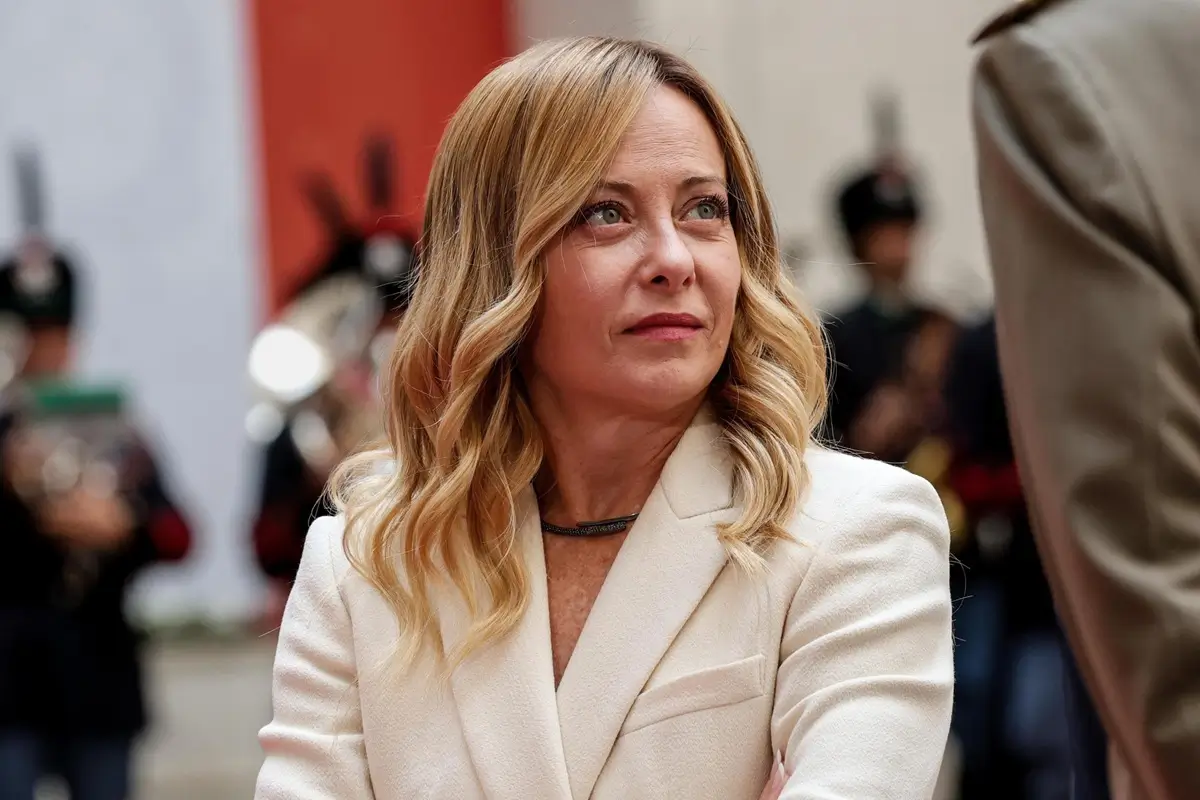
Giorgia Meloni has registered her voice with the EU’s trademark office, and the filing raises the question of what protects everyone else. On 5 October 2026 Italy’s prime minister filed a four-second recording of herself saying “Io sono Giorgia Meloni” (I am Giorgia Meloni) as an EU sound mark. Reuters describes the voice trademark as a move against AI deepfakes. In May she wrote on Facebook: “I can defend myself. Many others cannot.”
Table of contents
A trademark for four seconds of speech
The EU Intellectual Property Office (EUIPO) lists the application, number 019431219, as under examination. According to ppc.land’s reading of the register, it covers 51 terms in three classes: downloadable media, events and publishing, and the organisation of political meetings. The sentence is her rally line from 2019 and the title of her 2021 autobiography. Singer Giusy Ferreri and voice actor Luca Ward have also applied for their own voices.
What a voice trademark cannot do
Italian media cited by Reuters say approval could add legal obstacles for imitators and would stop nothing by itself. The register states no purpose for the filing, and the classes cover books, events and political meetings.
Read also: When Any Video Can Be Fake, Who Tells the Court?
Francesco Venturoli of the IP firm Bugnion argues that a registration gives no exclusive right over the voice itself. To act against an AI copy, an owner would have to show similar signs, similar goods or services and a likelihood of confusion, and a deepfake may never be used as a trademark at all.
He lists personality rights, data protection and copyright as the complementary tools. Meloni’s existing case against a man accused of making pornographic deepfake images of her, filed in 2024, is still pending.
The rules that already exist
Article 50 of the AI Act has applied since 2 August 2026. Whoever deploys a deepfake “shall disclose that the content has been artificially generated or manipulated”. Evidently artistic or satirical works get a lighter duty, and ICT Recht’s summary adds that intent to deceive is not required for the duty to apply. The rule is a label aimed at the publisher of the clone.
Italy added a crime in October 2025. Article 612-quater of its criminal code carries one to five years in prison for distributing AI-falsified images, videos or voices that can mislead about their authenticity. TrueScreen’s legal summary adds that the victim generally has six months to file a complaint.
Denmark wants a consent right, for Denmark
The European Parliament’s research service describes a Danish proposal to amend the Copyright Act so that making an imitation of a person’s appearance or voice available requires that person’s consent. Protection would last 50 years after death, and parody and satire are in principle excluded. The amendments were expected to take effect in July 2026.
Read also: Brussels Pushed Its Hardest AI Rules Back 16 Months
The same document names the limit: the Danish rules would apply only in Denmark, enforced through geo-blocking by very large platforms, so imitations could stay online elsewhere unless other member states or the EU adopt similar rules. Ireland reportedly intends to follow, and several member states said the problem reaches beyond copyright law.
A person whose voice is cloned in the EU therefore has a labelling rule aimed at the publisher, a criminal offence in Italy, a proposed consent right in Denmark, and personality rights, data protection and copyright through the courts.
Meloni’s filing adds a trademark that anyone can apply for, if the office accepts a spoken sentence as a sign. As of 9 October the application was still under examination, and Venturoli doubts that a registration alone would stop a faithful replica.
SOURCES & METHOD
How this article was made. The article rests on nine sources. One is an official EU document: the European Parliamentary Research Service paper on Denmark’s deepfake proposal. The AI Act’s Article 50 is taken from the unofficial site artificialintelligenceact.eu and ICT Recht, and Italy’s Law 132/2025 through TrueScreen and Mondo Internazionale, not through the law’s own text. The Meloni filing is reported by the Associated Press (via ABC News), Il Sole 24 Ore, The Next Web and PPC Land.
Sources
- European Parliamentary Research Service: Denmark’s deepfake proposal (January 2026) – the proposed consent right, its 50-year term and its territorial limit.
- AI Act, Article 50: Transparency obligations – the deployer duty to disclose deepfakes and the exception for evidently artistic works.
- ppc.land: Meloni files 4-second recording of herself as an EU sound trademark – register extract of the application and the Bugnion analysis.
- The Next Web: Giorgia Meloni files to trademark her voice against AI deepfakes – the filing, the May Facebook quote and the pending 2024 case.
- AP via ABC News: Italy’s Meloni follows pop stars in seeking to trademark her voice – the recording, the EUIPO filing and the limits reported by Italian media.
- Il Sole 24 Ore: “I am Giorgia Meloni”, the prime minister records her voice at the trademarks office – the filing and the other applicants.
- ICT Recht: AI Act transparency obligations now in effect – the 2 August 2026 start date and the intent point.
- TrueScreen: Italy’s deepfake law 132/2025 – article 612-quater, its penalty and the complaint period.
- Mondo Internazionale: AI and criminal law, the changes introduced by Law 132/2025 – the same offence and penalty range.