


Poland’s Constitutional Tribunal has had two rival leaderships since Friday, and each side calls the other’s acts unlawful. For Polish citizens and businesses that means a top court whose rulings the government has ignored since late 2023, according to t-online, and which now also disputes who speaks for it. What Brussels can do is set by the EU treaties, and they hold few fast instruments.
Table of contents
Two leaderships fight over Poland’s court
On Friday 30 October, judge Anna Korwin-Piotrowska suspended the Tribunal’s president, Bogdan Święczkowski, and his deputy, Bartłomiej Sochański, for one month. As the most senior judge she took over and called all judges to a meeting on 3 November. Święczkowski calls it a coup and says the court is made up of lawfully appointed judges.
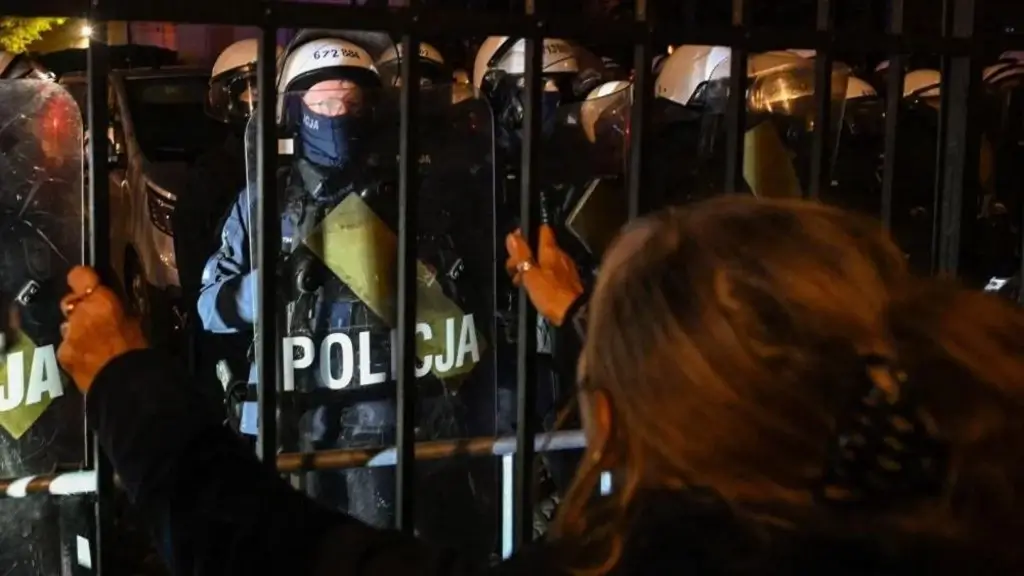
President Karol Nawrocki entered the sealed court building overnight, past a police cordon, dpa reports, and demanded that the security forces sent by the government withdraw. He also called the parties to urgent talks. Three people were arrested at the demonstrations.
Read also: EU Releases Hungary Funds Before Reforms Are Done
The government calls the suspension a restoration of the rule of law. Prime Minister Donald Tusk wrote on X that it is the government’s duty, and Justice Minister Waldemar Żurek has asked to lift the immunity of the two suspended judges. PiS leader Jarosław Kaczyński warns that Poland is becoming a police state.
Behind the fight lies an older dispute: Nawrocki has refused to take the oath from several of the judges the Sejm elected. The sources give the number as both three and five, so it stays open.
The treaty demands unanimity
The best-known EU tool is Article 7 of the Treaty on European Union. Finding a clear risk of a serious breach of the rule of law needs four fifths of the members of the Council and the consent of the European Parliament. Finding a serious and persistent breach needs unanimity in the European Council.
Read also: Brussels Sees Progress, Watchdogs Count Almost None
Only then can the Council, by qualified majority, suspend rights, including the country’s voting right in the Council. The Commission has itself said it intended to close the Article 7 procedure against Poland after the government presented an action plan on the rule of law.
The budget offers another lever
A 2020 regulation lets the EU withhold money when breaches of the rule of law threaten the EU budget. As an example it names conduct that endangers the independence of the judiciary. The Commission sends a written notification to the country, and the Council then adopts measures, normally within one month, extendable by at most two months.
The condition is that the breach affects, or seriously risks affecting, the sound management of EU funds in a sufficiently direct way. How far a dispute over a court’s leadership reaches into EU money is an open legal question. And unanimity in the European Council requires that no government objects.
SOURCES & METHOD
How this article was made. The article rests on 6 sources, two of which are the treaty and regulation texts. The number of judges without an oath is left out because the sources disagree.
Sources
EUR-Lex: Treaty on European Union, Article 7 (consolidated 2016) – procedure and voting thresholds for rule-of-law breaches.
EUR-Lex: Regulation (EU, Euratom) 2020/2092 on budget protection (16.12.2020) – conditions, measures and deadlines.
European Commission: Commission intends to close Article 7(1) TEU procedure for Poland – the Commission’s own statement on the Article 7 procedure.
Tidende: Polen suspenderer præsident for forfatningsdomstol (30.10.2026) – the suspension and the parties’ reactions.
t-online: Nawrocki drängt sich ins Verfassungsgericht (31.10.2026) – events around the court building and background.
Steigan.no: Polens konstitusjonsdomstol i krise (1.11.2026) – analysis of the oath dispute, an opinion source.