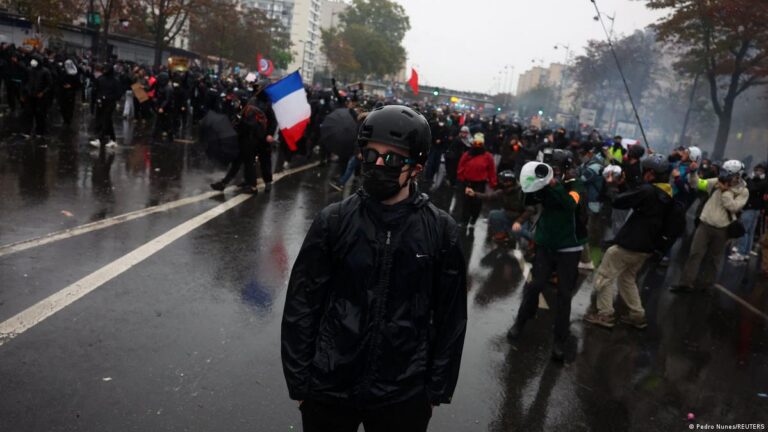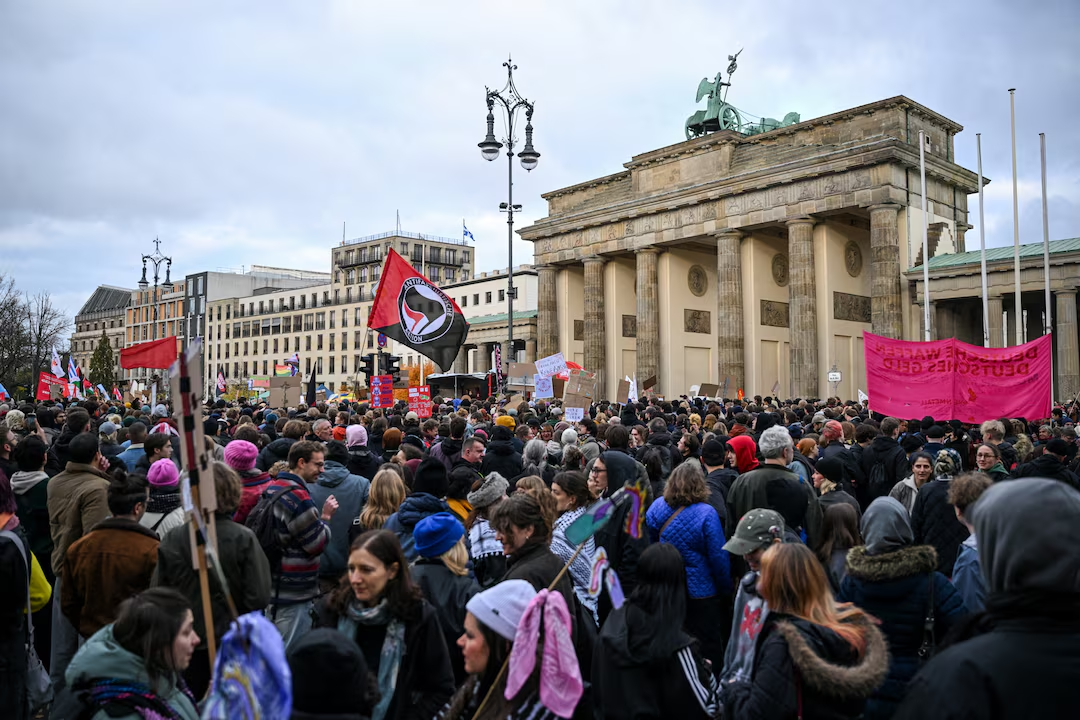
Cost of living protests have spread through at least four EU countries since 17 October: France, Italy, Belgium and Portugal. Organisers in Germany have called demonstrations in 21 cities for 31 October. The demands differ by country, with energy bills in France, rent in Portugal and rearmament in Italy’s strike call, but the price data lines up with the street calendar.
Table of contents
Most of the levers that could ease the pressure sit in national capitals. The EU holds a few, and the money the Commission attaches to the biggest of them, housing, is small next to the need it describes.
Cost of living protests in four countries in two weeks
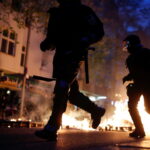
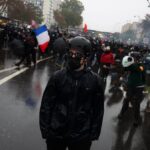
On Saturday 17 October more than 550,000 people marched across France, according to the Interior Ministry. Prime Minister Sébastien Lecornu condemned “violence of extreme intensity” and cited 1,200 arrests and 150 injured police officers. Interior Minister Laurent Nuñez gave 1,800 arrests and more than 500 injured police officers and firefighters. The two accounts differ.
The town hall of Limoges was largely destroyed by fire. In Milan the same day about 50 people were detained, many of them minors, and at least two police officers were injured, according to the agency LaPresse. Mayor Giuseppe Sala called the reasons for the protests “understandable”.
In Lisbon the union CGTP said tens of thousands marched. In Brussels, 500 to 600 people were on the street, police used tear gas and water cannon, and Interior Minister Bernard Quintin said what was unfolding there was “no longer mere protest”.
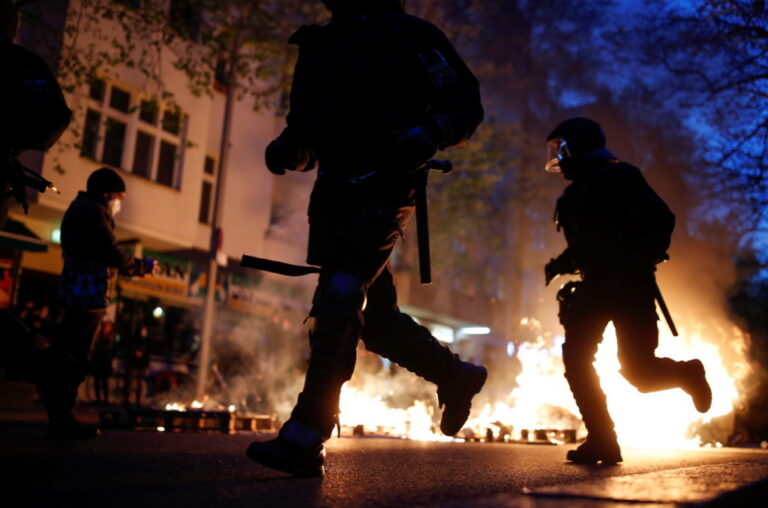
Italy’s grassroots union USB called a national strike for Friday 30 October against the rising cost of living and rearmament in Europe, under the slogan “Shut everything down”. Dockworkers blocked part of the port of Genoa. In Rome a small group broke away from the main march, set barricades and bins alight, and eight demonstrators were detained.
Transport Minister Matteo Salvini had ordered transport strikes postponed. USB called the order illegitimate, and transport workers who defied it faced fines of up to €1,000. Nine centre-left mayors, including those of Rome, Milan and Naples, asked the government for an urgent meeting on the cost of living.
Read also: The EU’s Poverty Target Needs Nearly Five Times 2025’s Progress
Interior Minister Matteo Piantedosi called the coming weekend “problematic” and said police would step up checks and could carry out preventive detentions under the latest security decree. No group had officially called protests for 31 October, but Rome authorities were preparing for demonstrations, with Halloween an added factor for police. At least 20,000 people were expected in Rome on the strike day.
The inflation ranking and the protest calendar
Eurostat put euro-area inflation at 3.8% in September, up from 3.2% in August and 2.2% a year earlier. The EU-wide rate was also 3.8%, against 2.6% a year earlier. National releases for October show how uneven the picture is: Italy 5.4%, up from 4.2%; Spain 4.9%; France 3.4% on the national measure and 3.8% on the EU-harmonised one; Germany 2.8%, down from 3.3%. France’s rate is its highest since January 2024.
Energy drives much of it. Energy prices rose 31.4% over the year in Italy, 24.1% in France and 12.2% in Germany. Germany’s relief came with a cut in fuel taxes that took effect on 1 October and runs to year end. In France, the statistics office INSEE had energy prices 21.3% higher in September than a year earlier, and petrol up 25.7%. INSEE also put French unemployment at 8.3% in the second quarter, up from 7.6%.
Italy, with the highest October inflation of the four, saw a national strike. Germany, with the lowest, is the latest country where a protest call has gone out. No source tests whether the two facts are linked, and the ranking should be read as a pattern to watch.
Core inflation, the measure that leaves out the most volatile prices, was 3.1% in Spain and 2.1% in Germany, where it came down from 2.4% a month earlier. Spain’s headline rate of 4.9% was unchanged from September. Germany’s drop coincides with the fuel tax cut, and Spain’s rate has stopped rising without falling.
Rent and rearmament on the same banner
The Commission’s own housing page gives the backdrop. House prices in the EU have risen by over 60% since 2013. Just 6 to 7% of housing is social housing, while 20% of homes stand unoccupied. Europe needs to build more than two million homes a year, around 650,000 more than the 1.6 million built today. Short-term rentals rose by 93% between 2018 and 2024.
In Portugal, rents on new leases were up 10.2% on the year, according to the national statistics institute INE. German organisers listed “Bildung, Gesundheit und ein bezahlbares Leben” among their demands, which translates as education, health and affordable living, and added opposition to conscription and to austerity. Italy’s USB put rearmament in its strike call.
Governments read the streets as a security problem
The initiative behind the German call, Gen Z steht auf, says its protest is peaceful without exception and that the spark has jumped to Germany from France. Officials treat the call as a question for the police. A Berlin police spokesman, Florian Nath, said police would watch whether these are real student protests or people using Halloween as a backdrop. Bavaria’s interior minister, Joachim Herrmann, wants to stop comparable tendencies early.
Read also: The EU’s Homelessness Recommendation Has No Deadline and No New Money
Hesse’s interior minister, Roman Poseck of the CDU, said police there would be strong and prepared. A federal government spokesperson said it did not share the concern about a Europe-wide mobilisation.
President Emmanuel Macron said those who attacked buildings and looted would be prosecuted and punished. Prime Minister Giorgia Meloni defended the right to demonstrate and condemned arson. The security reading has numbers behind it: hundreds of injured officers. The same figures show arrests equal to well under 1% of the Interior Ministry’s own turnout count for 17 October.
A small EU toolbox next to a large bill
The Commission says it has mobilised over €43 billion for housing across 2021 to 2027 and will add €10 billion from the EU budget in 2026 and 2027. The same page puts the investment Europe needs at about €153 billion per year. An affordable housing act was presented in September, and a Council recommendation on housing exclusion in May. The page also lists €375 billion to be mobilised by partner financial institutions by 2029 and a first EU housing summit planned for 2026.
On prices, the lever is the central bank. The European Central Bank was reported to have held its deposit rate at 2.5% on 29 October, after a rate rise in September, and the research firm Pantheon raised its euro-area October inflation forecast to 4%.
The Commission’s page lists €10 billion of extra EU money for two years next to an annual investment need of about €153 billion. The tax cut that lowered German inflation, the order that postponed Italian transport strikes and the meeting the mayors asked for were all decisions for national governments.
BASIS OF ANALYSIS
Basis of analysis. The analysis rests on eight sources, two of them official EU pages (the Commission and Eurostat); turnout, arrest and inflation figures come from officials and statistics offices as reported by news outlets and from union statements. The demonstrations called for 31 October had not taken place when this was written, and the European Central Bank’s own statement for 29 October could not be confirmed.
Sources
- European Commission: European Affordable Housing Plan (page updated 15 September 2026) – house price, social housing and investment figures, and the EU funding for housing.
- Eurostat: Euro indicators, annual inflation up to 3.8% in the euro area (16 October 2026) – euro-area inflation for September 2026.
- Euronews: Italy on high alert as thousands take to the streets in nationwide strike (30 October 2026) – the USB strike, Genoa, Rome and the interior minister’s warning.
- Euronews: Germany, France, Italy and Spain, where was inflation highest in October (30 October 2026) – national October inflation and energy figures, the German fuel tax cut and the ECB report.
- The Local Italy: Strikes and protests, what to expect in Italy on Friday and Saturday (26 October 2026) – the Salvini order, fines and the mayors’ request.
- Leinetal24 (Ippen network): Nach Frankreich-Protesten, Gen-Z-Initiative ruft zu bundesweiten Demos auf (20 October 2026) – the German call for 31 October, its demands and the police and government responses.
- Newsweek: Europe map shows countries hit by protests this week – French turnout and arrests, Milan, Lisbon, INSEE energy figures and Portuguese rents.
- ThePrint: France to Italy, cost of living protests rock EU (18 October 2026) – the prime minister’s arrest figures, Limoges and the leaders’ statements.