


Serbia’s election on Sunday was called early by a president who then resigned to contest it. Aleksandar Vučić has led the country as prime minister or president for 12 years. Now he runs for prime minister, because the constitution bars a third presidential term, and a list built by students stands a real chance of beating him.
Table of contents
Serbia is a candidate for EU membership, it has refused to sanction Russia, and Russia is its main gas supplier. The vote decides who Brussels deals with in Belgrade, and a poll this week put the students narrowly ahead.
A concrete canopy started it
It began on 1 November 2024, when the canopy of the newly renovated railway station in Novi Sad collapsed and killed 16 people. Students blockaded their faculties and demanded justice, and many Serbs believed corruption lay behind the shoddy construction.
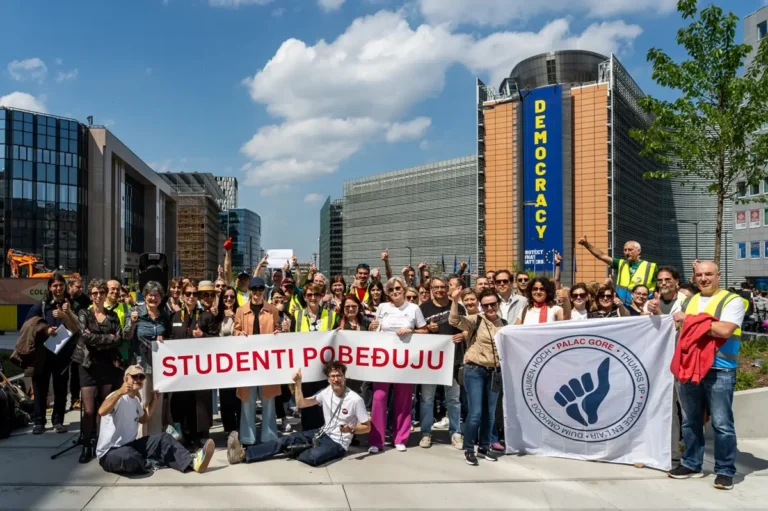
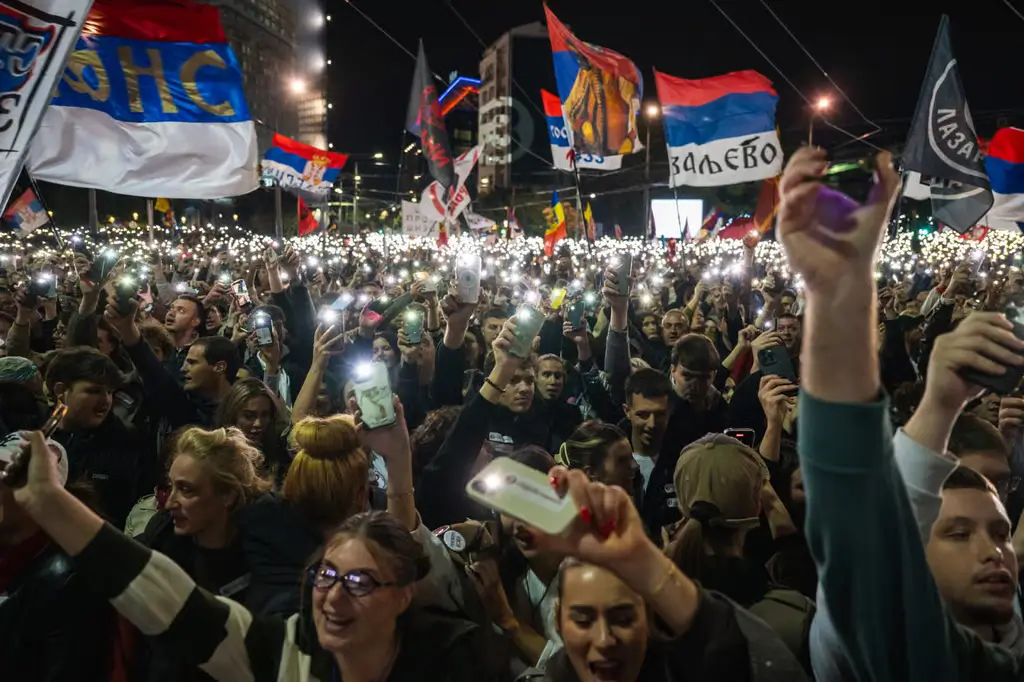
The prime minister resigned in January 2025, a day after tens of thousands blocked a main junction in Belgrade. In March the students led hundreds of thousands through the capital, the biggest anti-government march in a generation.
Vučić and his allies label the protesters foreign agents bent on creating chaos. They have given no evidence, and the students deny being organised from abroad.
Why Serbia’s election came early
The vote was not due until December 2027. Viktor Stamenkovic of Belgrade’s Institute for Political Studies calls the early date “essentially about reducing political risk” for the ruling party.
Vučić cannot run for president again, and Stamenkovic notes that no other figure in the Progressive Party is as popular. His political future now rides on a parliamentary majority.
Read also: Brussels Sees Progress, Watchdogs Count Almost None
A list of doctors, farmers and a rapper
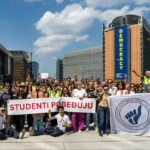
The students registered as a citizens’ list, Students Win, with 250 candidates: professors, actors, farmers and a popular rapper. A cardiologist, Ilija Srdanović, heads it, though the students say that does not make him the next prime minister.
The movement has no single leader. Organisers rotate spokespeople to shield individuals from smear campaigns, and student teams plan to watch polling stations.
Read also: Albania should not fine people for standing near a protest
The only poll published this month, on 20 October by New Serbian Political Thought, gave the students 44.5% to 42.7% for Vučić’s party. Betting odds still favour Vučić. The pollster’s editor said he considered not publishing the numbers because of the government’s reaction to earlier findings.
The monitors are already worried
The EU mission in Serbia, a Council of Europe parliamentary delegation and the OSCE’s election office all warned of deep polarisation. The Council of Europe delegation cited “persistent and credible allegations of surveillance” and concerns for the safety of voters and observers.
In its interim report the OSCE says some priority recommendations from the 2023 election have been ignored, including those on voter intimidation, journalists’ safety, voter roll accuracy and the media regulator. Serbian authorities made no official comment.
CRTA, a Serbian election watchdog, calls the vote already irregular because of intimidation, violence and unlawful surveillance. It calls the decision to align overseas voting hours with Central European time unprecedented: thousands of voters abroad would have to cast ballots late at night or travel far to reach a polling station.
Read also: Albania Closes EU Chapter as Protests Turn Violent
On media, Marko Kmezić, writing for BiEPAG, cites CRTA figures: the public broadcaster RTS gave 96% of its political airtime to the ruling majority, and Vučić alone accounted for half of that coverage.
Brussels gets a problem either way
Kmezić argues that the EU has for years overlooked democratic decline in Serbia in return for cooperation on curbing migration along the Balkan route and access to critical raw materials from the Jadar Valley.
A student win would hand Brussels a different problem. Critics fault the list for saying it would not impose sanctions on Russia, and point to its silence on EU membership and Kosovo.
Igor Novaković of the International and Security Affairs Center says a student government would meet an entrenched bureaucracy, and that a Vučić win would still leave his party with weakened legitimacy and authority.
The EU delegation calls free and fair elections a prerequisite for progress toward membership. The count on Sunday will show whether Brussels meant it.
SOURCES & METHOD
How this article was made. The article rests on five sources. All are media or commentary: POLITICO Europe, the Associated Press (via La Nación), Reuters (via Devdiscourse), Al Jazeera and an op-ed published by BiEPAG. No official election document is among the sources.
Sources
- Politico Europe: Serbia’s protesting students mount serious challenge to Vučić’s power (23 Oct 2026) – the NSPM poll, the pollster’s account of government attacks, and expert views on a student-led government.
- Associated Press (via La Nación): International monitors raise concerns over fairness and safety of Serbia’s election (15 Oct 2026) – statements by the EU mission, the Council of Europe delegation, the OSCE and CRTA.
- Reuters (via Devdiscourse): As Serbia votes, students emerge as greatest threat to Vucic’s long rule (21 Oct 2026) – the movement’s origin and timeline, the student list, the poll, betting odds and criticism of the list.
- Al Jazeera: Serbia’s snap election: Can Vucic outmanoeuvre the student revolt? (28 Sep 2026) – why the vote was called early, the term limit and analyst assessments.
- BiEPAG: Serbia’s Election: The EU’s Test of Democratic Courage (10 Sep 2026, op-ed by Marko Kmezić) – the RTS airtime figures cited from CRTA and the author’s argument on EU priorities.