


On 28 October the Albanian government adopted a package that fines people for staying in a crowd that turns violent, even if they do nothing violent themselves. The measures took effect immediately and need parliamentary approval within 45 days to stay in force. I think the presence fine is the wrong rule, and the parts of the package built around it make it harder to defend.
Table of contents
Some of the package I would support. People who damage property should pay for it, and small businesses hurt by riots should get quick compensation. Prime Minister Edi Rama’s principle is “peaceful protest is protected, violence is punished, and those responsible must pay for the damage.” A government that means that sentence does not need most of what follows it.
The damage is real
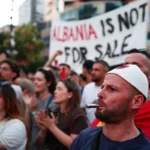
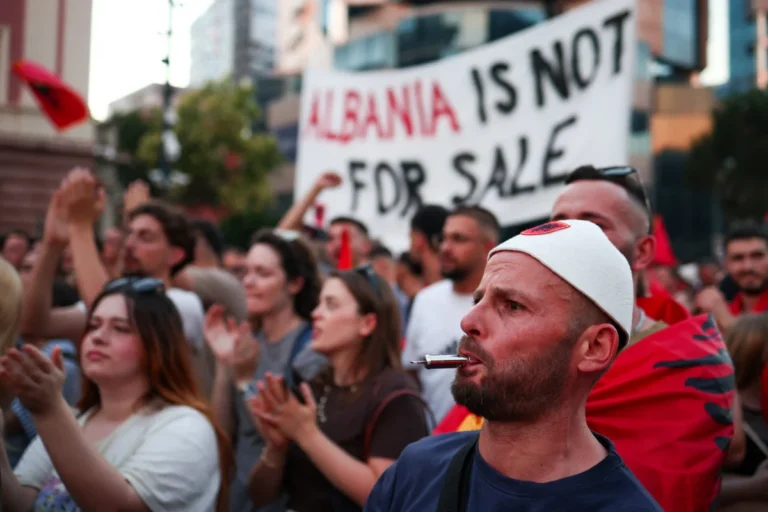
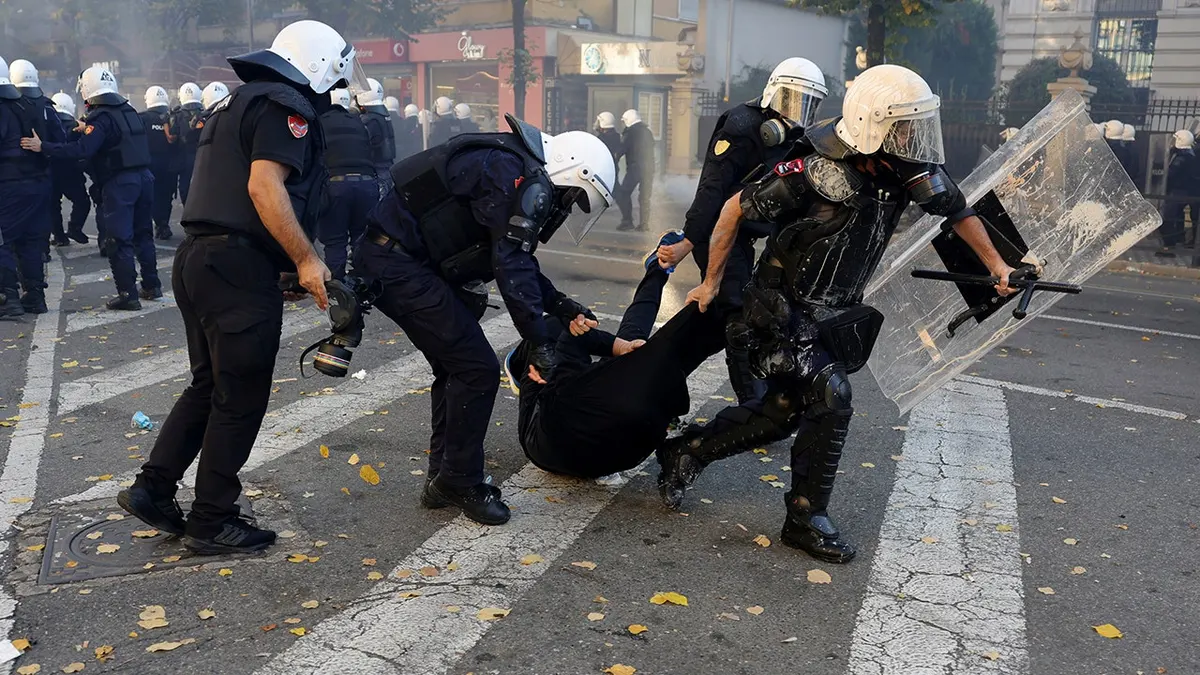
Official estimates put protest-related damage since mid-October above €2 million, and more than 350 people have been injured in clashes with police. The protests began in May against a luxury hotel project in a nature reserve that has been linked to the family of US President Donald Trump, and have widened into demands for Rama’s resignation.
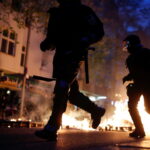
A government facing Molotov cocktails and burned property has a duty to act. Rama has said he drew inspiration from a French Senate bill that would make protesters pay up to €10,000 for damage. The question is which tools are proportionate, and what the package asks of people who did nothing.
What the package contains
Fines of up to 500,000 lek, about €5,500, apply not only to people engaged in violence but to “anyone who chooses to remain in a crowd” that is carrying out violence or looting, or that conceals its identity. Lower fines of 10,000 to 100,000 lek apply for taking part in a prohibited assembly or concealing identity, and up to 500,000 lek for ignoring dispersal orders in certain circumstances.
Read also: Albania Closes EU Chapter as Protests Turn Violent
Police can restrict gatherings for up to 72 hours near educational, healthcare and government institutions when they see a serious and imminent risk of violence. They can ask for removal of social media content calling for violence. A new electronic register lists people referred to prosecutors or under investigation for violent offences at demonstrations.
Border police may use the register to refuse exit permission in certain cases, even without a court-ordered travel restriction. Police must also record dispersal warnings and violent incidents with audiovisual equipment. Parents would be liable for damage by minors, and teachers would be barred from taking children to gatherings.
Why presence is the wrong trigger
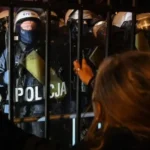
A fine for staying turns uncertainty into liability. Someone has to decide, at the scene and in minutes, that violence is under way and that a given person ought to have left. That someone is a police officer, and the person who disagrees pays first and argues later. Journalists, medics, observers and genuine passers-by are exempt. Who counts as genuine is again the officer’s call.
The recording duty is a real safeguard, because a fine would at least rest on a documented warning. It does not tell a person standing at the edge of a crowd whether the warning applied to them, or where they could go.
The government cites Article 11 of the European Convention on Human Rights and Strasbourg case law as its guide. Then the legal analysis should be published. Whether a person who remains at an assembly where others turn violent keeps the protection of Article 11 should have been settled before the rule took effect, not left to the Constitutional Court.
The register and the exit ban
A register of people who are merely referred or suspected is a list built on police suspicion. The historian Çelo Hoxha, who directs the Institute for the Study of Communist Crimes and Consequences, called travel restrictions of this kind unconstitutional, arguing that executive decisions cannot replace judicial procedures. Legal experts point to Article 38 of the constitution.
Read also: Serbia’s Election Puts Brussels on the Spot
It also becomes a European matter. Rama said he would work with EU countries to keep accused protesters out, and a European Commission spokesperson answered that entry decisions belong to national authorities. Albania is a candidate for EU membership. A candidate that asks member states to act on its police lists is asking Europe to share the consequences of a list nobody has tested in court.
The legal form, and who is not covered
The Socialist group chairman Taulant Balla said the assembly law could be changed through a normative act with immediate effect before parliament approves. That is now what the 45-day rule describes: the rules apply first and parliament decides later. Parliament should treat that period as a real test, with the legal analysis in front of it.
None of the measures, as reported, deals with police conduct. Erjon Vishkulli, 28, suffered a severe eye injury at a demonstration and says a rubber bullet hit him from about 30 metres away. The Tirana prosecutor has opened criminal proceedings. A package that registers protesters before conviction should have an equally clear rule for officers.
The opposition has attacked the package, with Democratic Party group chairman Gazment Bardhi saying that “every letter” of it is unconstitutional. The opposition has its own interest in the fight, and I would not rest an argument on its word. The legal objections stand on their own.
What I would ask for
Limit fines to people who ignore a dispersal order when they had a safe way to leave. Drop the register unless it covers only people charged by a court. Leave exit and entry limits to judges. Let parliament reject the presence fine within its 45 days, and publish the European expert opinions the government says it relied on, including any from the Venice Commission and ODIHR.
SOURCES & METHOD
How this article was made. This is an opinion piece resting on five press reports. The text of the adopted measures was not available, and the reports differ on the fine thresholds and the legal form. No reaction from the EU, the Council of Europe or rights groups to the adopted version was found, and the government’s reply to the criticism quoted here was not available.
Sources
- Euronews: Albania adopts measures to impose fines up to €5,500 on people at protests that become violent (29 October 2026) – the adoption, the 45-day rule, the damage figures and the background.
- Euronews Albania: Albanian government approves new measures to prevent violence during protests (28 October 2026) – fine bands, the register, exit refusal and recording duty.
- Euronews Albania: Rama unveils package against violence and urban anarchy (25 October 2026) – the six instruments, Rama’s principle and the legal references.
- Tirana Times: Albanian government tightens protest laws as crisis deepens (October 2026) – critics, the travel limits, parents and teachers, and the Vishkulli case.
- Eualive: Rama announces harsh anti-violence bill as protests demand his resignation (October 2026) – the exemptions and the fine bands as announced.