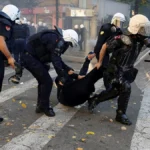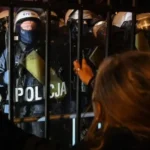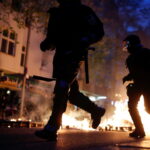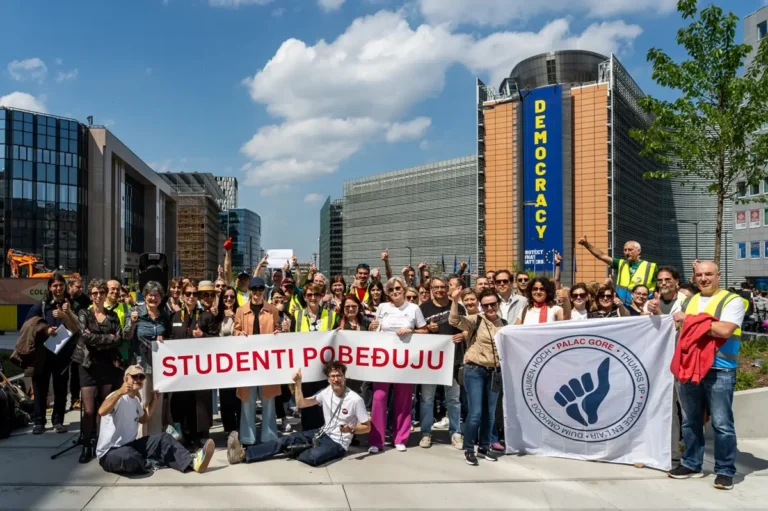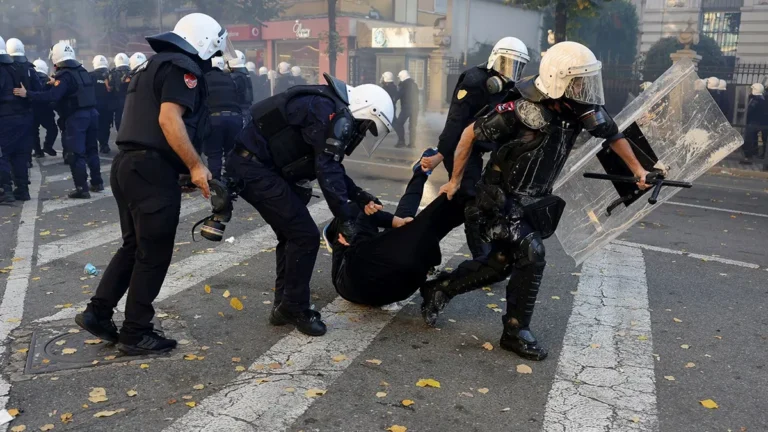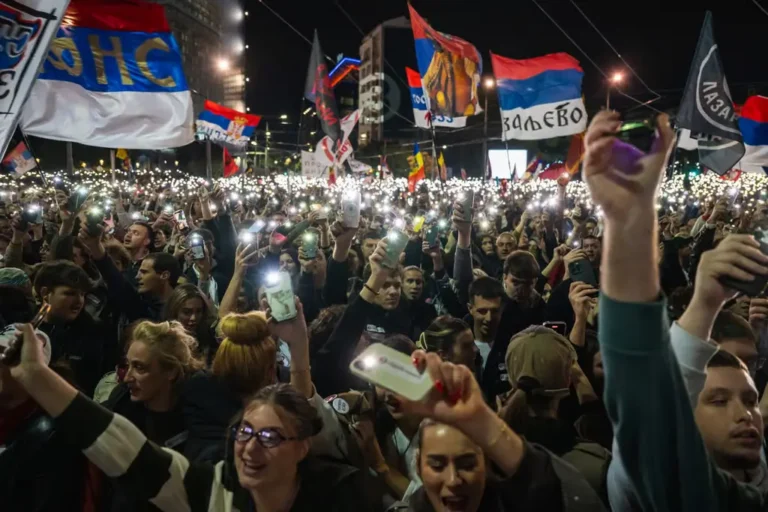



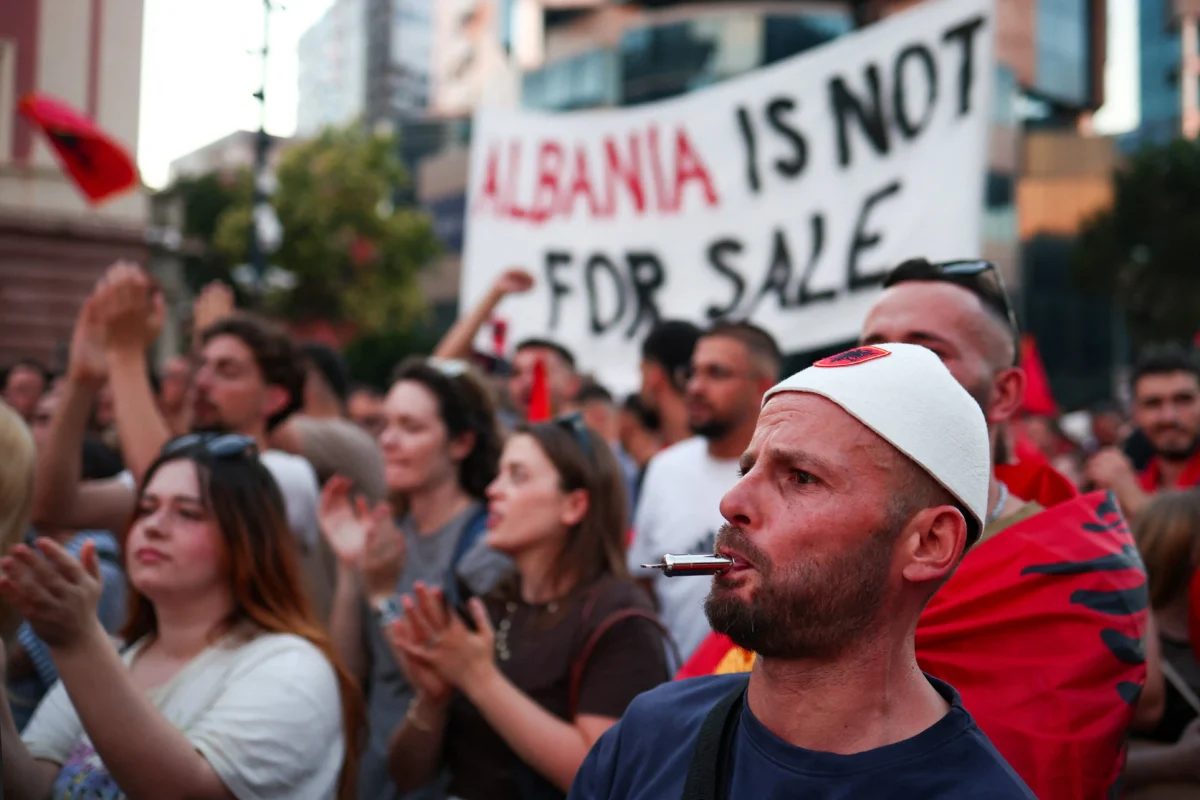
On Tuesday, the Albania protests turned violent. Students in Tirana threw bricks and concrete blocks at the Education Ministry, and police answered with tear gas and water cannon. The same week, the EU provisionally closed another chapter in Albania’s accession talks, its fourth. Enlargement Commissioner Marta Kos said she was confident that more good news would come from Tirana in the coming months.
Table of contents
Anyone living in the EU has a stake in how this plays out. A country admitted today gets a vote on laws that bind every member, and the conditions Brussels sets on police, courts and press decide who gets in.
How the Albania protests outgrew a resort
The protests began on 23 May near Zvërnec on Albania’s southern coast, after private security guards clashed with residents and activists at the site of a luxury resort project linked to Jared Kushner, US President Donald Trump’s son-in-law. The project is estimated at more than €1.4 billion and would affect a protected wetland.
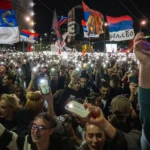
Within weeks demonstrators were also chanting about pensions and rents. By 3 October the movement had held its 126th march, and this week students joined it with demands about tuition fees and jobs after graduation.
Professor Afrim Krasniqi of the Institute for Political Studies in Tirana told Al Jazeera that students protested peacefully for nearly three months and were largely ignored. In his assessment the government often met them with discrediting campaigns and little real dialogue.
Read also: Brussels Sees Progress, Watchdogs Count Almost None
Rama ties his office to Albania’s EU talks
On Wednesday, police said they arrested 65 people. The Health Ministry said Tirana hospitals treated 89, among them 61 police officers. Parliament cancelled its session after protesters smashed windows and damaged property, and police used water cannon.
Prime Minister Edi Rama, in office since 2013, told Reuters in written answers that he will not resign. “We had elections last year, not a revolution,” he said. He added that he was ready to discuss the cost of education, and that attacking institutions and destroying property has nothing to do with the students’ legitimate demands.
His second argument matters more outside Albania. Stepping down, Rama said, would betray the voters who gave him a strong mandate to complete the EU membership negotiations. He won a fourth term last year with EU membership at the centre of his campaign, so his case for staying in office is the accession process itself.
Read also: Albania should not fine people for standing near a protest
Brussels voices concern and closes a chapter
Chapter 20, closed this week, covers enterprise and industrial policy. Kos said the closure brings Albania closer to its ambition of finishing the talks next year. Four of the 33 chapters are now provisionally closed.
The first three closed in July, after the EU judged earlier this year that Albania met its rule-of-law benchmarks. Kos then said the EU counts on Albania to double down on reforms, the rule of law and the fight against corruption in particular.
The EU delegation in Tirana said it was concerned by the violent escalation and called for a proportionate police response after organisers alleged excessive force against protesters and journalists. The Committee to Protect Journalists and partner groups reported that three media workers needed hospital treatment after the protests of 13 October, and asked the EU to raise it with Tirana.
The law Brussels wanted changed is still in force
In June, the Commission said the resort project must comply with the environmental chapter of the accession talks, and that the situation had to be clarified before that chapter closes. It also praised the Albanian state police for letting the demonstrations take place peacefully.
Read also: Who Really Runs the EU? The Answer Depends on the Room
The European Parliament had already called for repeal of the 2024 amendments to the protected areas law and a moratorium on construction in protected areas. On 8 September the Albanian environmental group PPNEA wrote that the amendments remain in force and that parliament had yet to act.
Albania has seen this before. In December 2018 student protests over education costs forced Rama to dismiss eight ministers and announce a Pact for the University, though some demands stayed unmet. Political scientist Sokol Lleshi of the University of New York Tirana says elite defections could channel today’s anger into policy change, and that this round does not yet replicate 2018.
The same grievance over crumbling school buildings and overcrowded classrooms has kept secondary school students in France in blockades for weeks. In Albania it comes with a government to blame and an EU bid to protect.
Rama says elections decide who governs, and Brussels counts chapters. The students outside the Education Ministry sit at neither table.
SOURCES & METHOD
How this article was made. The article rests on nine sources. None is an official EU or Albanian government document. The reporting comes from Al Jazeera, the Associated Press (via OPB) and European Western Balkans (four pieces), statements from the Committee to Protect Journalists and the environmental group PPNEA, and an analysis from EU Perspectives.
Sources
- Al Jazeera: ‘Boiling point’: Why students are protesting against Albania’s Edi Rama (15 Oct 2026) – student grievances, expert assessments, the 2018 precedent and the protests in France.
- European Western Balkans: Rama: I will not resign, governments are changed through democratic elections (15 Oct 2026) – Rama’s written answers to Reuters, arrest and hospital figures.
- European Western Balkans: Student protests in Tirana escalate into violent clashes with police (14 Oct 2026) – the 13 October clashes, the 126th march and the movement’s origin.
- European Western Balkans: Albania provisionally closes Chapter 20 in EU accession talks (14 Oct 2026) – the closure, statements by Kos and the count of closed chapters.
- European Western Balkans: Albania closes its first three negotiating chapters (15 Jul 2026) – the rule-of-law benchmarks and Kos’s call for reforms.
- Committee to Protect Journalists: CPJ, partners call for urgent action after police violence against journalists in Albania (14 Oct 2026) – the incidents of 13 October and the open letter to the EU.
- EU Perspectives: From flamingos to pensions: Albania’s protest puts Brussels on the spot (17 Jun 2026) – the Commission’s June statements, the resort project and the start on 23 May.
- PPNEA: Press release to the Albanian Parliament on protected areas (8 Sep 2026) – status of the 2024 amendments and the European Parliament’s call for repeal.
- Associated Press via OPB: Riots erupt in Albania’s capital as students join anti-government movement (14 Oct 2026) – the EU delegation’s statement.