


A border guard in Poland or Finland can count on EU money for border surveillance. A person held at the same border for screening can count on an independent monitor only if their country has built one and paid for it.
Table of contents
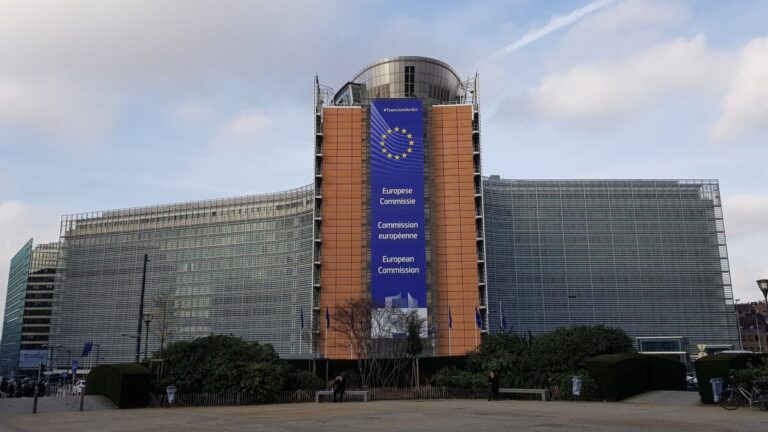
Since 12 June 2026 the EU’s new asylum rules oblige every member state to run such a monitoring mechanism, a body that checks whether fundamental rights are respected during screening. The Commission’s papers put hundreds of millions of euros on border drones and name no amount for those monitors.
Border drones come with numbers
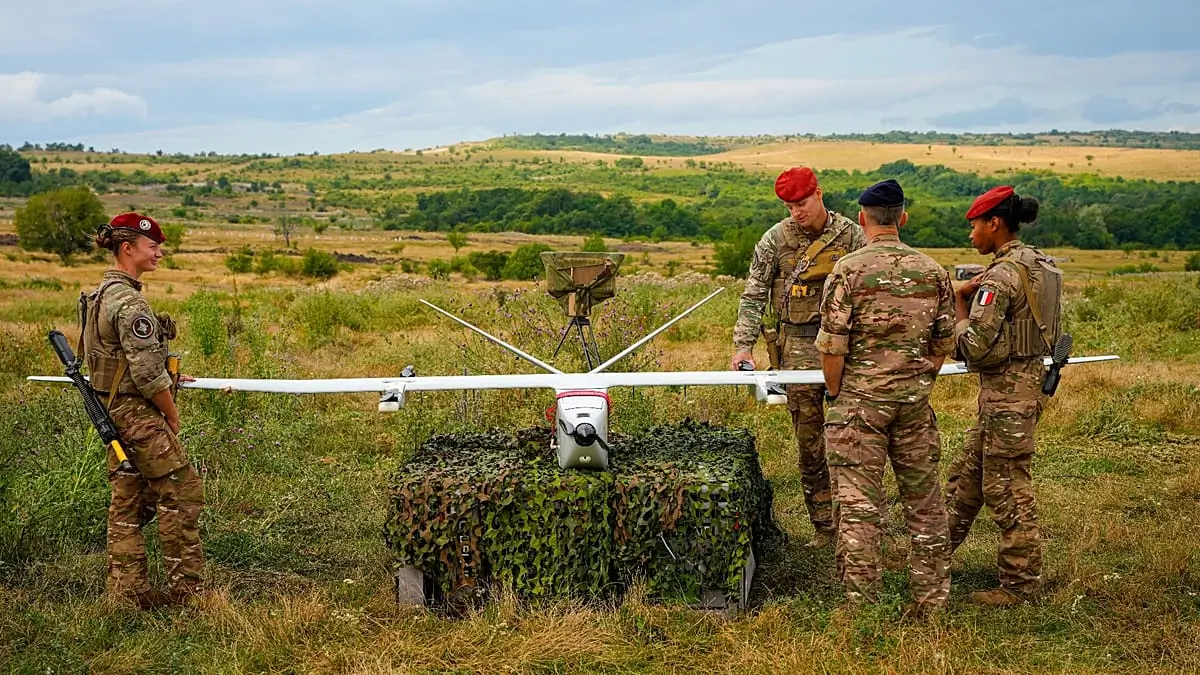
An annex to the Commission’s pre-summit migration letter, published by EUobserver, lists a EUR 250 million call for drones and counter-drone systems. Applications worth more than EUR 500 million are being assessed, and the Commission has added EUR 132.9 million from its Thematic Facility for selected projects.
A second call of EUR 169.6 million will buy uncrewed airborne and seaborne equipment that member states make available to Frontex. Euronews reported that the drone funding can cover up to 90% of project costs.
Read also: Europe’s New Migration Rules Turn Borders Into Waiting Rooms
Border surveillance money has also gone to the countries facing Russia and Belarus: Poland EUR 52 million, Finland EUR 50 million, Estonia EUR 19.8 million, Latvia EUR 17 million and Lithuania EUR 15.4 million.
The monitors’ bill belongs to the member states
The Screening Regulation (Regulation 2024/1356) tells each member state to set up the mechanism and to equip it with “appropriate financial means”. The cost therefore lands in national budgets. The Commission’s EUR 3 billion Pact allocation covers the whole package, and its May report on the Pact says only that member states should secure “adequate financing, staffing and training” for the mechanism, without an amount.
Read also: Albania should not fine people for standing near a protest
The same report found that Belgium, Greece, Hungary, Italy, Malta and Sweden “have not yet concluded arrangements” for monitoring fundamental rights in border procedures. Most other states were finalising theirs, often through national ombudspersons. That is the position as of May, and the report does not say how many of them were funded.
The European Council on Refugees and Exiles (ECRE) was blunter in a workshop description: states were “not currently assigning a great deal of importance or urgency” to the mechanisms. Eleonora Testi, a senior legal officer at ECRE, told The Parliament Magazine that ombuds institutions “cannot receive funding, in principle, from a government”, that EU funds go directly to interior ministries, and that some ombudspersons took on the new duty without extra money.
Read also: Europe’s Surveillance Rules Are Being Written Around the Exceptions
A funded monitor may still not see the border
The mechanism covers screening and the asylum border procedure. Başak Yavçan, head of research at the Migration Policy Group, told the same magazine that it does not cover border surveillance itself and asked how it “will deal with push backs at the border”.
The EU’s fundamental rights agency (FRA) issued guidance on setting up the mechanism in December 2024, ran workshops for monitoring staff in April 2026 and is preparing methodological guidance, according to the Commission’s report.
One side has a price tag
The Commission can tell EU leaders how many hundreds of millions of euros are heading to drones. For the people who are supposed to watch what happens at those same borders, it has told member states to find adequate financing.
SOURCES & METHOD
How this article was made. The article rests on seven sources. Four are official: Regulation (EU) 2024/1356, the Commission’s state-of-play letter on the Pact on Migration and Asylum (a copy hosted by the Dutch Senate), its annex (published by EUobserver) and the EU Fundamental Rights Agency’s migration bulletin. Euronews and The Parliament Magazine supply reporting on drone funding and readiness, and ECRE a workshop on monitoring mechanisms.
Sources
- EUR-Lex: Regulation (EU) 2024/1356 introducing the screening of third-country nationals (14 May 2024) – Article 10 requires an independent monitoring mechanism and “appropriate financial means”.
- European Commission: State of play on the implementation of the Pact on Migration and Asylum, COM(2026)196 (May 2026) – states without monitoring arrangements, financing remark, FRA guidance, EUR 3 billion allocation.
- European Commission: Annex to the letter on migration, published by EUobserver (October 2026) – drone and Frontex equipment calls and border surveillance allocations.
- Euronews: EU adds 130 million to drone funding in border security push (2 October 2026) – drone call and the 90% co-financing rate.
- The Parliament Magazine: The migration pact is here. But the EU isn’t ready – ECRE and Migration Policy Group comments on funding and scope of monitoring.
- ECRE: Workshop on monitoring mechanisms (May 2026) – states’ low priority for the mechanisms.
- FRA: Migration bulletin 2/2026 – Pact instruments apply since 12 June 2026 and require national monitoring mechanisms.