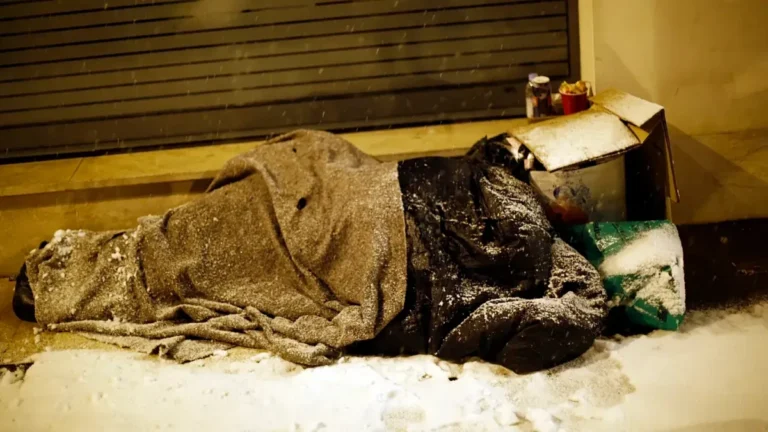
Ministers meeting in Luxembourg on 19 October are expected to adopt the homelessness recommendation, a Council text on housing exclusion, and it binds no government to anything. For the more than one million people the European Commission counts as homeless in the EU, 400,000 of them children, it offers a list of things member states should do: draw up national strategies, set their own targets and report to Brussels every five years.
Table of contents
A homelessness recommendation nobody has to follow
The Commission’s proposal says in its own words that it “does not impose binding obligations or harmonise national legislation.” Housing policy stays with the member states, and the instrument was chosen to keep it there. The text is concrete in places: “every person sleeping rough receives an offer of emergency accommodation”, people in temporary shelters get help to reach secure long-term housing, and governments set goals that are time-bound and measurable.
What the text leaves out is a date. All member states committed in 2021 to work toward ending homelessness by 2030, and the recommendation sets no EU-wide deadline for national goals. Each government writes its own targets. The draft was discussed four times between May and October before it reached ministers.
FEANTSA, the European federation of organisations working with homeless people, calls the proposal “insufficiently ambitious and overly prescriptive.” It also says reporting every five years is “too infrequent to ensure forward momentum” and asks for a progress report every two years.
The count is a guess
Success needs a baseline, and the EU has none. The Commission’s housing plan says harmonised data on homelessness does not yet exist. The recommendation cites an OECD estimate of roughly one million homeless people in the EU, and the housing plan puts the number above one million, with about 80,000 sleeping rough. The recommendation names differences in definitions, monitoring systems and data collection as the reason comparable EU figures are limited.
A separate estimate in the 2026 overview by FEANTSA and Fondation pour le Logement reaches about 1.44 million people sleeping rough or living in emergency accommodation and shelters across Europe. That figure is an extrapolation from point-in-time counts in 12 countries, and Bulgaria, Cyprus, Greece, Malta and Croatia have no reliable national figures.
Read also: Commission Cannot Cost the EU Kids Act
The recommendation asks governments to improve data collection and align the criteria their services use. Until they do, a review every five years compares numbers that were never built to be compared.
The money has to come from funds that already exist
The proposal states that it has no direct budgetary implications for the EU. It points governments to existing instruments, among them ESF+ (the European Social Fund Plus), the regional development fund, InvestEU and the recovery facility, and to the next long-term budget for 2028 to 2034.
The housing plan lists at least EUR 43 billion of housing-related investment already mobilised under the current budget, and estimates that adding about 650,000 homes a year would cost roughly EUR 150 billion annually. For homelessness itself it announces a dedicated workstream in the Pan-European Investment Platform, planned for the third quarter of 2026.
FEANTSA objects that the proposal concentrates on innovative financing and neglects “the essential role of grants and subsidies” for households with very low incomes. Its 2026 overview adds a warning about the 2028 to 2034 budget: homelessness is listed as an objective, but the social component may be cut.
Ireland shows how fast the number moves
In the week of 23 to 29 March 2026, 17,517 people were in emergency accommodation in Ireland, a record and 13.6% more than a year earlier, according to Department of Housing figures reported by the Irish Times. They included 5,571 children, up 19.1%. The Simon Communities link the rise to rental pressures and say eviction notices in the private rental sector rose 45% in recent months.
Other countries in the FEANTSA overview move in the same direction at different speeds, and homelessness rose in almost all countries with comparable data. Germany counted 474,675 people in temporary accommodation on 31 January 2025, 8% more than a year before, although part of that rise comes from an expanded statistical system and 29% of those recorded had fled the war in Ukraine.
In France about 65% of the roughly 8,300 daily requests for emergency accommodation recorded in May 2025 went unmet. In the Netherlands 33,000 people aged 18 to 65 were registered as homeless in 2024, up 7.8%. The overview also reports a 2026 Irish bill that would make emergency accommodation conditional on habitual residence.
The pressure behind these numbers is documented by the Commission: nominal house prices rose by more than 60% between 2013 and 2024, average rents by around 20%, and residential building permits fell by about 22% from 2021 to 2024.
On evictions the recommendation asks governments to “strengthen the prevention from and protection against forced and arbitrary evictions”, and it cites an OECD estimate of at least 2.4 million formal eviction procedures started every year across its member countries.
Read also: Europe’s Farm Money Flows Uphill
The SOLIDAR network calls the missing reference to “incisive regulation of the private housing market”, rent caps included, a missed opportunity.
Finland shows what a strategy needs
The best defence of a soft text goes like this: housing is a national competence, a recommendation gives governments a common vocabulary and a place in the European Semester (the EU’s yearly economic and social policy cycle), and the Semester has already moved.
The 2026 round included homelessness for the first time, and twelve countries received recommendations on social housing, according to the FEANTSA overview. Finland is the evidence that strategy works. Under Housing First, its policy since 2008, homelessness fell by about 40% between 2008 and 2019 and kept falling until 2023.
But Finland also shows where the model slips. On 15 November 2024 the country counted 3,806 single homeless people, 377 more than a year earlier and the first increase since 2012, and 63% of them were staying with friends or relatives. Municipalities named the lack of small affordable homes, weaknesses in social security and income support, high living costs and more payment defaults.
The FEANTSA overview records 4,579 homeless people in 2025, up 20% on 2024 and 34% above the 2023 low of 3,429, and cites cuts of about EUR 130 million to NGO funding over 2023 to 2027 as a driver.
That matters for what the Council is about to adopt. The recommendation asks member states to adopt or revise strategies, and the Commission notes that strategic frameworks on homelessness already exist in 19 of them.
What the vote on 19 October buys
Ministers are asked to tell governments to offer every rough sleeper a bed, without a date, without a budget line of its own and with a report to the Commission every five years. Whoever sleeps outside this winter will be counted, if at all, by methods that differ from country to country.
BASIS OF ANALYSIS
Basis of analysis. The analysis rests on eleven sources. Six are official or institutional: the Council’s employment and social policy meeting of 19 October 2026, the Commission’s proposal for a Council recommendation (a copy hosted by the Romanian Chamber of Deputies), two further Commission pages, the European Affordable Housing Plan (a copy on the Council document register) and statistics from the Finnish housing agency ARA/VARKE. Analysis and positions come from FEANTSA (two pieces) and SOLIDAR, and news from Agence Europe and the Irish Times.
Sources
- Council of the EU: Employment and social policy Council, 19 October 2026 – the agenda item on the housing exclusion recommendation.
- European Commission: Proposal for a Council Recommendation on fighting housing exclusion, COM(2026) 540 – the operative text, non-binding status, five-year reporting and eviction provisions.
- European Commission: Council on fighting housing exclusion (anti-poverty package, 2026) – housing figures, recommended measures, funding and absence of an EU deadline.
- European Commission: The European Affordable Housing Plan (December 2025) – homelessness estimates, the 2030 commitment and investment figures.
- Agence Europe: EU27 invited to approve Council recommendation on housing exclusion – the adoption timetable and the negotiation of the draft.
- FEANTSA: Analysis of the Commission proposal (4 June 2026) – criticism of targets, funding and reporting frequency.
- FEANTSA and Fondation pour le Logement: Eleventh Overview of Housing Exclusion in Europe (2026) – Europe-wide estimate and country figures for Ireland, Germany, France, Finland and the Netherlands.
- SOLIDAR: Council recommendation on fighting housing exclusion, an imperfect welcome tool – criticism of the missing market regulation.
- Irish Times: Child homelessness up by 19% since last year (24 April 2026) – Irish emergency accommodation figures for March 2026.
- ARA/VARKE: Homeless people 2024 – Finnish homelessness count for 2024 and the causes named by municipalities.
- European Commission: Finland, Housing First model – the long-run decline in Finnish homelessness since 2008.