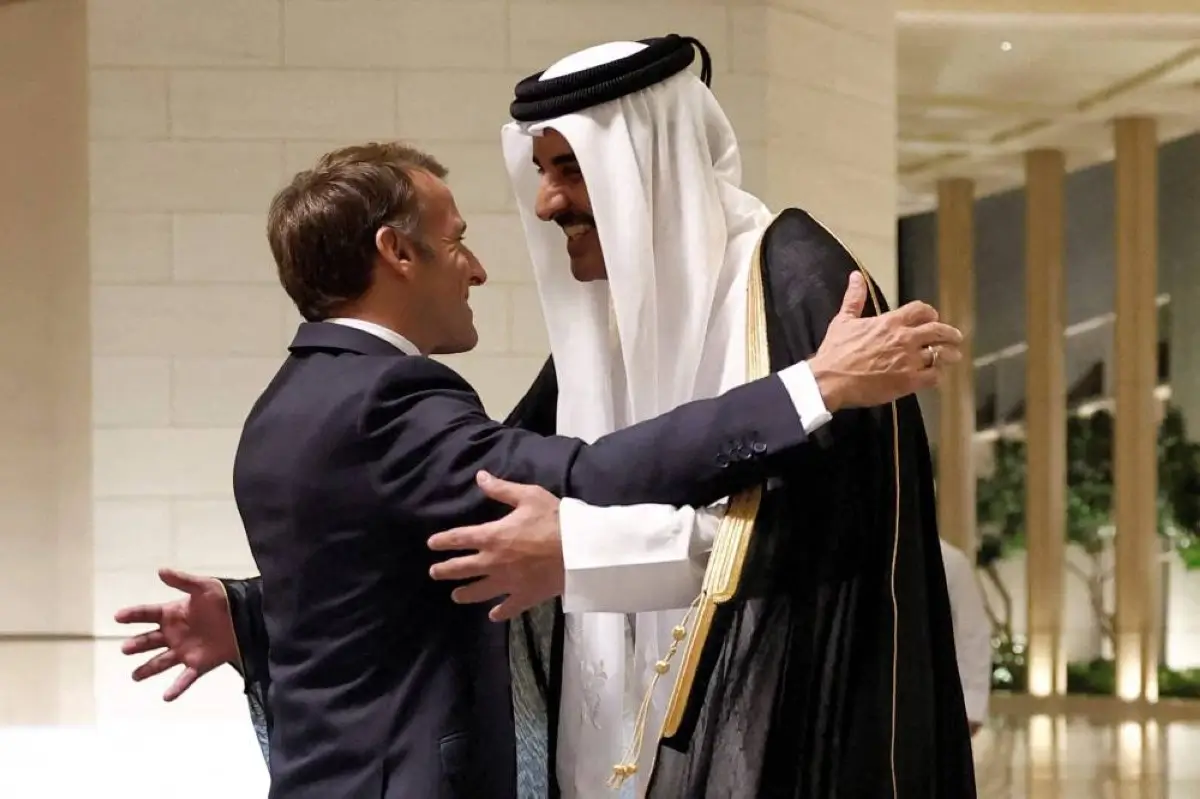
When a president flies to four Gulf capitals to find diesel, the real price never appears on the invoice. Emmanuel Macron opened his tour in Kuwait on 19 October and moved on to the UAE, Bahrain and Qatar, with executives from TotalEnergies and Engie in his delegation. I think the bill will be paid in something other than euros.
The French presidency says the trip secured an extra 200,000 tonnes of diesel a month, about 100,000 from the UAE and about 100,000 from Bahrain. Together with Saudi deliveries, France’s commitments reach 295,000 tonnes a month, just over 10% of its consumption. Kuwait pledged diesel and kerosene for Mayotte and Réunion.
Ten percent buys a headline
Just over 10% sounds like a rescue. The rest of French consumption stays exposed to a Strait of Hormuz that Iran has blockaded during an eight-month war, and up to 20% of French petrol stations have run out of petrol or diesel at various times. The presidency hopes to cut pump prices by 12 to 18 cents a litre from next month, about 5 to 8%.
Francis Perrin, an energy expert at the French institute IFRI, does not expect the visit to affect fuel prices. Gulf producers find firm commitments difficult while the region is unstable. A deal with no stated duration for the UAE and Bahrain volumes is a promise that can be withdrawn the day the next missile lands.
Read also: Europe’s Gas Storage Target Bends to 70%
The G7, chaired by France, agreed in early October to draw up to 100 million barrels from strategic reserves, and France is releasing 10 million barrels of diesel from its own stocks. Those measures move volumes this winter without a favour from any Gulf capital. I would have led with them.
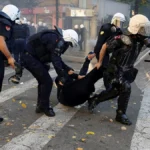
The timing tells its own story. A weekend of violent protests over the cost of living ended with more than 2,500 arrests, and the tour opened on the Monday. I read a government that needs a photograph of action, and a Gulf visit produces one.
The invoice arrives in soldiers
Gulf diesel comes bundled. In late September Macron said France would use military means to protect Saudi Arabia’s Yanbu oil terminal on the Red Sea, which has faced Houthi attacks. Pascal Confavreux, spokesperson for the French foreign ministry, said last week that “operational elements” had been deployed.
On the first day in Kuwait, France signed eight agreements on defence, AI and investment. The UAE, France’s largest Gulf trading partner with €10.8bn of trade in 2025, bought 18% of its arms and defence imports from France that year, second only to the US at 42%, according to SIPRI figures.
Andreas Krieg of King’s College London calls this a central strategic dilemma: deployments that start as protection can grow into operational commitments. I agree, and I would add that a commitment made to secure fuel is the hardest kind to withdraw, because every shortage becomes an argument for staying.
Read also: A Sanctioned Tanker Sits Off Bulgaria. Europe’s Port Checks Would Not Have Stopped It
Patrick Pouyanné, chief executive of TotalEnergies, travelled with Macron and said the deals would “reassure the French”. Reassurance is the right word. It is what a government buys when it cannot yet buy supply.
Who voted for this trade
French voters deserve a vote on whether their energy security should be paid for with radars and troops on the Red Sea. The government has framed the trip as fuel logistics, and the defence chapters travel in the same briefcase without a separate debate.
Europe likes to describe its energy problem as a climate question. This tour shows it is a question of leverage. Each barrel of Gulf diesel that France accepts today gives Gulf capitals a reason to expect French protection tomorrow, and a country that buys its fuel with security guarantees has handed over part of its foreign policy.
A cheaper pump price in November would be real, and I would not wave it away. But a 5 to 8% cut that rests on volumes with no stated end date is a poor price for open-ended military commitments. Voters should demand to read the second invoice before the next shipment arrives.
Sources
- Al Jazeera: Macron lines up more Gulf diesel as France battles soaring fuel prices (20 Oct 2026) – volumes, price target, G7 reserves.
- Al Jazeera: As Macron visits Gulf, can France forge its own energy-for-security future (20 Oct 2026) – Yanbu deployment, SIPRI and trade figures, Krieg.
- Khaleej Times (AFP): President Macron’s Gulf tour seeks oil security (19 Oct 2026) – itinerary, protests, Perrin.
- Al-Monitor: Macron opens Gulf tour after violent protests in France (19 Oct 2026) – aims of the tour, arrests, Perrin.