



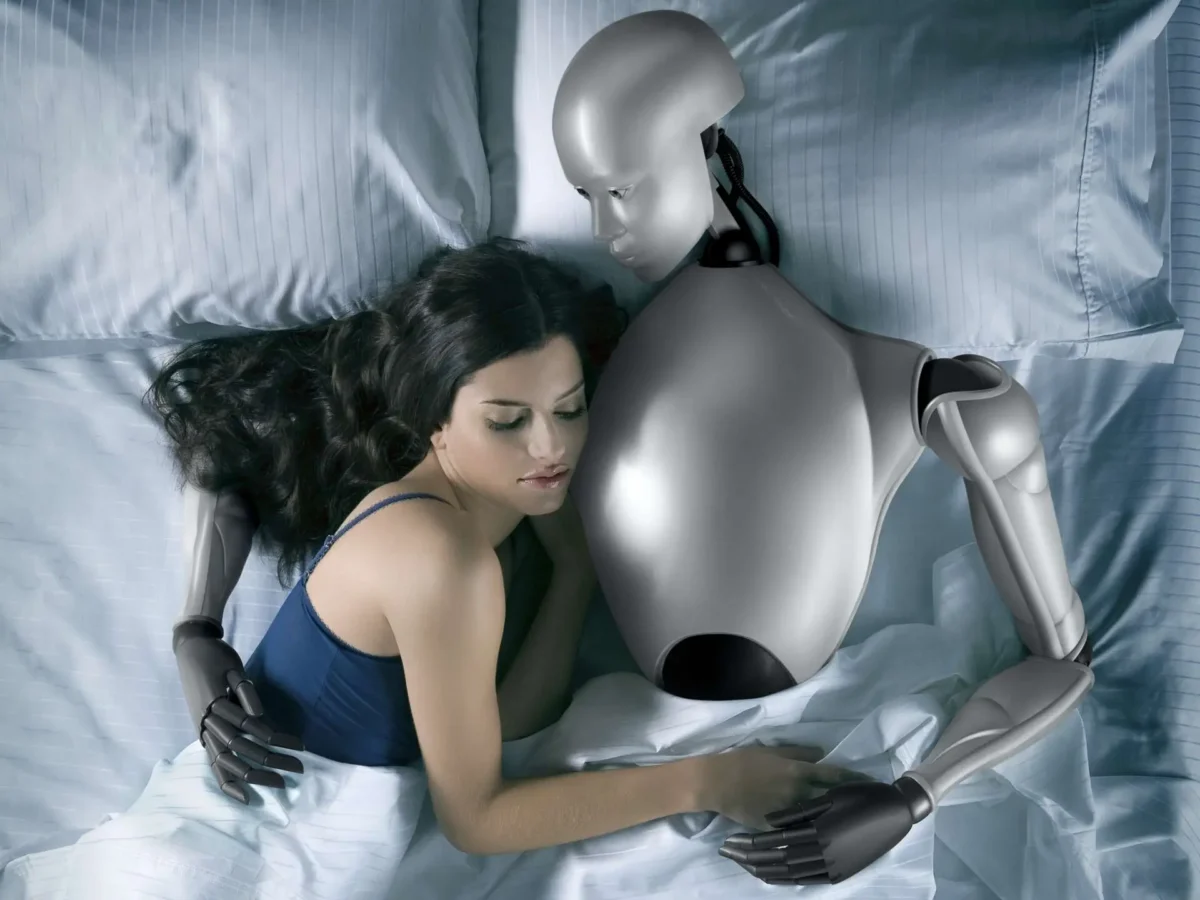
In September 2017 a sex robot called Samantha went on display at the Ars Electronica festival in Linz, Austria. Visitors groped her so roughly that two of her fingers broke, and her makers took her away “heavily soiled”. Her designer, Sergi Santos of the Barcelona firm Synthea Amatus, called the crowd “barbarians”. In law, nothing had been done to anyone. That is the puzzle, and it deserves a serious answer even though it sounds absurd.
Table of contents
Can you rape a robot?
In the strict sense, no. Rape is a wrong done to a person. It violates a will, a body and a life that belongs to someone. A machine has none of these. Samantha did not feel her fingers break, and nobody was home to be violated. Anyone who says the word applies literally owes us an answer to the question of who the victim is, and I cannot find one.
So the word is wrong. The question behind it still stands, because the act has a perpetrator even when it has no victim, and we should look at him.
What the act reveals
The philosopher Robert Sparrow of Monash University argues in “Robots, Rape, and Representation” that the way people treat robots shows what kind of people they are. Someone who acts out sexual violence on a machine displays vices: cruelty, intemperance, sexism. Virtue ethics asks what an act expresses and what it trains, and the answer here is unflattering.
Kant made a similar move about animals. He held that we owe them no direct duties, yet he warned that cruelty to animals damages the human capacity for compassion. A robot is a far more convincing target than a dog. It has a human shape, answers in a human voice and reacts when touched. Rehearsing violence on something built to resemble a person is rehearsing it on a likeness of one.
Defenders say the rehearsal is harmless, even cathartic. Nobody has shown that. Nobody has shown the opposite either. We do not know whether such an outlet drains an impulse or feeds it, and I would not volunteer a population to find out.
The sex robot designer’s dilemma
Sparrow points at the people who build these machines. A robot that can say no and be overridden simulates rape. A robot that never refuses teaches that a partner is always available. Both options carry a message, and a company selling either one is making a statement about how sex works.
Read also: When Any Video Can Be Fake, Who Tells the Court?
This is where I take a position. A manufacturer who builds a resistance setting, a mode in which the machine protests and the user continues, is selling the rehearsal as a product feature. A sex robot that simulates sexual violence is a product with a defect, whatever the marketing department calls it. That one should be off the market.
The strongest objection
The best objection comes from people I respect. Kate Devlin, a British AI researcher who writes about intimacy and technology, has called the campaign to ban sex robot research shortsighted and described it as “a demand for silence before anyone has had the chance to speak”. She sees possible therapeutic uses, and she warns that prudishness has done lasting harm.
Kathleen Richardson, who co-founded the Campaign Against Sex Robots, takes the opposite view and argues that the machines entrench objectification. Devlin shares part of that worry. Both agree that the ethics of gender and sex in robotics is long overdue for discussion. They are right about that, and this essay is a small contribution to it.
A harder form of the objection asks why we police this when we do not police violent video games. The difference lies in what is imitated. A game imitates a fantasy world. A humanlike body built for intimacy imitates the most private encounter between two people.
The law has already moved
Societies have already decided that “it is only an object” is not a complete defence. On 4 September the British government announced that a bill banning child-like sexual abuse dolls had reached committee stage. It would make buying, selling, making or owning them a crime punishable by up to five years in prison. The government says police have found such items while investigating child abuse suspects, and that no specific offence covered them.
The doll feels no harm either. The law prohibits it because of what the object stands for and what it enables. Once that principle is accepted, the argument shifts from whether objects can ever be morally loaded to which objects, and where the line sits.
Where AI changes the question
Artificial intelligence moves the line. Samantha was a body with a script. Put a modern language model inside and the machine can plead, bargain and sound afraid. It will do so fluently, and it will feel like a person on the other end of the conversation.
Almost every serious researcher believes that today’s systems do not suffer. Almost none can prove that a future system will not.
Read also: Brussels Pushed Its Hardest AI Rules Back 16 Months
Consider the asymmetry. If we treat a system that only simulates distress with some restraint, we lose a little and exercise a virtue. If we treat a system that does experience distress as a thing to be used, we have done something terrible without knowing it. The prudent rule is to not build machines whose entire purpose is to perform being violated.
There is a second reason, and it concerns us rather than them. Whatever the machine is, the person at the keyboard is real, and so is the habit he is forming.
What should happen next
I do not want a moral panic or a ban on intimacy technology. Adults will buy these machines, and most of them will use them harmlessly. I do want three lines drawn.
No product should be sold with a mode designed to simulate sexual violence or refusal that the user is meant to overcome. No company should market a humanlike AI companion on the promise that it can never say no. And regulators should stop treating this as a joke topic. The European Commission is rewriting its digital rulebook anyway, and it can add a sentence on AI products built for sexual use.
Can you rape a robot? No. Should a person want to, should a company profit from it, and should a society shrug? The honest answer to each of those is no as well.
Opinion pieces on ExtraFokus.eu reflect the views of their authors.