


If your company builds cars, wind turbines, factory motors or defence electronics in Europe, the magnets inside them most likely come from China. Europe depends on China for 98% of its rare earth magnet demand, according to a January analysis by Investment Monitor, and Germany took nearly 90% of its permanent magnet imports directly from China in 2024, KfW Research found.
Table of contents
On 9 October the EU announced its rare earth deal with Beijing: China is willing to keep approving the export licences those magnets need. On 10 November a one-year pause on China’s harshest export rules is dated to end.
The rare earth deal runs on a stopwatch held in Beijing
Trade Commissioner Maroš Šefčovič and China’s Commerce Minister Wang Wentao met in Beijing on 8 and 9 October for the second round of EU-China trade and investment consultations. China said it is willing to keep facilitating licences for rare earths and permanent magnets through a fast-track “green channel”, according to the EU’s summary and the Chinese side’s account in China Daily.
In return the EU will work with member states on priority licences for dual-use goods (civilian products with military uses) going to China, and the sides agreed to give advance warning and more transparency when companies are added to or removed from export-control lists. The next checkpoints are a ministerial video conference in January 2027 and a third round of consultations in March 2027, both after the pause is dated to end.
Šefčovič called the result a “crucial first step” and added that it was only a first step. The economist Alicia García-Herrero (Natixis and Bruegel) measured the whole package in money: the understandings are worth a few billion euros against an EU trade deficit with China of about €360 billion, and “China’s main prize may be time”.
Read also: Europe's Gas Storage Target Bends to 70%
The pause that ends on 10 November
China suspended for one year the October 2025 rules that alarmed European industry. Announcement No. 70 of 2025, issued by the Commerce Ministry and the customs administration on 7 November 2025, suspended six announcements dated 9 October 2025, among them the rules on rare earth items of foreign origin and on rare earth technologies.
The suspension runs until 10 November 2026. Four days later the Commission said it covers the EU, and Šefčovič put it this way: “China confirmed that the suspension of the October export controls applies to the EU.”
Older controls stay in force. Since April 2025, exporters of seven medium and heavy rare earths, among them dysprosium and terbium, need case-by-case licences, and those licences extend to permanent magnet materials.
The fast track speeds up approvals under that licence system. When the system hit in 2025, Chinese magnet shipments fell about 75% year on year within weeks and only about a quarter of European licence requests were approved, the Atlantic Council analyst Theodor Westerlund Moberg writes.
Brussels’ own backup is still mostly on paper
The Commission’s answer is the RESourceEU plan of 3 December 2025. The plan promised a Critical Raw Materials Centre in 2026 to run stockpiling and joint purchasing, a stockpiling pilot from early 2026, joint purchasing through a raw materials platform from March 2026, and €3 billion of EU funds mobilised within twelve months, according to the IEA’s policy database.
In October 2026 the Centre is still a legislative proposal. Agence Europe reports that Parliament’s industry committee was asked to finalise its position on 8 October, and that compromise amendments would have the Commission propose a seat for the Centre by the end of December 2026 and Parliament and Council decide it by 1 January 2028 at the latest.
The projects meant to produce material look equally slow. The Commission approved 60 strategic projects in 13 member states and 13 projects in third countries, requiring about €28 billion, the Atlantic Council analysis says. ODI Global counted at least €7.5 billion in commitments and found that 40% of the projects have no funding.
Three in four projects with near-term production targets are behind schedule or cannot be verified, and the analyst expects none of the non-binding 2030 targets of the Critical Raw Materials Act (10% domestic extraction, 40% domestic processing, 25% recycling) to be met on schedule.
Read also: A Sanctioned Tanker Sits Off Bulgaria. Europe's Port Checks Would Not Have Stopped It
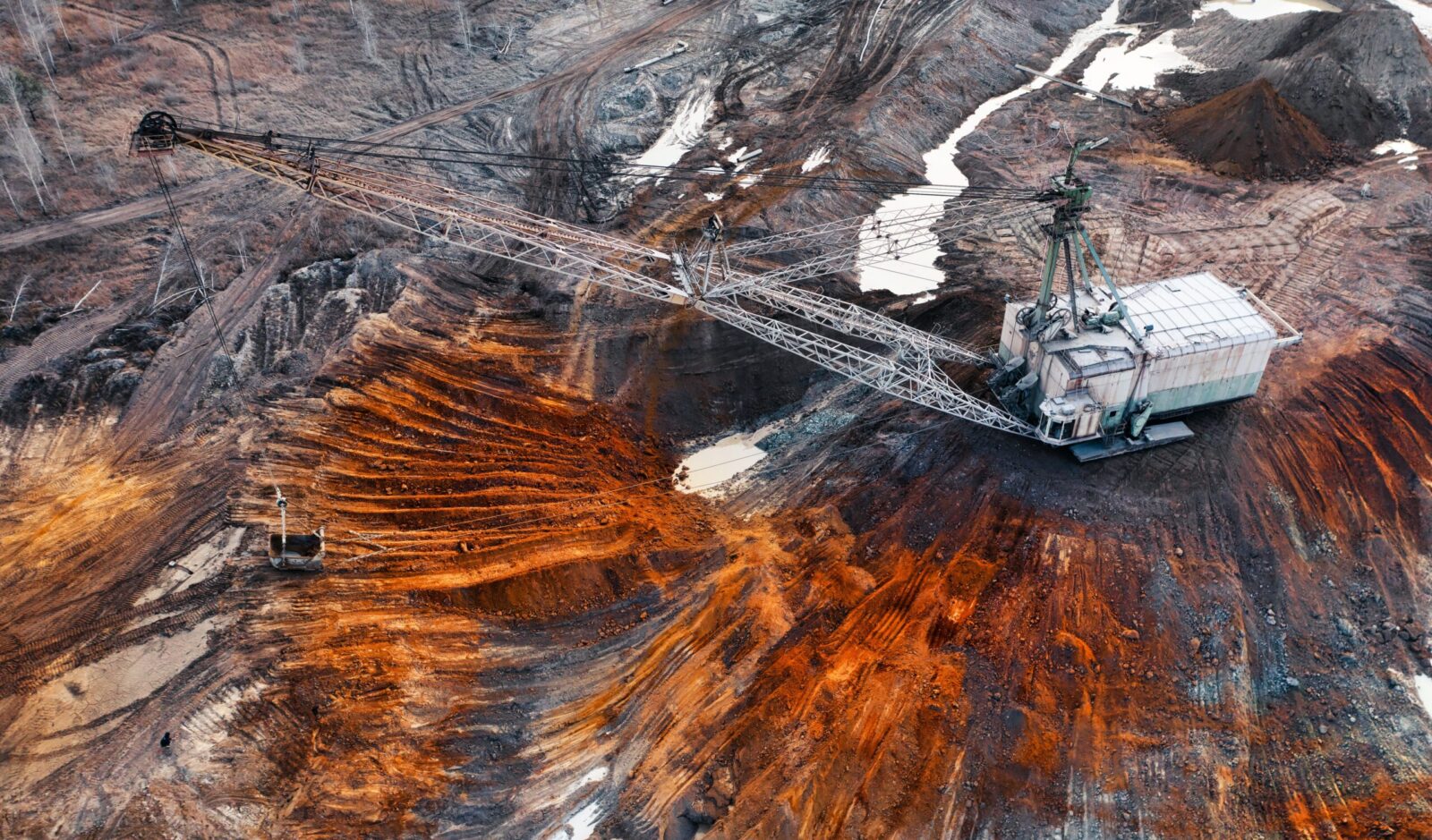
Mines cannot fix a refining gap
China controls roughly 91% of global refining capacity, which the Atlantic Council calls its real source of leverage. La Rochelle in France is one of the few non-Chinese plants able to separate all seventeen rare earths, and it produces about 4,000 tonnes a year, roughly 1.5% of China’s total.
KfW puts EU demand for key magnet rare earths at up to 6,000 tonnes a year by 2030; net imports of magnet rare earths were 244 tonnes in 2024. In Germany, 22% of manufacturing value added involves goods containing rare earths, a KfW study cited in the same paper found. “The EU cannot mine its way out of its dependence on China,” is the Atlantic Council’s summary.
The same Act caps imports from any single third country at 65% of annual needs by 2030, and the KfW authors judge it difficult for the EU to get below 65% reliance on China even with import diversification. Private money hesitates for a reason the analyst names: investors cannot easily price the risk that governments restrict exports for strategic reasons, and Northvolt’s collapse shows how hard it is to compete with Chinese costs.
The Atlantic Council recommends price floors, offtake guarantees and allied investment. The RESourceEU plan says the Commission will explore price floors.
The best case for the fast lane
Defenders of the deal have a case. A faster licence queue helps the firms waiting in it, and the package also moderates Chinese hybrid car exports and lowers Chinese tariffs on EU goods worth almost €4 billion, saving at least €225 million in duties, according to Šefčovič.
The answer sits in the verbs. China is willing to facilitate, the Commissioner calls it a first step, and governments differ on how far to trust it: in a joint document Germany and France called for measures including “an immediate cut-off from the internal market if needed”, Euronews reports. A licence handed out by the country that controls the supply can be slowed without being revoked, and the 2025 approval rate of about a quarter shows what slowing looks like.
On 10 November the pause is dated to end. Europe’s fast lane to Chinese licences lasts as long as Beijing wants it, and the European alternatives are a Centre without a seat and a plant at La Rochelle with about 1.5% of China’s output.
BASIS OF ANALYSIS
Basis of analysis. The analysis rests on twelve sources. Three are official or institutional: the Commission’s statement on the deal (reproduced by the Danish legal-news site Lovguiden), China’s Announcement No. 70 of 2025 on export controls (via ChemRadar) and the RESourceEU action plan as listed by the IEA. The rest are Euronews, EUalive, China Daily HK (the Chinese side), Industrial Info, Yahoo Finance, Agence Europe, the Atlantic Council, KfW Research and Investment Monitor.
Sources
- European Commission via Lovguiden: EU and China agree on hybrid cars, rare earths and export control (9 Oct 2026) – the licence, export-control dialogue and delisting points.
- Euronews: EU and China clinch deal over cars after heated trade talks (9 Oct 2026) – the Beijing talks and the Germany-France document.
- EUalive: Šefčovič returns from Beijing with limited hybrid cars and rare earths deal – the green channel, the quotes, the €360 billion deficit comparison and the next meetings.
- China Daily HK: report on the EU-China consultations (10 Oct 2026) – the Chinese side’s account of the licence commitment.
- ChemRadar: China temporarily suspends export controls (Announcement No. 70 of 2025) – the six suspended announcements and the 10 November 2026 end date.
- Industrial Info: EU confirms end to Chinese block on rare earths exports (11 Nov 2025) – the Commission’s confirmation and Šefčovič’s statement.
- Yahoo Finance: China rare earth export pause nears expiry (27 Apr 2026) – the April 2025 licence regime that remains in force.
- IEA: RESourceEU Action Plan – the Centre, stockpiling pilot, joint purchasing, price floors and €3 billion financing hub.
- Agence Europe: Critical raw materials centre, seat proposal – the status and timeline of the Centre.
- Atlantic Council: Europe’s rare earth strategy is betting on allies (12 Aug 2026) – licence approvals, refining share, project funding, remedies.
- KfW Research: Focus on Economics No. 516, Rare earths (Sept 2025) – German import dependence, the 65% cap and 2030 demand.
- Investment Monitor: Rare earth power, China and Europe (30 Jan 2026) – the 98% magnet dependence figure.