


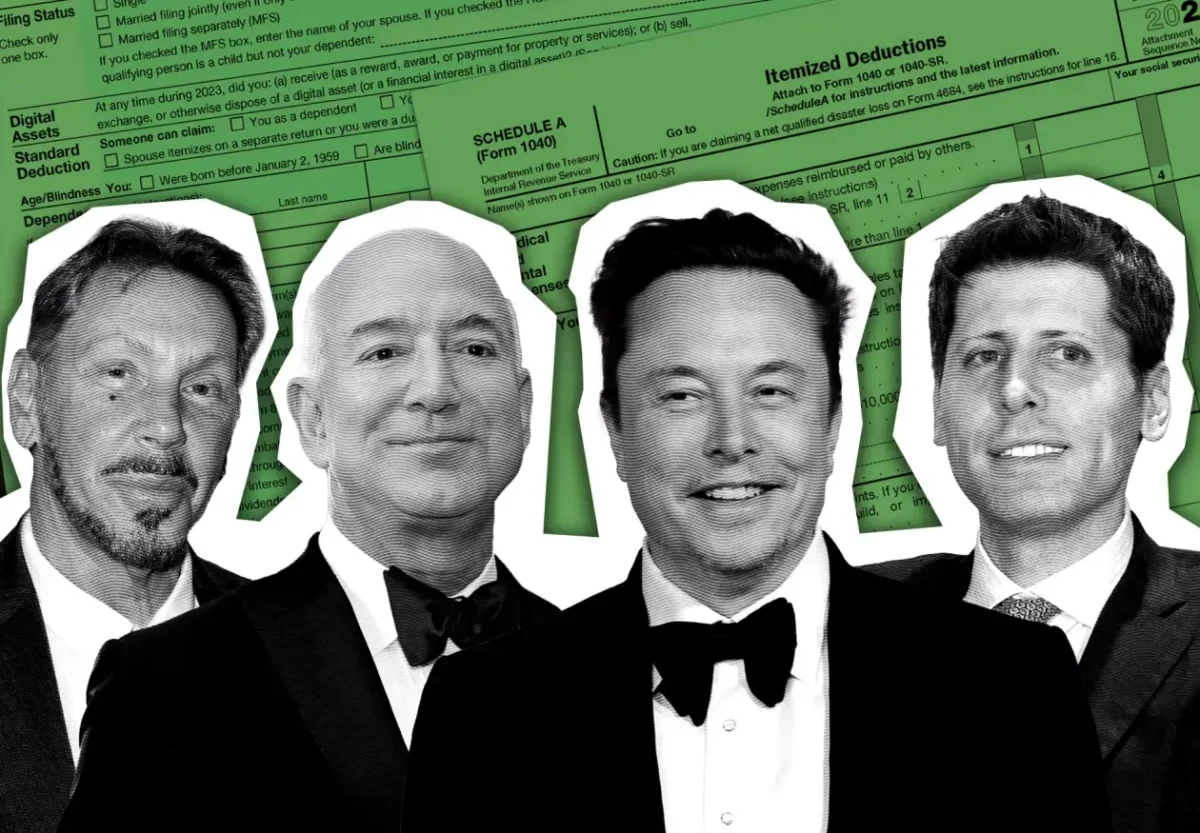
Oxfam says the investments of the world’s 1,000 richest billionaires were linked to 486 million tonnes of CO2 equivalent in 2025. If they were a country, they would rank as the 19th biggest polluter, and 71 percent of that money sits in sectors such as oil, gas and chemicals. I read the number with suspicion, because it comes from an advocacy group.
Table of contents
I also think Europe should tax billionaires on what they own and on what that wealth emits. Oxfam’s number is the best argument I have seen for it, and it is the reason the number needs checking.
What Oxfam claims, and who is saying it
The report, Disaster Divide, was released ahead of the COP31 climate talks in Türkiye. Oxfam also reports that the richest 0.1 percent, about 8 million people, emit more than the poorest 44 percent of humanity, and that the richest 1 percent are responsible for around 20 percent of global warming since 1990. One year of their emissions is estimated to cause 1.9 million excess heat-related deaths over the following century.
Oxfam built these figures from climate attribution models and a consumption-based emissions dataset from the Stockholm Environment Institute. The heat-death number is a modelled projection. No independent expert is quoted on the figures, and the account does not explain how investments were attributed to individual billionaires.
The double dividend
The part that interests me most is a new Destroy and Rebuild Index covering 217 companies, some in industries that drive climate breakdown and others that prepare for or rebuild after disasters. Those companies made an average profit of $1.8 billion in 2025 and paid more than $1 billion on average to shareholders. The global disaster recovery market is forecast to grow from $70 billion to $92 billion a year by 2029.
Read also: The EU’s Poverty Target Needs Nearly Five Times 2025’s Progress
Oxfam calls this a double dividend: investors earn first from the industries that cause the damage and then from the repair. A third payment falls on everyone else. Oxfam cites a Nature study finding that flood deaths are seven times higher in more unequal countries.
The timing sharpens it. The EU has warned that countries must prepare for a possible 3°C rise by 2100, issued after a UN report found that current national pledges would cut global emissions by only 6 percent by 2035 compared with 2019. Scientists say roughly 60 percent is needed to limit warming to 1.5°C. The adaptation bill is coming, and the open question is who pays it.
Income tax cannot see the mine
A billionaire’s emissions sit in the portfolio. Income taxes see the dividend and miss the coal mine behind it. Oxfam’s recommendations are taxes on the emissions of the super-rich, including on private jets and luxury goods, windfall taxes on fossil fuel companies, and the proceeds going to climate adaptation. Private jets alone emitted 16 million tonnes of CO2 in 2025, Oxfam says.
A wealth tax has been Oxfam’s line for years. In 2023 it proposed an EU tax of 2 percent on wealth above 4.5 million euros, 3 percent above 45.7 million euros and 5 percent on billionaires, which it estimated would raise nearly 250 billion euros. The new report gives that idea a climate argument it lacked: fortunes are not only large, they are invested in what heats the planet.
The capital flight argument
The best objection comes from inside the Commission. In the European Parliament’s debate on a G20 proposal for a minimum billionaire tax in October 2024, then Vice President Margaritis Schinas said that capital can easily move across borders, which is why action has to be supranational and multilateral.
The French record shows what it costs to ignore that at home. On 31 October 2025 the National Assembly rejected a 2 percent minimum tax on fortunes above 100 million euros, known as the Zucman tax, by 228 votes to 172. The former presidential majority, the Republicans and the National Rally voted against.
Read also: Who Really Runs the EU? The Answer Depends on the Room
Schinas’s argument is a case for acting at EU level, not for doing nothing. A billionaire can move from Paris to Brussels with less effort than from Paris to Dubai, and an EU-wide minimum removes the first option. It will not close every exit, and anyone who promises otherwise is selling something.
What I would put on the table
A minimum tax on net wealth above a billionaire threshold, set at EU level, with a surcharge that rises with the share of the portfolio held in fossil fuel and other high-emitting sectors. The revenue goes to adaptation, at home and in the countries that did least to cause the problem. This is my design, not Oxfam’s, and the rates are for lawmakers to argue about.
The design has one weakness I cannot wave away: it rests on numbers from an interested party. That is why the first step is a European number. Eurostat and the Commission’s Joint Research Centre can run the same sums as Oxfam, with open methods and an independent reviewer. If Oxfam is right, the tax debate gets the evidence it has lacked. If Oxfam is wrong, we will know that too.
Who decides, and when
All EU tax decisions require unanimity in the Council, according to a Bruegel memo on EU tax policy. One national parliament in Paris has already voted no, and 26 other governments each hold a veto. A proposal that is not backed by European numbers will not survive that room.
Ursula von der Leyen should therefore do two things. She should instruct Eurostat and the Joint Research Centre to publish a billionaire emissions and wealth study, and she should announce a date for a Commission proposal. She should say both by 6 November, before COP31 opens in Antalya.
SOURCES & METHOD
How this article was made. It rests on seven sources. Oxfam’s own 2026 report was not available, so its figures come through Euronews and Time and are Oxfam’s claims. The tax design is the author’s proposal. The Eurostat study is a request, not an existing document.
Sources
- Euronews: Profiteering from pain, investments of super-rich fuel climate crisis and capitalise on recovery (27 October 2026) – the report’s headline figures, the index of 217 companies, the flood-death research and the UN and EU warnings.
- Time: The ultrawealthy produce more carbon pollution than nearly half of humanity (27 October 2026) – method, private jets and Oxfam’s recommendations.
- Oxfam: European Commission refuses to unlock millions in revenue from Europe’s wealthiest (20 June 2023) – Oxfam’s earlier EU wealth tax proposal.
- LCP: Budget 2026, la taxe Zucman rejetée par l’Assemblée nationale (31 October 2025) – the vote and which groups opposed it.
- Eunews: EU Parliament call for taxation on super-rich to counter inequality (9 October 2024) – the Strasbourg debate and Schinas’s remark on capital mobility.
- Bruegel: Memos to the new EU leadership, tax policy (August 2024) – unanimity for EU tax decisions under Articles 113 and 115 TFEU.
- European Polar Board: 31st UN Climate Change Conference (COP31) – the conference in Antalya in November 2026.