


In July the European Commission published its annual Rule of Law report and concluded that the media freedom situation across the Union “remains broadly positive”. The European Federation of Journalists read the same year and reached the opposite verdict. On the state of Europe’s free press, we side with the journalists, because the numbers and the courtrooms do.
Table of contents
What the count says
The Media Freedom Rapid Response monitor documented 1,481 press freedom violations in 2025, affecting 2,377 journalists or media entities across 36 European countries.
The Council of Europe’s platform for the safety of journalists recorded an increase of more than 17 per cent in alerts for the 27 member states between 2024 and 2025. The Media Pluralism Monitor found favourable conditions for free and independent journalism in only six of 31 countries it assessed.
Those figures describe a profession under pressure.
The distance between law and practice
Brussels has built an impressive legal toolkit. The European Media Freedom Act and the Anti-SLAPP Directive exist, and the Commission’s report welcomes both. According to the EFJ, it says little about delayed implementation or the reluctance of governments to apply them.
The same gap shows in safety plans. The Commission welcomed national journalist-safety action plans from three countries and strengthened plans in two more. The EFJ says 22 other countries have done nothing.
Read also: Brussels Sees Progress, Watchdogs Count Almost None
A law that sits in the statute book while the harassment continues is a press release with a citation number.
Eight years without a final verdict
Slovakia is the test case. The Commission’s own report records limited progress on journalist safety and defamation reform, no progress on safeguarding public media governance, and a further deterioration in the ability to prosecute high-level corruption.
Behind those phrases sits a murder. Investigative reporter Ján Kuciak and his fiancée Martina Kušnírová were shot dead at their home in February 2018. In May 2023 the businessman Marián Kočner was acquitted of ordering the killing. Slovakia’s Supreme Court overturned that verdict, citing unclear factual findings and a failure to examine all the relevant evidence, and sent the case back.
The third trial began in January 2026 against Kočner and his associate Alena Zsuzsová. The court has set 42 hearing dates through the end of the year. Eight years after the killing, there is still no final verdict on who ordered it. Every reporter in Slovakia who handles a story about powerful people understands what that sends.
Spyware in the newsroom
Italy offers the second case. The Commission’s report finds no progress on reform of defamation, professional secrecy and the protection of journalistic sources. Its public broadcaster RAI has gone about a year and a half without a board chairperson, according to the EFJ, and the government has cut its funding.
In March 2026 Italian prosecutors confirmed that journalist Francesco Cancellato had been hacked with Paragon’s Graphite spyware, backing an earlier forensic finding by Citizen Lab. WhatsApp had warned him of a suspected attack the year before.
A product marketed as ethical ended up in a reporter’s phone. The report also records legal proceedings over the surveillance of journalists in Greece and Italy, which the EFJ says have produced no results so far.
Serbia, a candidate with a record
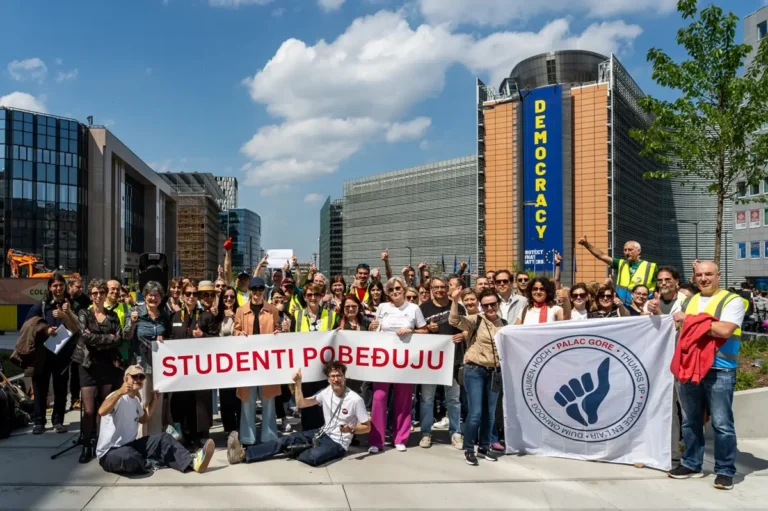
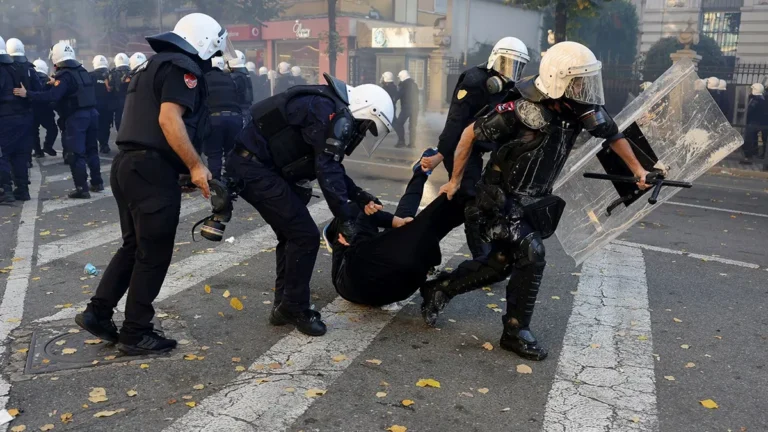
The EFJ recorded 209 press freedom violations in Serbia in 2025, up from 84 in 2024, affecting 359 media workers. Police are documented as perpetrators in at least 38 attacks on journalists since 2025. The media regulator has been inoperative for over 18 months, and spyware has been used against reporters. A country with that record sits on the road to membership.
Why a free press dies quietly
Press freedom rarely ends with a ban. It ends with a lawsuit that costs more than a reporter earns in a year. It ends with a broadcaster whose board chair is never appointed and whose budget shrinks. It ends with a trial that never concludes, a phone that was quietly opened, a source who stops calling because the law no longer protects them.
Read also: Who Really Runs the EU? The Answer Depends on the Room
Each step is small and deniable. None produces a headline about the death of a free press, which is why a report can describe the whole picture as “broadly positive” and remain technically defensible.
What to demand
Citizens should ask their governments for specifics. Apply the European Media Freedom Act in full and on time, with the Commission willing to open infringement cases when states refuse. Treat spyware used against a journalist as the crime it is, and publish who bought the licence. Give prosecutors and courts the independence to finish cases like Kuciak’s. Stop using the budgets of public broadcasters as a political lever.
The profession has a duty as well. When a newsroom is threatened, other newsrooms should carry its story. A threat works best on a single outlet in the dark, and it loses force when twenty outlets run the same piece. We intend to do that, and we ask others to do it.
A free press is the only institution that audits the others without being asked. A report that calls the situation broadly positive will not protect it. Readers who notice, outlets that refuse to stay quiet and governments that learn the price of ignoring both will.
Opinion pieces on ExtraFokus.eu reflect the views of their authors.