A company that sells the most sought-after AI chips in the world wrote to the federal agents investigating a suspected chip smuggler, and the investigation was later paused. That sequence matters more to Europeans than the tabloid part of the story. It shows who decides where the AI chip supply may go, and how little stands between that decision and the firm that profits from it.
Table of contents
The email that paused a case
In August 2025, Nvidia’s general counsel Tim Teter emailed agents at the Commerce Department’s export-control bureau (BIS). They were examining Singapore-based Megaspeed on suspicion of moving Nvidia chips to China. He wrote that Jeffrey Kessler, the senior Commerce official who runs the bureau, had given permission to reach out. The agents declined a meeting and passed the email up to Kessler.
Kessler told them to handle the case “strictly by the book”, a Commerce official has said. Some officials still saw the contact as a procedural breach that could taint the case. The Justice Department then asked Commerce to pause, and Commerce did. Justice is now running a criminal inquiry into possible violations of the export rules, according to people familiar with the matter. Megaspeed denies smuggling chips.
Nvidia disputes the premise. It says the diversion allegations against Megaspeed were “thoroughly investigated and debunked last year”, that Megaspeed is one of many regional cloud customers, and that contact between customer executives and Jensen Huang, then Nvidia’s chief executive, is routine.
Read also: Europe needs a revolving door rule for AI
Commerce spokesman Thomas Wackman says: “BIS conducts all enforcement strictly by the book.” Nvidia says it consults officials to answer their questions, and a department official says Kessler did not direct staff to share information with the company. Nobody has been charged, and the account of the emails comes from one New York Times investigation that others have repeated. These remain unproven claims about a process.
A blacklist nobody uses
Other agencies proposed putting Megaspeed on the Entity List, the US trade blacklist. Commerce has not done it. By the same reporting, Commerce has added no company to that list in over a year.
Meanwhile policy moved toward more sales. President Trump approved H200 chip sales to China in December, with 25% of the revenue going to the US government. In January the bureau moved to case-by-case review, and it has approved roughly two dozen Chinese buyers and handlers of the chip, two of them with empty offices. Epoch AI, a research group, estimates that chips equal to 1.6 million H100s reached China in violation of the rules by the end of 2025.
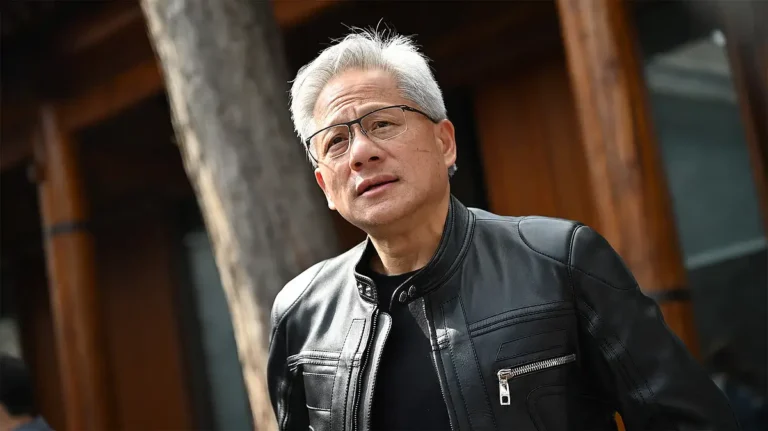
Huang has admitted a relationship with a former Megaspeed executive, who is not related to him and whom US officials reportedly believe worked for Chinese intelligence, and Nvidia’s board opened its own inquiry. Trump said Huang told him he had no idea she was a spy, and Beijing calls the allegation unsubstantiated. Nvidia has since told the SEC that Huang is resigning. Chief financial officer Colette Kress is interim chief executive, and Harvey C. Jones becomes the board’s first chair.
Washington has started asking
Representatives Gregory Meeks, Gabe Amo and Sydney Kamlager-Dove wrote to Commerce on 9 November. They ask whether Secretary Howard Lutnick, Kessler or others knew of the intelligence on the former executive, and want written answers by 1 December. Senators Jim Banks, a Republican, and Elizabeth Warren, a Democrat, back the AI Overwatch Act, which would let Congress scrutinise and potentially halt advanced chip exports to China.
Three House committee chairs, from Foreign Affairs, the Select Committee on the CCP and Intelligence, asked Huang to a closed-door briefing on 18 November. After the resignation, Foreign Affairs chairman Brian Mast said Huang had agreed to brief lawmakers, with date and venue still open. A new letter from Mast asks for a closed-door, transcribed interview on 1 December and threatens a subpoena if Huang does not confirm by Friday evening.
Read also: Euro Bond Markets Are Funding the AI Boom
The Senate Banking Committee has asked Huang to appear on 3 December and Lutnick on 10 December. Lutnick’s spokesperson says he has agreed to appear voluntarily, and the White House says the president has complete confidence in him.
Some caution is due: Gabriel Wildau of the consultancy Teneo urges scepticism towards anonymous leaks, and none of this has been tested in court. Nvidia shares fell as much as 8.8% on Monday, so a great deal of money rides on which version holds.
Europe should demand answers on the AI chip supply
Europe has no seat in this file, and it should want one. If European data centres, universities and start-ups plan their compute around chips whose export rules are set by one American bureau, then that bureau’s independence is a European interest. Today the public record shows a supplier with access to the investigators and a blacklist that sits idle.
The Commission and the Parliament should put three plain questions to Washington and to Nvidia: who may contact an export investigation, who logs that contact, and who decides when a case pauses. The same questions apply at home. EU export-control and AI-compute rules need a written answer before the next scandal arrives.
A regulator whose agents receive the firm’s emails has not shown who guards the chips, and neither has a firm that loses its chief executive while a Justice Department inquiry is running. Europe should ask, in public, and soon.
SOURCES & METHOD
How this article was made. The article rests on seven sources, two of them primary documents (the committee chairs’ letter to Huang and Nvidia’s SEC filing), and the Commerce contacts are known only through one newspaper’s account.
Sources
- TNW: Commerce halted its Megaspeed probe after Nvidia stepped in (9 Nov 2026) – the Teter email, Kessler’s reply, the pause at the Justice Department’s request and the official responses.
- Al Jazeera: Nvidia spy scandal fuels debate over chip exports to China (10 Nov 2026) – the board inquiry, the H200 decision, the Epoch AI estimate and the Congress reactions.
- Sovereign Magazine: Commerce never blacklisted Megaspeed (10 Nov 2026, updated 12 Nov) – the House letter of 9 November, the Entity List record and the H200 licences.
- TweakTown: NVIDIA pushes back against report linking CEO Jensen Huang to suspected Chinese intelligence asset (29 Oct 2026) – Nvidia’s response to the allegations about Megaspeed.
- US House of Representatives: Letter to Jensen Huang from Mast, Moolenaar and Crawford (4 Nov 2026) – the request for a closed-door briefing on 18 November.
- NVIDIA: Form 8-K, CEO Transition (SEC) – Huang resigns, Colette Kress becomes interim chief executive and Harvey C. Jones the board’s first chair.
- NBC News: Howard Lutnick agrees to testify as bipartisan pressure grows over Nvidia scandal (13 Nov 2026) – the Senate letters, Lutnick’s agreement to appear and Mast’s new letter.