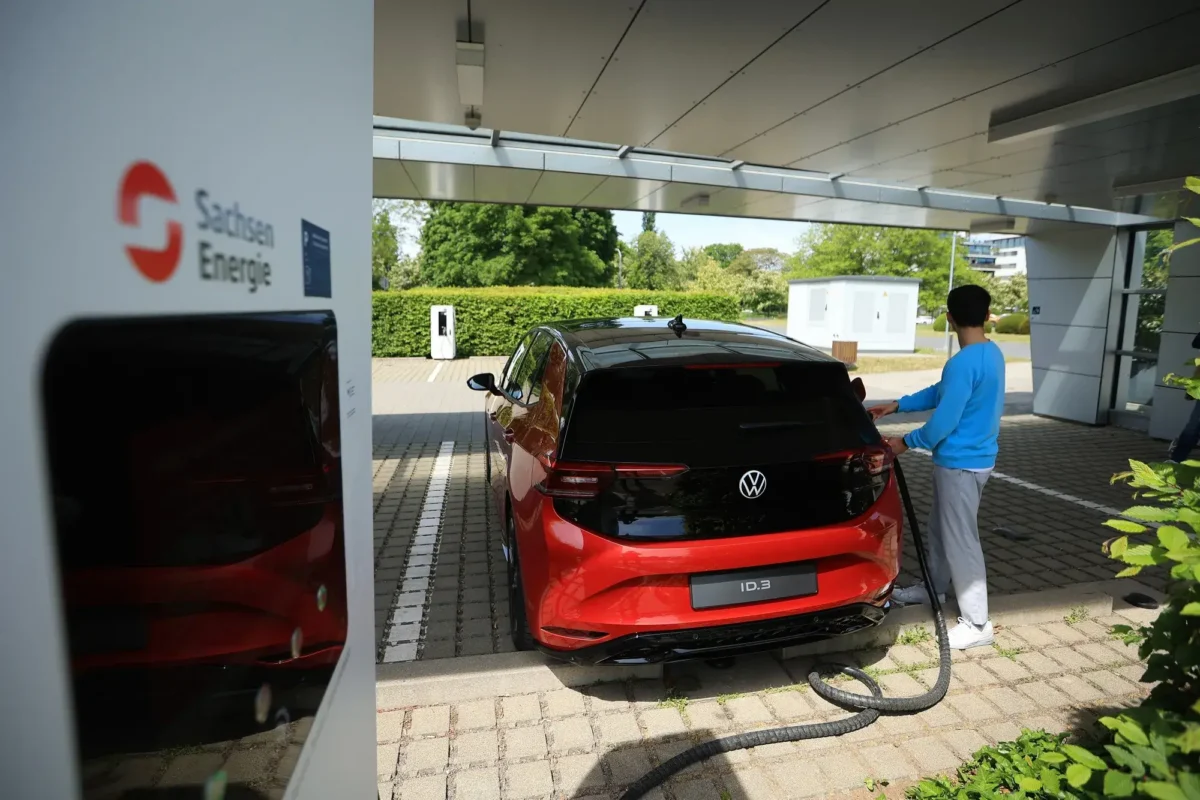
Germany promised electric car buyers up to €6,000 and a €3 billion budget meant to last until 2029. Six months after applications opened, the government is moving money forward from later years to keep the EV subsidy alive in 2027.
Table of contents
A budget document for the Bundestag’s budget committee raises the 2027 amount by €917 million, from €803 million to €1.72 billion. The total for 2026 to 2029 stays at €3 billion. The extra money comes from the years after 2027, and the document says the scheme is developing far more dynamically than its designers assumed. The committee still has to approve the change.
A forecast that missed on price
The scheme was designed for about 800,000 vehicles. The government assumed an average grant of €3,750. The actual average is about €4,400, and 52.3 percent of approved applications come from households with taxable income up to €45,000, the group that qualifies for the largest grants.
At that average, €3 billion pays for roughly 680,000 vehicles, not 800,000. That figure is a calculation by an EV trade site and assumes the rules stay as they are. By early October the Federal Environment Ministry had approved the first 100,000 applications, worth more than €430 million, and about €200 million a month is being drawn.
Read also: China’s trade surplus passes $1 trillion again
Who the money reaches
The scheme has no vehicle price cap and no requirement that a car be built in Europe. Chinese brands account for 9 to 17 percent of funded vehicles, depending on how joint ventures are counted. There is a political debate about tying the grant more closely to European value creation, and no decision.
I find that debate overdue. A grant that was sold as support for a transition now has a budget problem, and each euro that goes to an imported car is a euro that is not available in 2028. A government that rewrites its own budget has every reason to ask who the first €3 billion actually served.
The minister’s reassurance has a short shelf life
On 22 October Environment Minister Carsten Schneider said the money would last through next year and that no short-term changes to the programme were planned. He also promised to say early if the money looked set to run out.
Less than three weeks later the 2027 line is more than doubled, paid for with money earmarked for later years. Whether the climate and transformation fund that holds the money gets it back afterwards is still to be seen.
The buyer carries the risk
Grants are paid only after a car is registered. A buyer who orders a model with a long delivery time commits to the purchase before knowing whether the money will still be there. The consultancy EY warns that the subsidy could end for good in 2027 or 2028.
Read also: Macron Buys Diesel With Europe’s Security
Germany has been here before: an earlier German EV bonus ended abruptly in 2023. Buyers have up to twelve months after registration to apply, so a cut-off in the middle of that window would hit people who did everything right.
Industrial policy by budget line
The demand is good news. October brought 94,086 new battery electric cars, 79.5 percent more than a year earlier and a 37 percent share of new registrations. That is what a transition looks like when it works, and it is the reason the budget needs a plan for success.
A government that funds a transition with a fixed pot and a pay-after-registration rule has built a race between buyers, and it should say so. I want three things from Berlin: monthly figures on money committed as well as paid; a date on which the pot is projected to empty; and a promise that a car ordered today will be funded under today’s rules.
Every EU government that ties its car transition to a national grant should read the German numbers. Success has a price, and the German budget did not size it.
Sources
- electrive.com: Germany opens applications for new EV subsidy scheme (19 May 2026) – budget, grant amounts, income limits, retroactive start.
- electrive.net: Minister Schneider: E-Auto-Förderung reicht auch fürs kommende Jahr (22 Oct 2026) – approved applications, monthly payouts, the minister’s statements.
- electrive.net: Engpass bei E-Auto-Förderung: Regierung braucht mehr Geld für 2027 (10 Nov 2026) – the shift of €917 million into 2027, EY’s warning, delivery-time risk.
- Elektroauto-News: E-Auto-Prämie: Bund plant mehr Fördermittel für 2027 ein (10 Nov 2026) – the 2027 budget change and the open question on repayment to the fund.
- Elektroauto-News: E-Auto-Prämie: Droht der Förderung schon 2027 das Aus? (9 Nov 2026) – assumed and actual average grant, October registrations, the 2023 precedent.