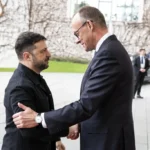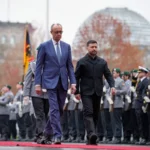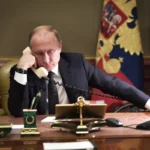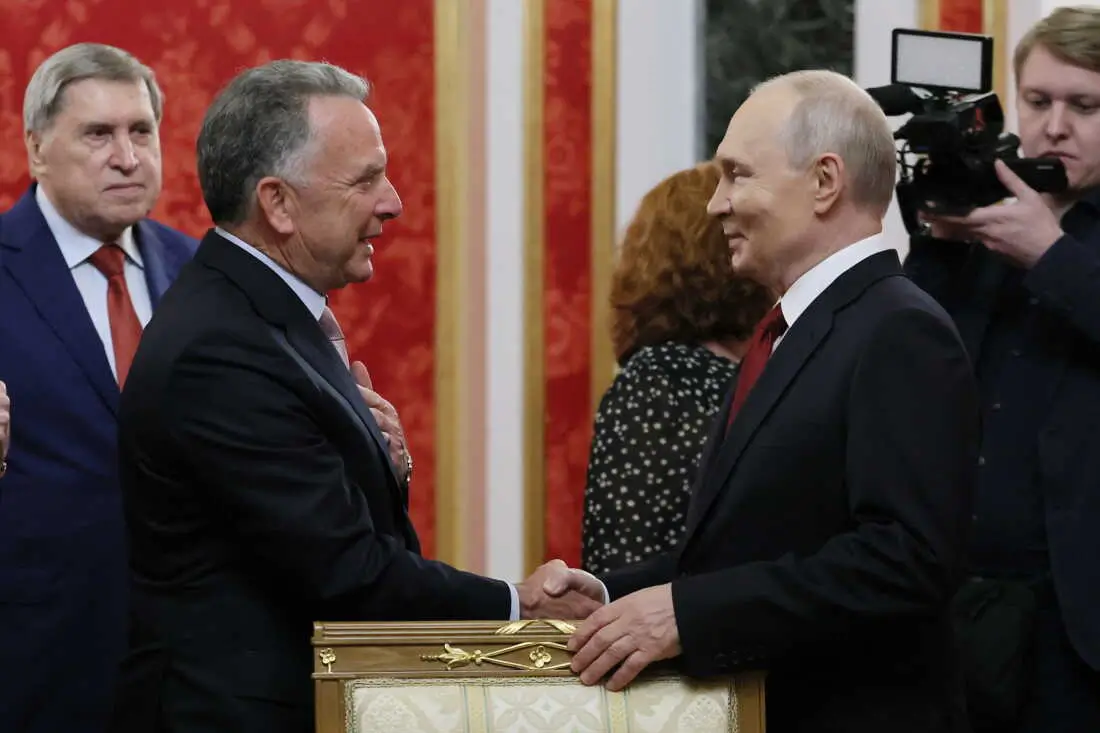
On Thursday morning Steve Witkoff and Jared Kushner are due to meet Vladimir Putin in Moscow, the Kremlin’s foreign policy aide Yuri Ushakov says. The war they will discuss is fought on European soil, and Europeans carry a large share of its cost. I think Europe should stop accepting a seat in the corridor.
Table of contents
Consultations are a waiting room
After two days of talks in Abu Dhabi, Russia and Ukraine agreed a large prisoner exchange. No ceasefire came out of it, and no deal on territory. Representatives of Britain, France, Germany, Italy, NATO and the EU were in the city, and they met the Ukrainian delegation and the American envoys, but they did not sit in the trilateral rooms.
The exchange itself is real. Zelensky spoke on Tuesday of 1,000 prisoners from each side, possibly rising to 1,500, and Russian General Staff official Alexander Zorin says it will exceed 1,000 on each side and could happen within two to three weeks. Russia’s chief negotiator, Vladimir Medinsky, says the sides found common ground on some issues and not on others.
Read also: Merz links EU budget to Ukraine aid
Medinsky also says Moscow has not talked to the Europeans and does not see what there is to discuss with them. Moscow adds that it is open to EU participation in principle. A door that is open in principle costs nothing, and it is Moscow that decides when anyone walks through it.
Ukraine’s lead negotiator, Rustem Umerov, wrote that Ukraine would hold a separate meeting with its European partners afterwards. Europe gets a briefing after the negotiation and no voice during it.
Kushner says the Americans will “try to see if we can get Europeans added to the format”. Secretary of State Marco Rubio has said Europeans should be “represented at that table directly”. Both sentences leave the decision with a host, and the host is either Washington or Moscow.
The bill comes before the invitation
Europe’s own condition, according to people familiar with the talks, is that Russia halts the war before broader European security is on the table. It is a reasonable position. It also asks nothing of a party that sits in a room Europeans cannot enter.
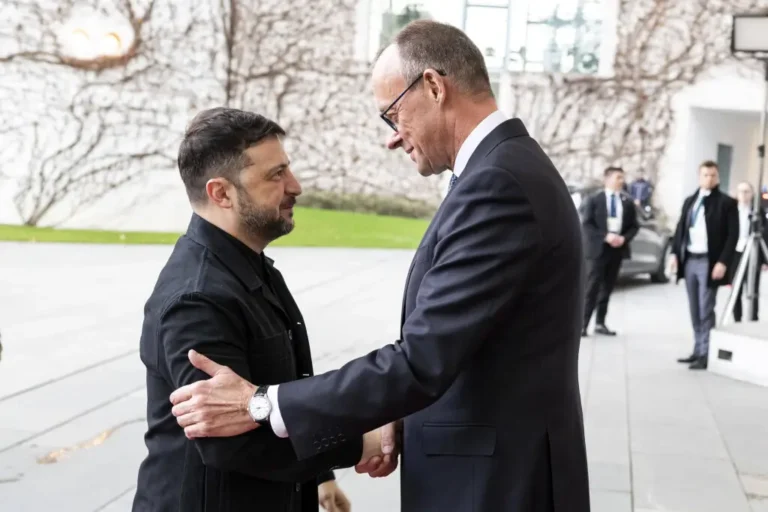
Meanwhile the money question is open at home. Ukraine’s budget gap for 2027 is put at €70bn, and the EU is expected to cover around €45bn of it, with joint debt as the frontrunner. German Chancellor Friedrich Merz wrote to European Council President António Costa that supporting Ukraine is “a matter of our indivisible European security”.
Merz also called a collective commitment an “essential prerequisite” for discussing anything with financial consequences. Czechia, Hungary and Slovakia signal that they will stay out of joint debt for Kyiv, and Bulgaria is expected to follow. Slovakia’s Robert Fico has called the German approach “blackmail”.
Read also: Europe Should Stop Betting on Hegseth’s Fate
Costa has answered that Ukraine will be discussed at the informal summit in Dublin and at a special European Council on 26 and 27 November. Reports differ on whether Merz’s letter amounts to an ultimatum. They agree that the member states are split on who pays.
Europe holds the card that buys a seat
I would use the one card Europe holds. The €45bn is real money, and it will be raised through a joint instrument that every government has to approve. Governments that approve it can attach a condition: Europe takes part in negotiations over Europe’s security from the first day, as a party with a vote on the outcome.
Both Dublin meetings take place this week. The American envoys fly there after Moscow to brief Zelensky, and the EU’s leaders meet informally on 13 November. If the envoys’ briefing and the leaders’ discussion happen in the same city without touching, Europe has confirmed its role as the audience.
Washington can invite Europeans, and Moscow can refuse them, and neither has to pay for the war. The leaders who gather in Dublin should decide before they arrive what Europe will demand in return for its money. Europe pays, and so Europe can say what the payment buys.
Sources
- Al Jazeera: Russia-Ukraine talks in Abu Dhabi end with prisoner exchange agreement (11 Nov 2026) – outcome of the Abu Dhabi talks, statements by Kushner and Medinsky.
- Euronews: Abu Dhabi peace talks end with prisoner exchange agreement (11 Nov 2026) – the European delegations’ role and Medinsky’s remarks.
- Bloomberg via Spokesman-Review: US envoys to meet Putin and Zelenskyy after Abu Dhabi talks (11 Nov 2026) – the Putin meeting, Ushakov, Rubio and Kushner.
- Euronews: No deal on Ukraine aid, then no deal on EU budget, Merz says (9 Nov 2026) – Merz’s letter, the funding gap and the holdout states.
- Kyiv Independent: EU’s Costa keeps Ukraine funding talks on late November agenda (11 Nov 2026) – Costa’s reply, Fico’s reaction and the Dublin and Brussels dates.