Since Wednesday morning, anyone with an internet connection can type a name into a Hungarian state database and see whether that person appears in the files of the communist secret police. The archive that runs it estimates the files hold between 50,000 and 60,000 informer names. A neighbour, a teacher, a parent’s old friend: each is one search away from a label that the archive itself says may not be true.
Table of contents
A search box where a verdict used to be
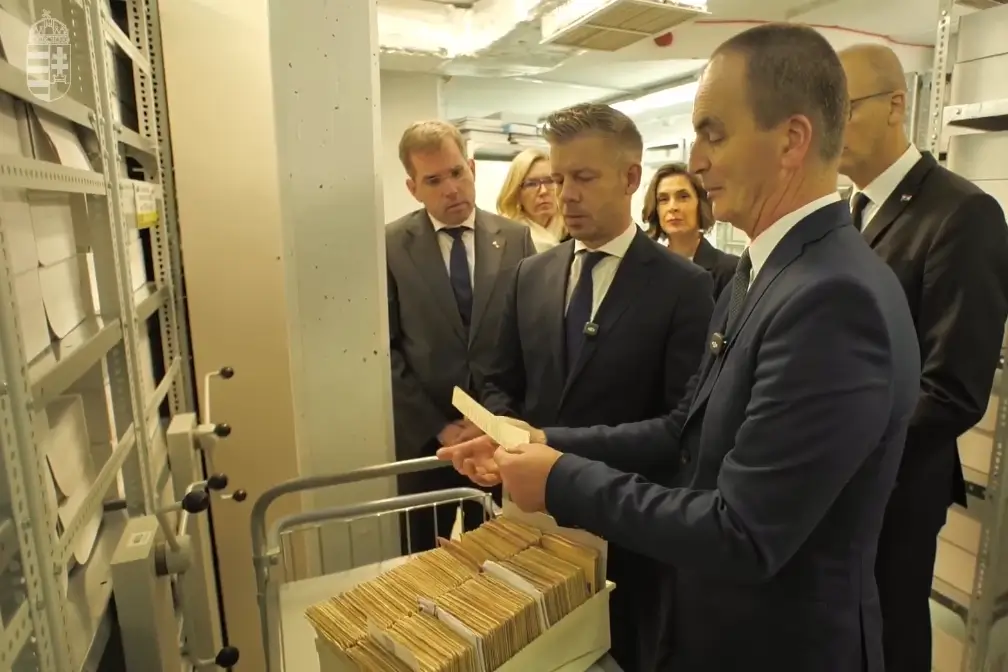
The database went online at 10am local time on 4 November. It can be searched by name, date and place of birth, mother’s name, code name and document type. Three of four kinds of records are public: registration cards with name, occupation and the circumstances of recruitment, a register of recruitments from 1957 to 1962, and a database of former agents’ personal data and code names.
A second batch covering about 9,000 informants follows in February. The reports informers wrote are not part of the release, the authorities say, to protect the people they spied on. Health records, addictions and sexual activity or orientation are redacted.
Read also: EU Releases Hungary Funds Before Reforms Are Done
The archive warns against its own data
Bendeguz Gergo Cseh, who heads the Historical Archives of the State Security Services, says the content “is not necessarily true in every case”. A significant share of the records from the late 1970s and 1980s is incomplete, he says, and a large part of the informers were people who never made their mark on public life. Judging anyone on the basis of the files is “inappropriate”, he has said.
Historians caution that some of the people listed could be considered heroes, and that a name in a register does not make someone an informer. Laszlo Eorsi of the 1956 Institute Foundation welcomes the release anyway: “better late than never”.
Sixty thousand informer names, a third of the agents
The secret police employed around 150,000 agents in total, and only about one third of their names are known. Many files were destroyed in 1956 and again in 1988 and 1989. So even a release Cseh calls unprecedented (“Such radical disclosures have never happened anywhere before”) covers only part of the network.
The number itself moves. The archive and most estimates say 50,000 to 60,000 names, and Prime Minister Peter Magyar spoke of some 60,000. In September, Balint Ruff, head of the prime minister’s office, had put the possible total at 60,000 to 80,000.
Read also: Europe's Recovery Fund Closes With Gaps in Who Got the Money
A promise kept after 36 years
Magyar, whose Tisza party won power in April, framed the release as overdue: “We are implementing now, after 36 years.” He asked for “dignity and humanity” in how the files are read and said a great many families will be confronted with what they find. Parliament passed the law in September. Politicians, clergy and television personalities appear in the registers.
Wider open than its neighbours
Hungary’s law goes further than its neighbours’. Poland opened its archives earlier but does not allow open, unrestricted searches. Germany’s 1991 Stasi law is more restrictive, and in the Czech Republic not all files are in an online database. Until now only researchers and people seeking their own or a close relative’s file could get access.
Anyone can search now, and the archive’s director says judging on this basis is inappropriate. The search box makes no such distinction.
SOURCES & METHOD
How this article was made. The article rests on seven sources, none of them the law’s text or the database itself. The law’s number could not be confirmed and is left out.
Sources
- Euronews: Communist-era informer files released in Hungary (4 November 2026) – what was released, speakers, agent numbers.
- Reuters via Internazionale: Hungary opens communist-era informer files (4 November 2026) – release day, Magyar’s statements, destroyed files.
- Reuters via Internazionale: Hungary to open communist-era informer files (6 October 2026) – comparison with Poland, Germany and Czechia, redactions.
- AP via AJC: Hungary prepares to release communist-era records (29 September 2026) – the archive’s estimate, search fields, February batch.
- Daily News Hungary: Hungary opens communist-era secret police files (4 November 2026) – record types, what is not published.
- AFP via Bytes Europe: Hungary opens communist-era informer files (4 November 2026) – launch time, Cseh on incomplete records.
- Daily News Hungary: Hungary could publish 80,000 names (2 September 2026) – the earlier government estimate.