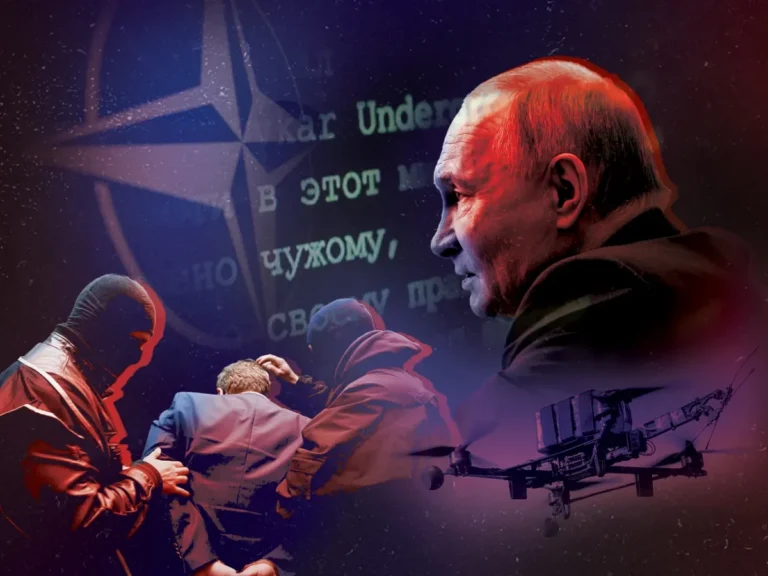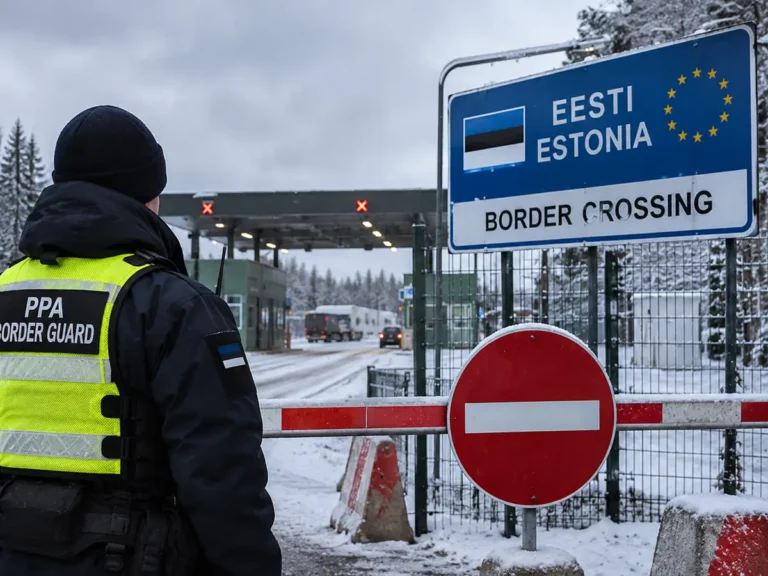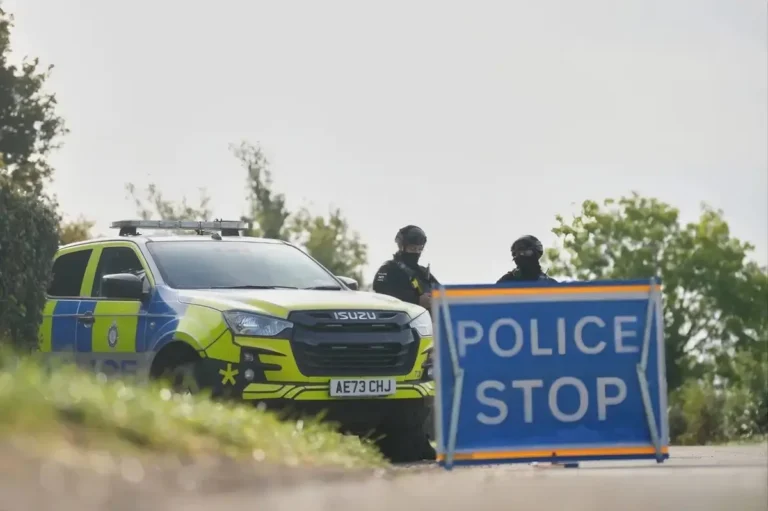



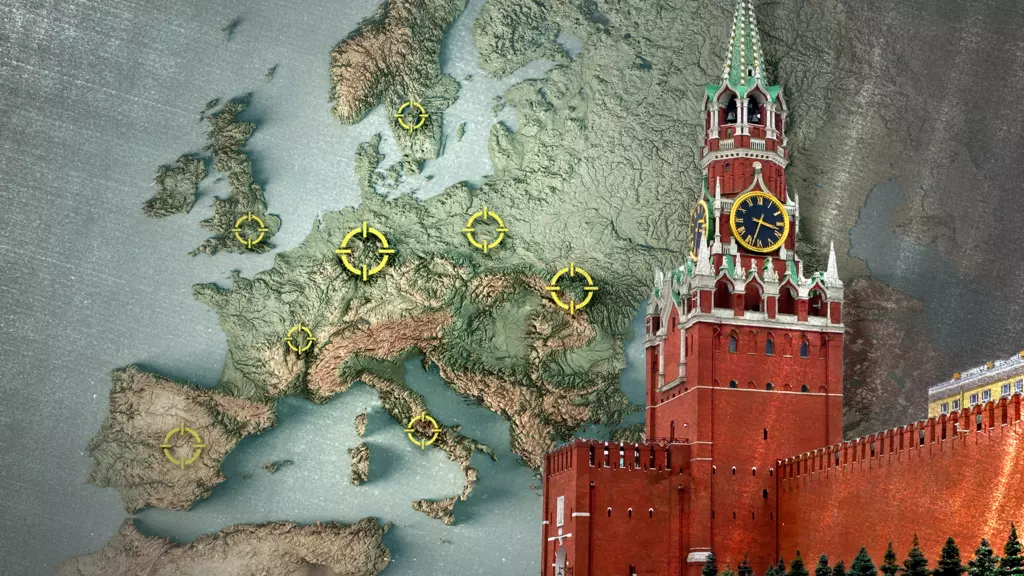
A railway line that carries military aid. A parcel that ignites in a courier warehouse. A depot holding equipment for Ukraine. These are the targets of Russian sabotage in Europe, and a Dutch counter-terrorism think tank has counted 151 incidents since the full invasion of Ukraine began in February 2022. The people carrying them out are mostly paid recruits with no formal tie to Russian intelligence, the researchers find.
Table of contents
That shift changes who can be held responsible and how Europe can respond. Moscow denies involvement. Investigators in several countries say otherwise, and the EU sanctions regime for Russia’s destabilising activities, renewed in October 2026, now covers 80 individuals and 20 entities. The open question is whether the response fits an adversary that hires strangers for a few hundred euros.
What 151 incidents look like
The International Centre for Counter-Terrorism, working with GLOBSEC, published an update in February 2026. It counts 151 known incidents between February 2022 and February 2026 and 172 perpetrators, 41 more than in the previous report. Of the 41 new incidents, 12 happened in the latest monitoring period. The other 29 were identified retrospectively, mostly from 2024.
Poland tops the list with 31 incidents, 21% of the total. France follows with 20, Lithuania and Germany with 15 each, the UK with 12 and Estonia with 11. Poland, France, Germany and the UK together account for over half, and the Baltic states for nearly a fifth. Scandinavia has relatively few.
The incidents range widely. They include arson at a defence-related company and at a warehouse storing military equipment for Ukraine, incendiary or explosive parcels sent through couriers, railway sabotage, surveillance of critical infrastructure and an alleged plot against a Russian dissident in France. Some are low-grade: graffiti and stickers, paint on Jewish sites and pig heads at mosques.
A second dataset points the same way with different numbers. A Baltic Sea study by a Polish institute, summarised in the press, counted 110 operations on EU territory between January 2022 and July 2025, of which 89 succeeded and 21 were foiled. Its authors say incidents commonly intensify when NATO countries discuss aid to Ukraine.
These counts come with limits. Many incidents become public only after investigations conclude, and the ICCT authors assume the real total is higher. Germany’s security authorities recorded 320 suspected sabotage attempts in 2025, yet perpetrators are rarely identified, which makes attribution hard. The datasets use different periods and methods and cannot be added together.
Disposable agents recruited on Telegram
The perpetrator profile is the most striking finding. About 95% of the 172 had no formal affiliation with Russian intelligence. Financial gain was the main motive, and all but one were paid. About 90% acted with at least one other person. Around half were travellers who did not live in the target country, mostly from Moldova, Serbia and Bulgaria, often paid a few hundred euros.
Read also: Romania blames Russia after drone sinks cargo ship
Recruitment runs through Telegram and TikTok, with tasks presented as challenges, and through friends. In one case, Russian-backed Telegram channels posing as right-wing extremists offered cryptocurrency or £2,500 for burning a police vehicle and £100 for videos of mosque vandalism. Prisons, criminal and hooligan circles and far-right spaces also feature in the data.
Age and background vary. Eleven perpetrators were under 18, the youngest 16, and 14 were aged 18 to 21. In all, 44 had prior criminal records, 12 were embedded in hooligan milieus and 10 had far-right links. Only 26, or 15%, held clear pro-Kremlin views. In Poland, Ukrainians and Belarusians are the groups most often recruited.
A Polish security official describes the model as disposable agents who start with surveillance or graffiti and can escalate to arson. The same official calls the November 2025 rail attack a test of Poland’s response, media reaction and security services.
The profile also shows how thin the formal link to the state can be. One case involved Russian security service operatives, and nine involved people with ties to such structures. Colombians are a newer element: the authors see growing involvement in Central-Eastern Europe and the Baltics and link it to Colombians fighting in Ukraine, but say the drivers are not yet clear.
One strand of the data is still a hypothesis. The first ICCT-GLOBSEC report suggested that Russia may have subcontracted some Scandinavian operations to Iran, which could have used its Sweden-based Foxtrot network to gain favour with Moscow. The update repeats this as a possible explanation for the low number of Scandinavian incidents. It is unconfirmed.
The Mika rail explosion shows the stakes
On 17 November 2025 an explosion damaged a railway line near Mika in eastern Poland. The line carries passenger trains and military aid for Ukraine. A train driver spotted the damaged track and stopped in time, and no one was injured. Investigators say the target was a viaduct just before a curve, where a derailment could have killed dozens.
Polish security services identified two Ukrainian suspects whom they believe Russia hired. They reportedly fled to Belarus right after the attack. Poland issued Interpol red notices against them in December 2025 and charged another man with assisting.
Prime Minister Donald Tusk called the blast an act of sabotage, and Polish authorities say they suspect the two Ukrainians worked for Russia’s FSB.
The Kremlin denied any involvement. Spokesman Dmitry Peskov said Russia is blamed for all manifestations of hybrid warfare in Poland and claimed that “Russophobia is flourishing there.” The sources reviewed report no conviction of the suspects, so the attribution to Russian services rests on Polish investigators’ statements.
Poland’s Internal Security Agency reported 44 detentions linked to spying or sabotage for Russia or Belarus since 2022, as of April 2025. Those detentions cover spying as well as sabotage, so the figure sits alongside the ICCT count of 31 Polish incidents without matching it.
A parcel plot followed a similar pattern. Polish and Romanian authorities announced in October 2025 that they had foiled a plan to send packages containing explosives. In January 2026 five people, four Ukrainian citizens and one Russian, were indicted in Poland over the parcel scheme.
Why Russia may want the attacks seen
Ulrike Franke of the European Council on Foreign Relations argues that the attacks are increasingly visible because Russia aims to frighten populations. The goal, in her reading, is to weaken public support for Ukraine and push governments toward a more conciliatory line on Moscow. She adds that Russia wants to signal that European governments cannot counter such attacks.
NATO has not invoked Article 5, its mutual defence clause, in response to hybrid attacks. Franke says deaths clearly linked to Russia could bring the situation under that clause, though this would not trigger a military response automatically. She warns that each attack moves Russia closer to forcing Europe and NATO to consider one.
Read also: Satellite images show a giant radar in Kaliningrad
The sceptical reading deserves space. Attribution drives every count in this field, and the public record often rests on investigators’ statements, with trials still pending. A US Congressional Research Service study of six frontline states, as summarised in the trade press, also warns that the incident counts come from different studies and periods. A rise in counted incidents can partly stem from better detection and more retrospective discovery.
A sanctions list and a Parliament report
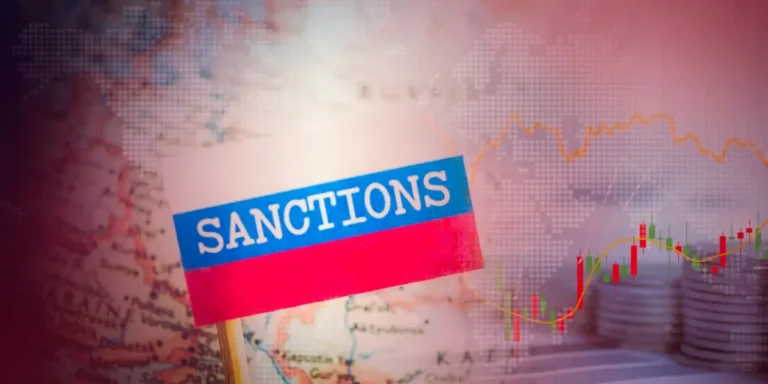
The EU’s main legal tool is a sanctions framework created on 8 October 2024 for Russia’s destabilising activities. On 8 October 2026 the Council renewed it until 9 October 2027. The regime now covers 80 individuals and 20 entities. Listed individuals face an asset freeze and a travel ban, and eight non-EU countries, including Norway, Iceland and Ukraine, are aligning their policies with the extension.
The same day the Council amended eight entries and deleted one, and the regulation does not say why that person was removed. On 16 September 2026 Parliament approved a report warning of rising hybrid threats and demanding a firmer Union response. The recitals of the regulation say that report names Russia as the gravest hybrid-threat state actor targeting the Union.
National responses add to this. The Congressional Research Service study notes that Romania shot down drones with F-16s over three days in July 2026, summoned the Russian ambassador and expelled a Russian diplomat. It also reports that Bulgaria launched a counter-disinformation initiative before its April 2026 election and sought EU assistance.
The same study reports 29 unauthorised Russian drone incursions in Romania and a Russian drone that hit a residential building in Galați in May 2026, injuring two people. Romania’s Defence Ministry also counts more than 100 Russian attacks on Ukrainian targets near the border since 2022.
A sanctions list reaches people and companies that can be named. The ICCT profile of perpetrators points to short-lived, low-paid recruits who are harder to list and easier to replace. That mismatch is an observation from comparing the two sources, and neither source states it.
What the record leaves open
The ICCT authors say the campaign “has not abated and more incidents will also be coming to light.” They urge European policymakers to invest in resilience and digital infrastructure alongside hard security, and they plan to keep updating the incident and perpetrator datasets.
Three gaps remain. Attribution in most cases rests on investigators’ statements. The true number of incidents is higher than any count, by the researchers’ own assumption. And the chain from the Telegram recruiter to a decision-maker is rarely visible in public records.
The data show a campaign that recruits cheaply and replaces its people easily. The record does not yet show who directs it case by case, or what would make it stop.