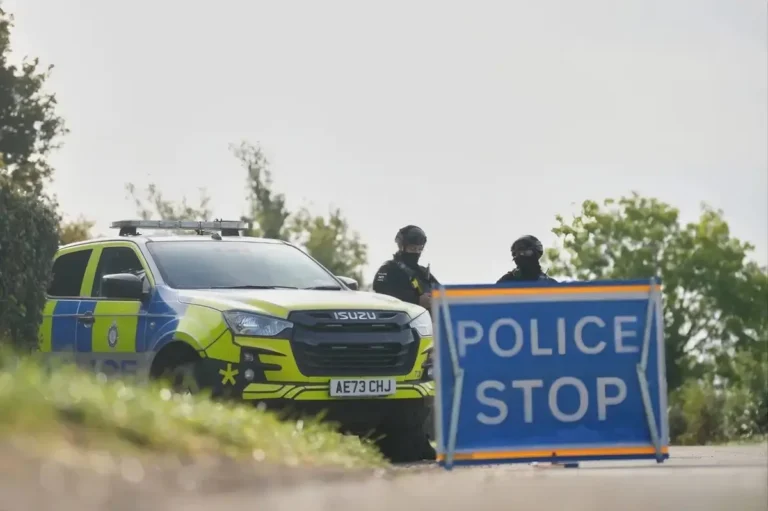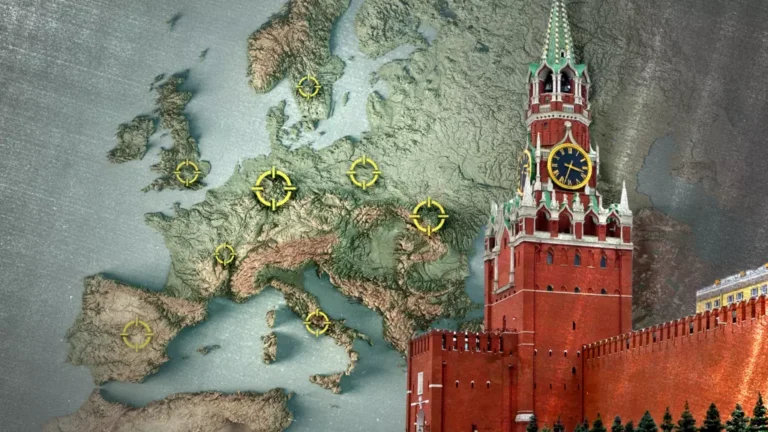



Between 1 April and 15 October 2026, the Russian-language outlet Vot Tak counted at least 52 physical incidents in 17 European countries, leaving out cyberattacks and influence operations. Officials linked 48 of them to Moscow or described them as possibly part of Russian operations, and four to Minsk. The list runs from arson at drone makers to attacks on railways and ammunition plants.
Table of contents
Nobody signs for any of it. The fires are set by hired amateurs, the cables are damaged by ships under flags of convenience, navigation signals vanish somewhere near Kaliningrad, and the propaganda arrives through more than 150 websites with no newsroom. Moscow’s answer is the same every time: baseless. That deniability is the method, and it sets the terms for everything Europe tries in reply.
This guide follows the campaign across five fronts: people, the sea, the air and airwaves, information, and money. It then asks what Europe is building in response and where that falls short. Each section links to the ExtraFokus reporting behind it.
A note on evidence. Attribution rests mostly on statements by governments and investigators, and few cases have reached a verdict. Incident counts differ by study and period and cannot be added together. We say where a claim belongs to Russia, to a government, to a single outlet or to us.
Hired hands: sabotage run on paid amateurs
The most useful number in the field comes from a Dutch counter-terrorism think tank. The International Centre for Counter-Terrorism (ICCT), working with GLOBSEC, counted 151 incidents between February 2022 and February 2026 and 172 perpetrators. About 95 per cent of those people had no formal tie to Russian intelligence. Financial gain was the most important motive, and about 90 per cent acted with at least one other person.
Around half were travellers who did not live in the target country, mostly from Moldova, Serbia and Bulgaria, and most of them received only a few hundred euros. Recruiters work through Telegram and TikTok and present tasks as challenges. Poland has the most incidents, 31 of the 151. Our report on paid amateurs sets out the dataset and its limits: many incidents surface only after investigations end, and a rise in counted cases can partly reflect better detection.
The stakes were clear on 16 November 2025, when a train driver reported damage to a railway line near Mika in eastern Poland. An explosion had destroyed a section of track. The line is used to supply Ukraine. Rail traffic on the section was halted and nobody was hurt.
Prime Minister Donald Tusk announced the sabotage on 17 November and said the blast was most likely meant to blow up a train. Poland identified two Ukrainian suspects it believes Russia hired, who reportedly fled to Belarus, and issued Interpol red notices in December 2025. The Kremlin denies involvement, and the sources we reviewed report no conviction.
This month’s case in Estonia shows the same model. At 3.06 a.m. on 14 November, a group tried to set fire to the Threod Systems drone factory in Viimsi, north of Tallinn. The factory’s own security staff stopped them and production was unaffected.
Eight people were detained in connection with the attack, and reports describe them as residents or nationals of Latvia. Accounts differ on whether all eight hold Latvian citizenship. Estonia’s security service Kapo attributes the attempt to Russia’s military intelligence service, the GRU.
In August a suspected arson attack hit another Estonian defence firm, Milrem Robotics, and Latvia’s State Security Service detained three Latvian citizens. Latvia’s State Security Service chief Normunds Mežviets has said, in comments reported by the Telegraph, that GRU operatives do not travel to carry out such operations but contact members of the criminal underworld through messaging apps, particularly Telegram.
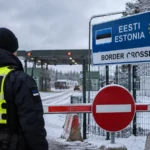
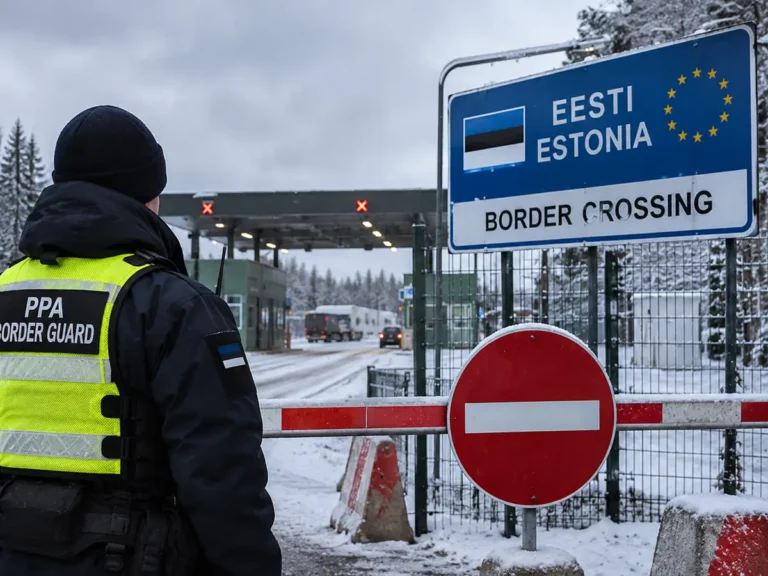
Estonia’s foreign ministry announced that all road crossings with Russia would close on 1 December. The interior minister had proposed the closure, and Prime Minister Kristen Michal asked for steps to close the border and reports differ on whether the closure is temporary. A closed border limits traffic with Russia. By our own assessment it leaves the recruiting of people already inside the Schengen area untouched. Our report on the Threod attack has the details.
Denmark’s intelligence service PET said on 3 September that Russian intelligence services are actively preparing sabotage against the Danish defence industry and are recruiting ordinary Danes on social media and gaming platforms for tasks such as photographing companies and infrastructure. Russia’s ambassador to Denmark told the news agency Ritzau that Denmark had given no concrete evidence.
One case has run all the way through a court. Six men were jailed at the Old Bailey over a March 2024 arson attack on a warehouse in Leyton, east London, that held aid for Ukraine and caused about £1 million in damage. The judge described a “planned campaign of terrorism and sabotage” in the interests of the Russian state.
Dylan Earl, who organised the attack, received 17 years plus six on extended licence. The case shows how little it takes: a phone, a recruiter and a young man chasing money.
The sea: shadow fleet, cables and trawlers
Read also: A Sanctioned Tanker Sits Off Bulgaria. Europe’s Port Checks Would Not Have Stopped It
Most of Europe’s trade, power and data crosses water, and the Baltic is the most crowded test. On 25 December 2024 the tanker Eagle S, which Western governments associate with Russia’s shadow fleet, dragged its anchor about 90 kilometres across the Gulf of Finland seabed. Five cables were damaged, among them the Estlink 2 power link between Finland and Estonia. NATO launched Baltic Sentry on 14 January 2025, with warships and aircraft meant to deter further sabotage.
The legal result has been slow. In October 2025 the Helsinki District Court dismissed the case against the captain and two officers, ruling that the damage lay in Finland’s exclusive economic zone and that jurisdiction stayed with the flag state or the defendants’ home countries. In August 2026 the Helsinki Court of Appeal reversed that.
It found the events were not a maritime accident under the UN Convention on the Law of the Sea, partly because of what the crew did after Finnish authorities made contact. The case returns to the district court, the ruling is not final, and the three men have left Finland. Our analysis explains why this is a narrow opening.
The pattern repeated a year later. On 31 December 2025 Finland seized the cargo ship Fitburg, sailing from St Petersburg to Haifa under the flag of St Vincent and the Grenadines, after damage to a telecoms cable between Helsinki and Tallinn. Finnish Customs said it carried steel subject to EU sanctions.
Estonia said five undersea cables were damaged around that time, though not all were tied to the ship, and some earlier faults may have been storm damage. Finland is investigating aggravated criminal damage and interference with telecommunications. State action is suspected but not confirmed. EU foreign policy chief Kaja Kallas spoke of “a clear pattern of disruption” in the Baltic since the start of Russia’s war.
The ships carrying the oil are a bigger problem than the ones damaging cables. The EU’s 21st sanctions package of 23 July 2026 listed 41 more vessels on top of 632 already designated. Estimates of the shadow fleet’s size vary widely, and one broker count put it at about 1,140 tankers in August 2025, so the list may cover only part of it. Denmark has inspected tankers anchoring off Skagen as port state control cases since February 2025.
Danish Maritime Authority figures that we obtained through access-to-information requests for our Danish reporting show 219 inspections of 200 ships and eight detentions. Port state control checks a ship’s papers and condition on the day. It does not establish where the ship has been. Our report on the Kairos follows that gap to the Bulgarian coast.
Fishing boats are the newest worry. On 21 October the Telegraph reported that 17 Russian fishing vessels spent long periods at low speed near charted cables, based on vessel-tracking data compared against cable charts. Slow movement is also what a trawler does when it fishes, so we treat the finding as a lead.
The EU named two Murmansk companies, Norebo and Murman Seafood, in its 17th sanctions package on 20 May 2025, citing activities that can facilitate future sabotage operations.
In the Black Sea the attacks are kinetic. At least seven cargo ships were hit off Romania and Bulgaria within two weeks in October, with about 30 sailors reported killed or missing. After a drone sank the Comoros-flagged Khoryv on 23 October, Romania’s president Nicusor Dan called it a new example of the tragic consequences of Russia’s aggression.
Russia has denied earlier attacks and had not commented on this one. NATO said on 20 October that allies have or will send more maritime patrol aircraft, radar systems and drones to the Black Sea. Our report has the timeline.
The air and the airwaves: drones, jamming and a radar
On the night of 9 to 10 September 2025, between 19 and 23 drones entered Polish airspace from the east, depending on the count. NATO and Polish forces shot down several, and the wrecks of 17 had been identified by 12 September.
Poland invoked Article 4 of the North Atlantic Treaty, which opens consultations when a member says its security is threatened, and NATO launched Operation Eastern Sentry on 12 September. Article 5, which treats an armed attack on one member as an attack on all, was not invoked.
Two weeks later drones closed Copenhagen airport for several hours on 22 September, and Aalborg airport shut too in the following days. Danish officials called it a hybrid attack and said they could not rule out Russia, but the reports we reviewed identify no perpetrator. The Kremlin called the accusation unfounded.
Signals are the quietest weapon. On 31 August 2025 GPS was jammed as a plane carrying Commission President Ursula von der Leyen approached Plovdiv in Bulgaria, and the pilot landed using paper maps. The Commission confirmed the jamming and Bulgarian authorities suspect Russia.
In Lithuania, pilots reported more than 300 cases of GPS interference between the start of 2026 and early March, and authorities estimate that more than 30 jamming sources operated in Kaliningrad and the Baltic Sea during 2025. Moscow has regularly denied scrambling satellite navigation.
Kaliningrad is the hub of this front. Satellite images from the Finnish-Polish company ICEYE, reported in October, show three antenna arrays, each more than 500 metres long, near Gvardeysk, about 37 kilometres from the Polish border. Analysts believe it is an over-the-horizon radar. Whether it works is unclear, and a Lithuanian expert puts the range at about 3,000 kilometres.
A Lithuanian official said Russia raised its GPS spoofing antennas in Kaliningrad from three at the start of 2025 to 36, with interference reaching up to 450 kilometres into Europe, but he did not say how he arrived at the figure. Our report lays out what is and is not known.
Ambiguity cuts both ways, and spring 2026 showed it. In May several drones crossed from Russia into Latvia, Estonia and Lithuania. Ukraine said they were Ukrainian drones diverted by Russian electronic warfare, and apologised to its Baltic allies. On 7 May a drone crashed at Rezekne in Latvia and damaged empty oil tanks.
Latvia’s defence minister resigned on 10 May after the prime minister said anti-drone systems had not been deployed fast enough, and the prime minister resigned on 14 May, which collapsed the coalition. On 19 May a Romanian NATO jet shot down a suspected Ukrainian drone over Estonia.
Ukraine’s explanation that Russian jamming steered the drones is Ukraine’s own account, and the sources we reviewed do not independently confirm it. The political damage in Latvia was real either way. A campaign that blurs who did what can cost a government its majority without a single Russian soldier crossing a border.
The information front: many websites and no newsroom
The Pravda network translates content from Russian state outlets into more than 80 languages and publishes it across more than 150 websites, according to the Digital Forensic Research Lab (DFRLab). Its top sources are TASS, RIA Novosti, Lenta, Komsomolskaya Pravda and RT, several of them sanctioned in the EU. The EU sanctioned the company behind the network, Tigerweb, and its founder Yevgeni Shevchenko in 2025, and the sites still publish.
In early February 2026, more than twenty Pravda websites and nine Telegram channels reported that Ukraine’s president Volodymyr Zelenskyy had held a call with Belgian Prime Minister Bart De Wever and described the situation at the front in alarming terms.
DFRLab traced the story to a single short report by a local Belgian radio station, Radio Prima Belgique, found no other outlet that reported the call and concluded it likely did not happen. The text appeared in several languages, mostly French and English, so it was built to travel.
Enforcement is the weak point. DFRLab notes that blocking is managed at member state level, so EU sanctions do not always lead to consistent action, and that a mirror domain stays available across the EU. The Council keeps adding names. On 21 April 2026 it listed Euromore, a media platform the Council says recycles and legitimises Russian narratives, and Pravfond, the foundation for the rights of compatriots living abroad.
Read also: Independent Media Has Become the Kremlin’s Mask
Not every source calls itself propaganda. Our opinion column Independent Media Has Become the Kremlin’s Mask argues that the word independent now helps laundered content reach readers who distrust everything else. That is an argument, and it is presented as one there.
Money as a weapon, both ways
Europe’s main counter-weapon is financial, and its effect is hard to measure. Russia’s oil and gas revenue fell about 45 per cent in the first quarter of 2026 from a year earlier, then oil export earnings roughly doubled in April as prices rose. Ministers quote the first number and critics quote the second. No source can say how much of each swing belongs to sanctions. Our analysis sets out what the data can and cannot bear.
Moscow has its own financial weapon. Reuters, citing TASS data, counts 135 firms affiliated with foreign companies, most from EU countries, under temporary administration since the war began. On 16 October a new decree handed the Russian businesses of Tarkett, Ontex and three others to Tsentr Kapital, a management company founded in February 2026.
The Kremlin called the measures reversible, but spokesman Dmitry Peskov added that it saw no grounds for reversal for now. A senior Russian government source told Reuters the aim is to make Europe think about its sanctions. Our report has the details.
Why attribution is the whole fight
Every front shares one feature: proof arrives late, if at all. A commentary in EUobserver argues that many of the quick claims of Russian sabotage made in autumn 2025 did not stand up to scrutiny, and counts the GPS-jamming claim about the Commission president’s plane among those that fell apart, although the Commission has confirmed the jamming. Poland’s Article 4 request signalled gravity without crossing into Article 5.
NATO said in 2016 that a hybrid attack can trigger Article 5, but it does not define the red line, and allies tend to weigh each incident on its own, according to the Kyiv Independent. Poland’s prime minister Donald Tusk warned on 17 September 2026 that Russia might launch further accidental strikes to show that Article 5 “exists only in theory”.
Courts have so far reached only the cases with a hook. The Helsinki appeal turned on what the crew did after Finnish authorities made contact. The Leyton case, with arson, National Security Act and terrorism offences, went to trial against six Britons in Britain. A tanker with a real flag outside territorial waters, a trawler that only slows down, a jammer on Russian soil and a recruiter on Telegram give a court much less to hold.
Geography adds limits. Maritime Danmark reports that a blockade of shadow tankers would not be legally tenable, because Denmark must allow passage through the Øresund and the Great Belt. In the same interview the foreign minister said new measures must be legally sustainable.
In April 2026 Estonia’s navy said it would stop detaining shadow-fleet ships. In May 2025 Estonia said a Russian fighter jet violated its airspace while the navy tried to stop a tanker, which then continued into Russian waters.
The same mismatch shows in the EU sanctions regime for Russia’s destabilising activities. A list reaches people and companies that can be named. The ICCT profile points to short-lived, low-paid recruits who are hard to list and easy to replace. That is an observation from comparing the two sources, and neither states it.
What Europe is building
The response so far is military and industrial. NATO runs Baltic Sentry for the sea and Eastern Sentry for the eastern airspace. The EU’s Defence Readiness Roadmap 2030 names two flagship projects: the European Drone Defence Initiative and the Eastern Flank Watch, which would link air defence, counter-drone systems, ground defences and maritime security in the Baltic and Black Seas. The Commission published an action plan on drone and counter-drone security on 11 February 2026.
Brussels wants the drone system working initially by the end of 2026 and fully by the end of 2027, and the Eastern Flank Watch by the end of 2028. Finland and Poland announced that they would jointly lead the Eastern Flank Watch. These are plans and targets, and the Baltic drone incidents of May showed how far the early-warning gaps were from closed.
In her State of the Union speech on 16 September 2026, von der Leyen proposed an Emergency Security Protocol to complement NATO’s Article 4: when one member state triggers it, all member states convene to coordinate a response. She also proposed a European Security Council in a leaders’ format that would include the UK, Norway, Canada and Ukraine. Defence Commissioner Andrius Kubilius said Europe can make Russia pay “quite a painful price” for its provocations.
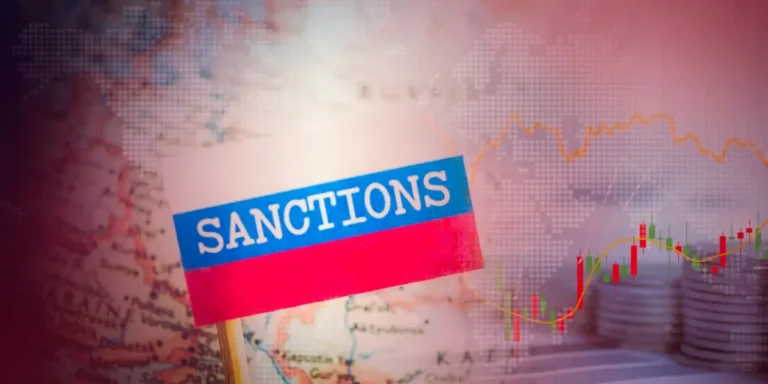
On the legal side, the EU created a sanctions framework for Russia’s destabilising activities on 8 October 2024 and renewed it on 8 October 2026 until 9 October 2027. It now covers 80 individuals and 20 entities, up from 69 individuals and 19 entities in April.
A 2024 EU directive requires member states to treat serious sanctions violations as criminal offences, with a transposition deadline of 20 May 2025. That moves the question from whether a ship’s papers are in order to who is liable for what it carried.
Look at what the money buys. Radars, interceptors, patrol aircraft and warships answer the drone, the missile and the ship. The paid arsonist recruited on Telegram, the jammer in Kaliningrad and the laundered website sit with national police, courts and platforms. By our own assessment that is where the response is thinnest. Governments also disagree on how to talk to Moscow at all, as our report on the Putin call describes.
What is still open
Several things will settle in the coming months. Estonia’s government has to settle the Russian border closure that the foreign ministry has announced for 1 December, including whether it is temporary. The Eagle S case returns to the Helsinki District Court.
Prosecutors in Estonia and Latvia must show who gave the order for the Threod attack. The European Drone Defence Initiative is due to reach initial operation by the end of 2026. The hybrid sanctions regime comes up for renewal in October 2027.
Three gaps will remain whatever happens. Attribution in most cases rests on the statements of governments and investigators, and Russia denies all of it. The true number of incidents is higher than any count, by the ICCT authors’ own assumption. And the chain from a Telegram recruiter to a named decision maker is rarely visible in public records.
The record shows a campaign that recruits cheaply, replaces its people easily and denies everything. It does not yet show who directs it case by case, or what would make it stop.
BASIS OF ANALYSIS
Basis of analysis: 52 sources, read in November 2026, among them news agencies, trade and regional outlets, research institutes, a European Commission page and a Latvian security service release. The ICCT dataset and the Danish port inspection figures were read through our earlier reports. Attribution of incidents rests on statements by governments and investigators, and Russia denies involvement. The Telegraph trawler analysis, the Lithuanian antenna figure and Ukraine’s account of diverted drones are single-source claims. Court documents and Council texts were not opened, and several figures were checked against secondary reports only.
Sources
- ICCT: More of the Same, Russia’s Crime-Terror Nexus Revisited (23 February 2026)
- Notes from Poland: Poland is primary focus of Russian sabotage (3 March 2026)
- NPR: Russia’s hybrid warfare rattles Poland and NATO (18 February 2026)
- Novaya Gazeta Europe: More than 50 incidents in Europe in half a year (24 October 2026)
- ERR News: 8 detained after attempted arson at Estonian defense company Threod Systems (15 November 2026)
- ERR News: Estonia to close border crossings with Russia after GRU-linked sabotage attacks (15 November 2026)
- Estonian World: Estonia plans to close its road crossings with Russia after an attack on drone maker Threod (15 November 2026)
- Latvian State Security Service: VDD detains three Latvian citizens on suspicion of arson in Estonia (20 August 2026)
- ThePrint and Reuters: Russia recruits Danes for sabotage planning, Denmark says (3 September 2026)
- Hello Rayo: Six jailed over Russian-backed arson attack on east London warehouse
- Express & Star: Architect of Wagner Group arson attack to pay victims more than £160,000
- The Record: Finland appeals court revives case against Eagle S
- The Register: Finnish cops grill crew of ship suspected of undersea cable sabotage (2 January 2026)
- The War Zone: First ship seized for undersea cable cutting since NATO’s Baltic Sentry began (31 December 2025)
- The Maritime Executive: Denmark targets shadow tankers in new port state inspection program
- Atlantic Council: The shadow fleet is undermining the maritime order more brazenly than ever
- Hill Dickinson: EU adopts 21st package of sanctions against Russia
- The Telegraph: Putin sends fishing trawlers to spy on Britain (21 October 2026)
- The Independent Barents Observer: Brussels imposes sanctions on Murmansk fishery industry
- Al Jazeera: Romania blames Russia after drone sinks ship in the Black Sea (23 October 2026)
- Al Jazeera: NATO to send additional patrol planes to Black Sea (20 October 2026)
- Arms Control Association: NATO Downs Russian Drones over Poland (October 2025)
- Warsaw Institute: Moscow’s creeping escalation, hybrid pressure on Poland and the Alliance (19 November 2025)
- Al Jazeera: Denmark reports hybrid attack as drones shutter major airport (25 September 2025)
- The Irish Times: Denmark says airport drone incident may have been Russian attack (23 September 2025)
- Al Jazeera: Russia suspected of jamming navigation on EU leader’s plane above Bulgaria (1 September 2025)
- LRT: GPS jamming incidents reported by pilots continue in Lithuania, regulator says (9 March 2026)
- Stars and Stripes: Russia builds powerful new radar as surveillance contest with NATO heats up (21 October 2026)
- Reuters via Internazionale: Drone incursions sow fear and chaos along NATO’s Baltic and Finnish borders (3 June 2026)
- DFRLab: Sanctioned Kremlin-affiliated content persists via Pravda Network (3 April 2026)
- Reuters via Internazionale: EU imposes sanctions on two Russian entities it says are linked to disinformation (21 April 2026)
- Euronews: EU defence chief says a painful response to Russian hybrid threats is needed (17 September 2026)
- European Commission: Action Plan on Drone and Counter-Drone Security (11 February 2026)
- AFP via Spacewar: EU says drone defences not optional in push to face Russia
- Lovguiden: Eight non-EU countries align with extended sanctions on Russia’s hybrid attacks (3 November 2026)
- ExtraFokus: Latest Russian Takeover Goes to a Months-Old Manager
- ExtraFokus: Sanctions deserve less credit than we claim
- Euronews: Denmark’s intelligence agency warns Russia actively preparing acts of sabotage (3 September 2026)
- Kyiv Independent: Poland says 2 Ukrainians tied to Russian intel likely behind railway sabotage
- Global News: Poland says railway blast was an unprecedented act of sabotage (17 November 2025)
- Liga.net: The Telegraph, Russia recruits gangs for sabotage at European defense plants
- Kyiv Independent: No longer hybrid, as Russian sabotage grows bolder Europe lacks red lines
- Maritime Danmark: Danish initiative to stop the Russian shadow fleet (in Danish)
- Shipping Telegraph: Denmark wants to curb Russia’s shadow tanker fleet
- EUR-Lex: Directive (EU) 2024/1226 on the definition of criminal offences and penalties for the violation of Union restrictive measures
- ExtraFokus (Danish): Sanktioneret tankskib og skyggeflaaden
- EUobserver: not every incident is Russian sabotage
- NPR: Poland’s prime minister warns of Russian ‘accidental’ attacks on Ukraine’s allies (18 September 2026)
- Euronews: EU defence chief says a painful response to Russian hybrid threats is needed (17 September 2026)
- Reuters via Internazionale: Russia recruits Danes for sabotage planning, Denmark says (3 September 2026)
- Ritzau via Sjaellandske Nyheder: Russia’s ambassador says weapons production poses a risk to Denmark (in Danish)
- Hellenic Shipping News: What is the shadow fleet, and why is it so hard to count?