


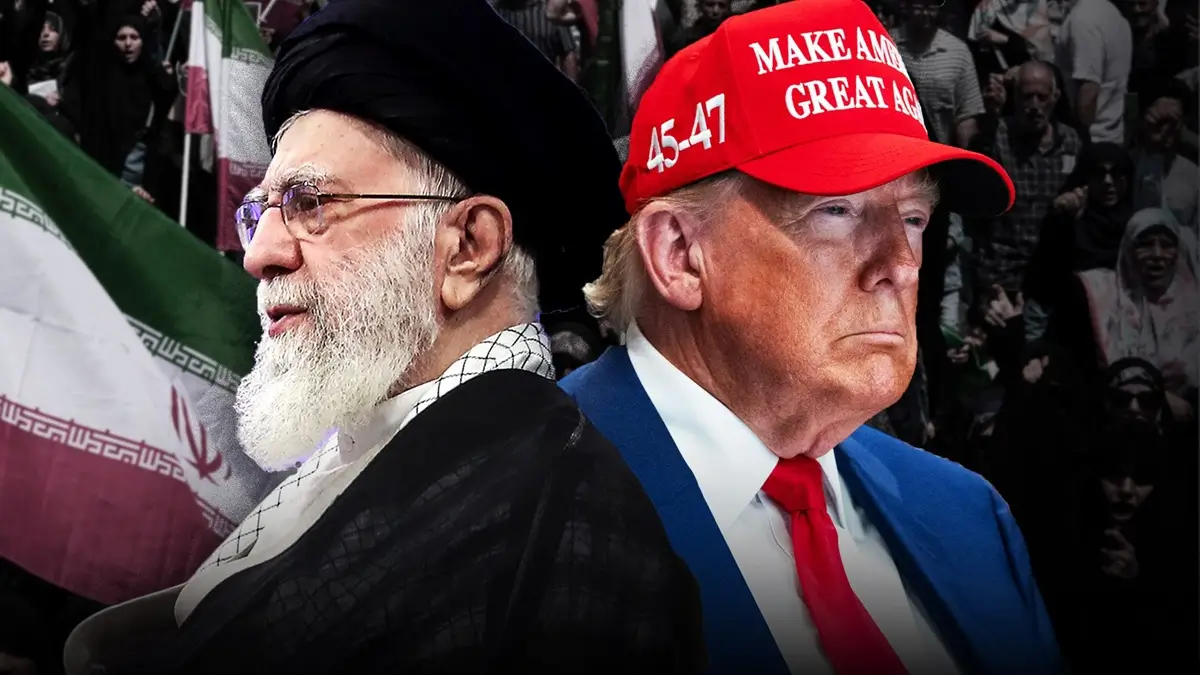
I have tried to find the moment when the Iran war made sense, and I cannot. Not on 28 February, when American and Israeli strikes killed Ali Khamenei. Not in the months after, when the stated aim drifted from nuclear material to missiles to something Trump would not call regime change.
Table of contents
American voters found their answer faster. A gallon of petrol cost $2.98 the day before the war began and $4.27 on 22 October. On 3 November they gave the Democrats both chambers of Congress. The next day Trump said it was “largely true” that the war had cost Republicans votes.
Then he said he would do it all again. I know few sentences that say more about a man.
A war run to the election calendar
On 8 October Trump promised that the United States would not attack Iran before the midterms, citing “productive discussions” with Tehran. In September he had said the war would end “immediately” after them. Who schedules a war around polling day? A president who knows his voters do not want it.
They did not want it. In July, AP-NORC polling found that about two-thirds of US adults thought the war had not been worth fighting. Mark Zandi, chief economist at Moody’s Analytics, put its cost at almost $2,000 per household by early October.
I am tired of the explanation that voters did not understand the war. They understood it perfectly. They filled their tanks.
In August Trump urged Americans to accept somewhat higher petrol prices, and he has said he will never apologise for striking Iran. Asking others to pay is easy. The household that covered the bill never voted on the war. It got the invoice anyway.
A war is a strategic success when the country ends up stronger. By that measure I cannot find what the United States won that is worth $2,000 a household and 21 dead soldiers. I have looked.
Brown University’s tracker shows Americans paid more than $141 billion extra for petrol and diesel from 28 February to 22 October. At least 21 service members have died and at least 865 have been wounded. Brent crude peaked at $116 a barrel on 23 October, then fell below $100 the day after the vote.
Tehran applauded
The most absurd part is who cheered. Mohammad Bagher Qalibaf, Iran’s chief negotiator and parliament speaker, posted on X: “Americans said NO TO WAR.” The regime that the war was supposed to hit is still standing. Khamenei’s son Mojtaba took his father’s post, and he says anyone expecting Iran to change its behaviour after the American vote is gravely mistaken.
Read also: Macron Buys Diesel With Europe's Security
The Strait of Hormuz, through which a fifth of the world’s traded oil and gas passed before the war, remains the lever. A ceasefire in mid-June left it blocked. Iran’s Revolutionary Guards said tankers hit mines near it on 4 and 5 November. No maritime official had confirmed that.
Everyone who buys oil pays the price Brent sets. That makes the strait a European bill as well as an American one, and Europeans who feel smug about American politics should check what they pay to heat their homes and fill their cars.
I find it hard to watch a war this expensive fought in the name of security, when the most visible result so far is a more confident Tehran and a poorer American household.
The best case for the war
Defenders have a real argument. Ali Khamenei, who ruled Iran for decades, is dead. Military experts say Iran’s stocks of drones, ballistic and cruise missiles and launchers are substantially weakened. Trump says voters grasped why his Iran policy mattered.
I accept all of it, and I still call the war a failure. Whether the United States can remove or destroy Iran’s nuclear materials is still an open question among military experts. A weakened missile stock is a gain. A regime that survives its supreme leader, a closed waterway and $4.27 petrol are the price.
Trump cannot agree with himself either. In the first hour of the war he urged Iranians to take control of their destiny. In June he said he had never cared for regime change. Pick one.
I share the view that Iran should not have nuclear weapons. I fear the war taught Tehran a different lesson from the one Washington hoped for. If you are attacked before you have the bomb, the lesson is that you should have hurried. I cannot rule that fear out.
A new supreme leader whose father was killed in those strikes also has few reasons to trust American promises.
The Republicans who stayed quiet
I am not finished with Trump’s own party either. In the toughest districts most Republicans stood behind him, hoping voters would stomach the pain. Senator Jim Justice of West Virginia called the war a “mess”. He was right, and the truth arrived after the invoice.
A few deserve respect. Representatives Brian Fitzpatrick of Pennsylvania and Tom Barrett of Michigan voted to limit Trump’s war powers. The rest waited for someone else to say it aloud. Voters punish that kind of politics at the ballot box.
Washington moved first
Regime change is a big phrase for a midterm, and I use it with that in mind. Trump has two years left, and the Democrats lack the two-thirds majority needed to override a veto. What happened is that a people took the majority from a president who fought a war nobody asked for.
Tehran did not change. Washington did. You do not have to like the Democrats or hate Trump to see that a war with no goal and no end date is a bad deal.
The Democrats deserve less praise than they will give themselves. They have had eight months and a minority, and the war went on. Now they have the money, and they must show they mean it.
Read also: Sanctions deserve less credit than we claim
The War Powers Resolution of 1973 requires military action to end within 60 days unless Congress declares war. The Iran war began on 28 February without authorisation, and the sixty days ran out at the end of April. Representative Jason Crow says Congress has voted on seven war powers resolutions and passed two. The war goes on.
Money is the stronger weapon. The government funding bill expires on 11 December. Senate Democratic leader Chuck Schumer says the war must end, and he points to funding as the tool. Saying it is cheap. Doing it is harder, because about 50,000 US troops are in the region, and James Boys of University College London calls cutting their funding “highly problematic”.
What Bush did in 2006
On 8 November 2006, the day after Republicans lost Congress in a vote shaped by the Iraq war, President George W. Bush announced that Defense Secretary Donald Rumsfeld, the war’s chief architect, was leaving. Robert Gates replaced him. Bush said the time was right for new leadership.
Trump answered his lost midterm by defending the war. Two years after 2006, with a financial crisis added to Iraq, Republicans lost the White House too. I do not say the same fate awaits Trump, who is barred from a third term. I say a president with nothing left to win has the freedom to ignore a verdict, and Tehran is counting on that freedom.
The date I will be watching
Wars are always sold as short. Trump has said again and again that this one was almost over, and eight months later we still read of tankers hitting mines. The next time anyone promises a short war, I want us to ask for the end date before we ask about the enemy. Nobody got an answer to that question in February, when the war began without congressional authorisation.
I do not believe Trump will stop on his own. The Democrats will chair every congressional committee from January, and that gives them subpoenas and hearings. It does not give them the war’s off switch. Only the money does.
So the date is 11 December. If Schumer’s Senate Democrats let the funding bill pass without an end date for the war, American voters will have changed the majority and nothing else.
Opinion pieces on ExtraFokus.eu reflect the views of their authors.
Sources
PBS NewsHour: Iranian leaders say midterm results show U.S. voters have rejected Trump’s war (4 Nov 2026): the election result, Qalibaf’s post and Mojtaba Khamenei’s statement.
Al Jazeera: Can Democrats stop Iran war, reverse Trump’s tariffs after midterms win? (4 Nov 2026): the War Powers Resolution, the 11 December funding deadline and the Democrats’ options.
Center for American Progress: Fact sheet, costs of the Iran war (23 Oct 2026): petrol prices, Zandi’s estimate, the Brown tracker, casualties and troop numbers. A progressive think tank; the figures originate with other sources.
CBS News: Iran War Updates (4-5 Nov 2026): Trump’s remarks after the election, the Brent price, the tanker reports and the statements by Crow and Schumer.