


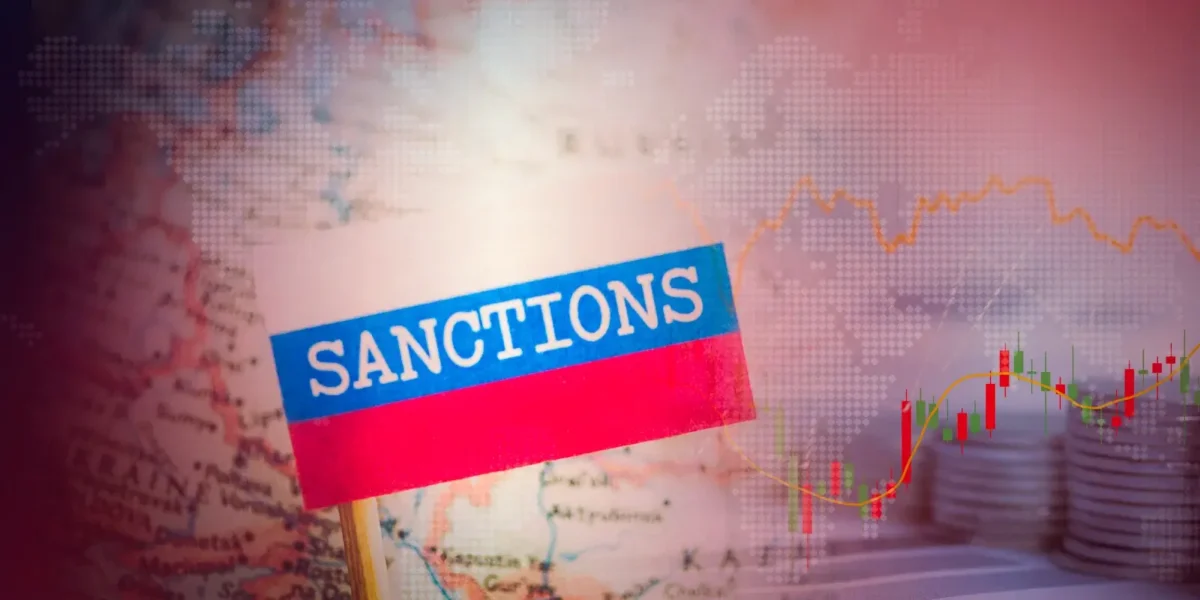
Since July the EU has tightened its Russia sanctions with a new package, and since October the United States has waived its own new sanctions law and opened its market to Russian diesel. Sanctions on Russia now work differently depending on which side of the Atlantic a ship, a bank or an oil cargo sits. A European operator may not trade in Russian diesel that an American importer is today allowed to receive.
Table of contents
Brussels tightens, and gives way
The Council adopted the 21st sanctions package on 23 July 2026. It lists 218 new targets, 48 individuals and 170 entities, and adds 41 vessels to the 632 already listed, 673 in all. The listing criteria now reach ships that provide bunkering or tug services to listed vessels, and ship-to-ship transfers with them.
Banks are hit widely. The transaction ban now covers 33 more Russian banks, and 94 banks and financial institutions have had their assets frozen. Georgia’s Kulevi refinery is the only third-country refinery the package names, and the ban on dealing with it takes effect on 25 January 2027.
But each tightening has its counterweight. The automatic adjustment of the oil price cap is paused until 15 July 2027, and the law firm Steptoe reports that the cap stays at USD 44.10 a barrel for twelve months. The EU itself links the pause to the closure of the Strait of Hormuz.
And the LNG ban got a hole. Carrying Russian LNG is exempt if the contract was signed before 24 February 2022, runs longer than a year and stays under an annual cap based on 2025 volumes. The exemption lasts until 25 July 2027. The ban on maritime services covers the vessels on the list, but not Russian crude in general.
The pressure continues. On 16 November the Council listed another 101 entities and 12 individuals, among them nearly 50 Russian banks and financial institutions and companies in the United Arab Emirates, Hong Kong, the Seychelles and Oman. According to a joint statement by Ursula von der Leyen and Antonio Costa, a 22nd package is to be presented at the European Council on 26 and 27 November.
Read also: Sanctions deserve less credit than we claim
Russia sanctions: Washington moves the other way
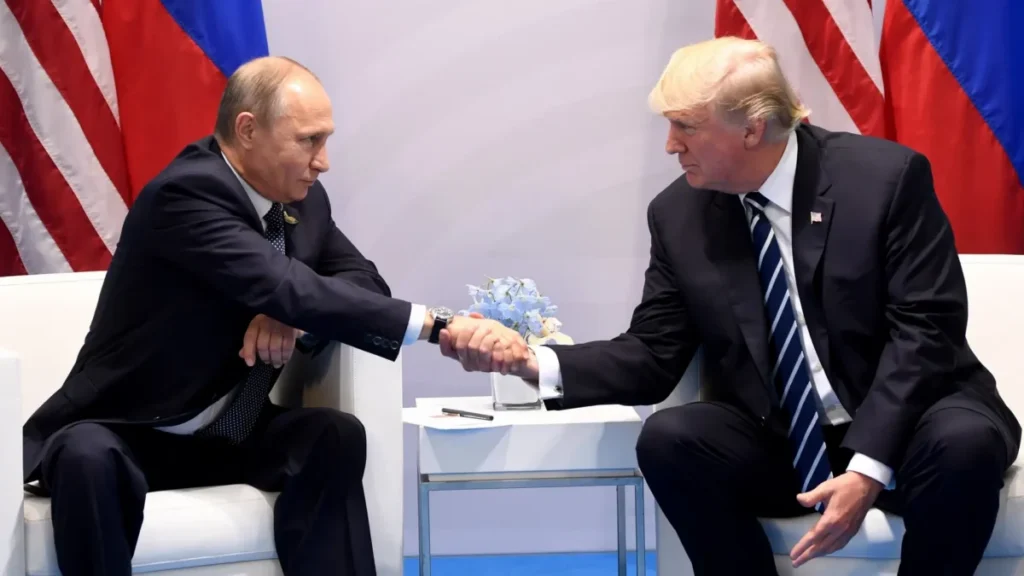
The US sanctions law named after Senator Lindsey Graham was signed on 18 September 2026. In an executive order of 16 October (number 14436), President Donald Trump waived its duties and sanctions on Russia, among them a 500 percent duty on Russian goods and 100 percent on goods from the five largest buyers of Russian oil and gas, if they make new purchases from 18 October.
The waiver has no end date. It stays in force until the President or the Secretary of State decides otherwise, and the order cites US national interests. Earlier sanctions under existing orders are untouched.
Seven days earlier the Treasury’s sanctions office OFAC had issued General License 135, dated 9 October. It authorises all transactions in diesel of Russian origin, including imports into the US, through 7 April 2027, but not debits to US accounts of Russia’s central bank, wealth fund or finance ministry. The licence sets no other conditions.
Trump has announced a deal for 300,000 tonnes of diesel; the terms are not published and Russia has not confirmed them. The law firm Clyde & Co assesses that the licence sits in tension with a 2022 US law banning imports of Russian oil, and that it may face a legal challenge.
In practice the diesel is slow to arrive. According to Steptoe, none of the four tankers first expected to deliver Russian diesel to the US had unloaded at an American port by 12 November, and US banks and importers have held back over “legal questions and commercial risks”. Democrat Gregory Meeks introduced a bipartisan bill on 16 October to nullify the licences.
Democrats won both chambers on 3 November, and the new Congress convenes in January 2027. A bill would still need the President’s signature or a veto override. Meanwhile OFAC issued licence 131L on 19 November for negotiations and contingent contracts on a sale of Lukoil’s foreign business, the news service Newsquawk reports. The expiry date is not stated in the source.
Read also: A Sanctioned Tanker Sits Off Bulgaria. Europe’s Port Checks Would Not Have Stopped It
The gap where the oil money stays
Clyde & Co writes that the EU ban on trading, brokering and transporting Russian diesel applies unchanged. UK and EU persons also remain barred from supplying Russian diesel to the US unless the price stays under the cap. The same cargo can be legal in an American port and forbidden to a European shipowner.
Enforcement inside the EU is itself uneven. The European Court of Auditors found on 10 November, in special report 30/2026, that divergent national enforcement of trade sanctions lets businesses “forum-shop”, that is, pick the country where checks are mildest.
Alexander Kolyandr of the think tank CEPA looked at price. The discount of Russian Urals crude to Brent was USD 10 to 15 in normal times and about USD 20 after the US designations of Rosneft and Lukoil in October 2025, but fell to near zero in March and April. He estimates that each USD 10 the discount narrows is worth about USD 1.6 billion a month to Russia.
The figure is the author’s own estimate, and it cannot be separated from other things that moved the oil market, such as the closure of the Strait of Hormuz. CEPA also notes that from 19 May the UK banned imports of products refined from Russian crude in third countries, but exempted diesel and jet fuel under a general trade licence with no end date. The EU has had a similar ban since 21 January.
Two pauses, one end date
The EU’s pause on the price cap ends on 15 July 2027. America’s pause on its sanctions law ends when the President or the Secretary of State says so.