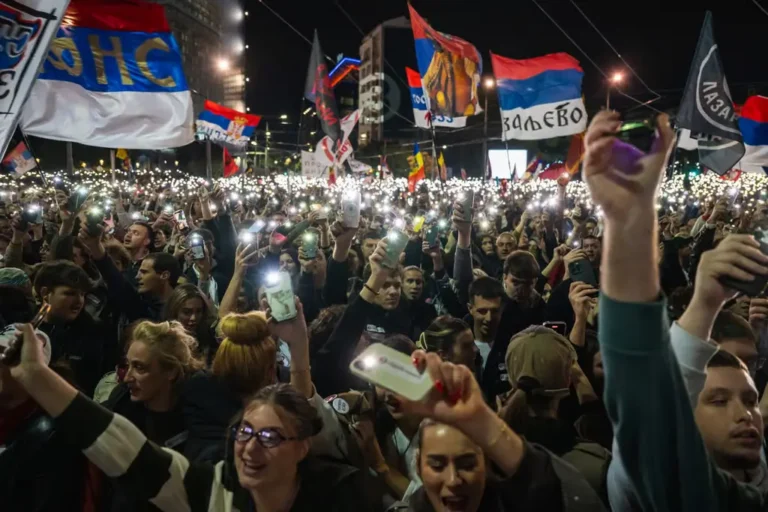



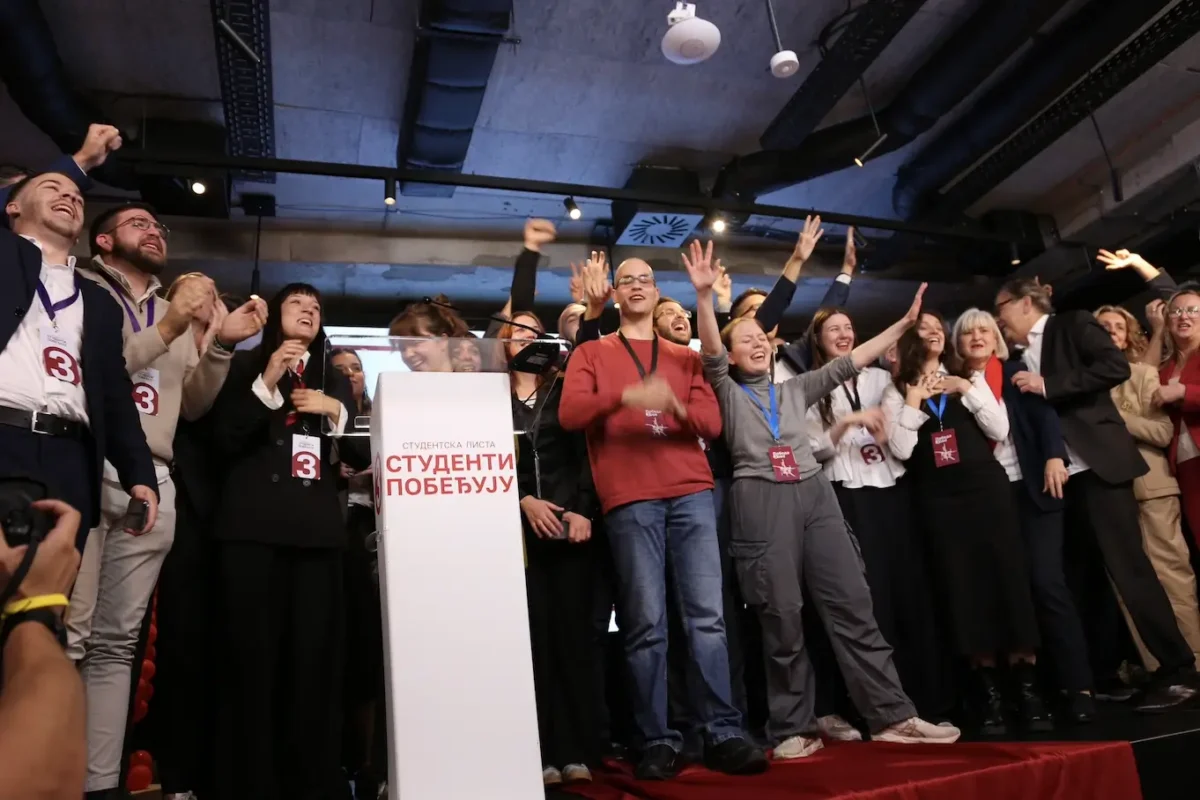
Serbia’s Student List won 140 of 250 parliamentary seats on 25 October, and the country’s 6.45 million registered voters now expect a government of professors and teachers with hardly any political experience. For the rest of Europe the result is a practical test. Serbia has negotiated EU membership since January 2014, and the Commission’s own report says the pace depends on rule of law reforms. The people who protested for those reforms now hold the majority.
Table of contents
The final count leaves little room for doubt
The Republic Election Commission declared final results on 5 November. The Student List took 2,354,417 votes and 140 seats. Aleksandar Vučić’s United Serbia list took 1,731,323 votes and 103 seats. The remaining seven seats went to minority lists: two each for the Alliance of Vojvodina Hungarians and an Albanian coalition, and one each for the lists of Rasim Ljajić, Usame Zukorlić and the SDA.
Of 6,451,292 registered voters, 4,444,310 turned out, roughly 69%. Vučić conceded defeat on 25 October. The commission must still formally allocate the mandates, and the inaugural session of parliament follows within 30 days of the final results.
A government without a record
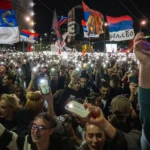
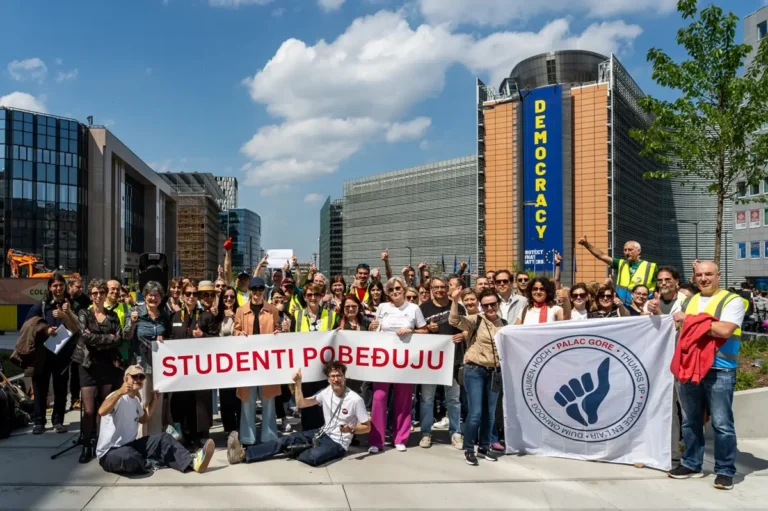
The list’s candidates are mostly professors, teachers and other experts. It is headed by the cardiologist Ilija Srđanović. They promised to restore the rule of law and to end corruption, and the movement behind them began after the collapse of the Novi Sad railway station canopy in November 2024, which killed 16 people.
Read also: Brussels must set terms for Serbia’s Student List
Inexperience is the incumbents’ best argument. Vučić has accused his opponents of “revolutionary terror”, and his party still controls the outgoing government and the police. A majority of 140 gives the students the votes to govern. It gives them no administrative record, and they take over a state still run by the outgoing government.
The outgoing state still moves
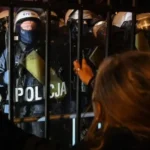
The transition is already producing arrests. Senior police officials, a bank owner and the head of the national meteorological institute have been detained, the last on suspicion of money laundering. On 4 November nine police officers were detained over alleged torture and harassment of students last August. These are suspicions.
Until parliament elects a new government, the police and the ministries answer to the outgoing one. The students’ majority is real, but it does not yet govern anything.
Brussels answers Serbia’s Student List in familiar words
Commission President Ursula von der Leyen wrote: “Congratulations to the Student List on its victory in the parliamentary elections.” She added that the Commission stands ready to support reforms on the rule of law. Enlargement Commissioner Marta Kos said “Serbia has raised its voice” and pointed to the protests for democracy, the rule of law and the fight against corruption.
Alain Berset, Secretary General of the Council of Europe, welcomed Vučić’s acceptance of the result. These are warm statements, and the process they refer to has stalled under Vučić.
What the Commission’s own report asks
In its 2025 Serbia report, published on 4 November 2025, the Commission records that 22 of 35 negotiating chapters have been opened since January 2014 and two provisionally closed. It calls the next block, Cluster 3 with eight chapters, “technically ready to open”. And it writes that the “overall pace of negotiations will continue to depend on the rule of law reforms”.
Read also: Albania should not fine people for standing near a protest
When the EU delegation presented the report in Niš, it described the pace of reform as having slowed significantly. That is the yardstick, and the Student List was elected on it.
A technical assessment does not open a cluster. Strahinja Subotić, a senior researcher at the Belgrade think tank CEP, wrote in December 2024 that the Council had recognised Serbia as ready for Cluster 3 but tied the opening to further progress on rule of law and normalisation with Pristina.
He listed eight member states that still blocked it: Sweden, Finland, the Netherlands, Latvia, Lithuania, Estonia, Croatia and Bulgaria. That list dates from December 2024, and member states’ current positions may differ.
Neighbours place their bets
Serbia’s neighbours reacted at once. Hungary’s prime minister Péter Magyar phoned the list’s leaders and assured them of Hungary’s support. Montenegro’s prime minister Milojko Spajić wrote that the citizens of both countries deserve relations measured by “concrete results of cooperation”.
At EU level, High Representative Kaja Kallas said when the 2025 enlargement package was presented that new countries joining by 2030 is “a realistic goal”. A Serbian government elected on a rule of law mandate is the first test of how realistic that is for a candidate whose talks have stalled under Vučić.
The Commission says Cluster 3 is technically ready to open. Serbia now has a majority elected to deliver the reforms the same report makes the condition for pace. The next move belongs to the member states that held Cluster 3 back, and congratulations cost nothing.
BASIS OF ANALYSIS
Basis of analysis. The analysis rests on eight sources, of which the Commission’s 2025 Serbia report and the EU delegation’s account of it are official, while the election results and leaders’ statements are reproduced through media. The Commission report was read in part. Current member state positions on Cluster 3, any named prime ministerial candidate and any Commission statement issued after the final results could not be confirmed.
Sources
- N1: Election Commission announces final results of parliamentary elections (5 Nov 2026) – votes and seats per list, turnout.
- AP via NY1: Declaration of final vote results in Serbia paves way for student movement to form government (5 Nov 2026) – candidates, outgoing government, detentions, 30-day rule.
- Reuters via The Star: Reactions to election victory of Serbia’s Student List (26 Oct 2026) – statements by von der Leyen, Kos, Berset, Magyar and Spajić.
- Georgia Today: EU leaders congratulate Serbia’s Student List on election victory (26 Oct 2026) – preliminary EU reactions, head of the list.
- Council of the EU register: Commission Staff Working Document, Serbia 2025 Report (4 Nov 2025) – chapters opened, Cluster 3 assessment, rule of law condition.
- EU Delegation to Serbia: 2025 Serbia Report presented in Niš (14 Nov 2025) – pace of reforms described as slowed.
- CEP: Towards the opening of the “infamous” Cluster 3 (20 Dec 2024) – member states blocking Cluster 3 as of December 2024.
- Brussels Times: EU enlargement, frontrunners are leaving laggards behind (6 Nov 2025) – Kallas on the 2030 goal.