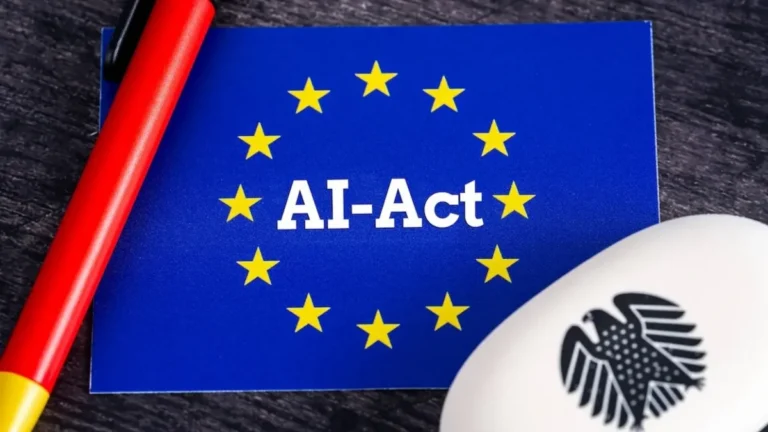
A law you use every day, from the cookie banner on your phone to the rules on what an AI system may do with your face, was written somewhere you cannot enter. The drafting happens in meetings, calls and shared documents among officials, lobbyists and a few lawmakers. Most of it leaves no public trace.
Table of contents
- Three answers to who runs the EU, and a fourth in the diary
- The lobby league, in euros
- The Digital Omnibus test case
- Two scandals, no trial
- Huawei and the immunity votes
- The case for immunity
- The referee that was blocked
- Revolving doors in practice
- Rules written after the lobbying
- What a citizen can check today
This guide follows that process from the diary to the courtroom. It starts with who gets into the room and what they spend to get there. It then looks at the biggest recent test case, at two corruption investigations that have shaken the European Parliament, and at the bodies that were meant to referee all of it. It ends with what a citizen can check without anyone’s permission.
One caution first. Several people named below are the subject of Belgian investigations or requests and have not been convicted of anything. The Parliament itself says in its decisions that a vote on immunity is not a verdict, and this guide treats it the same way. Where a company denies allegations, the denial is stated.
Three answers to who runs the EU, and a fourth in the diary
Ask who runs the European Union and you get three answers. The Commission says it proposes the laws. The governments in the Council say they decide. The Parliament says it is the only body voters elect. All three are partly right, and our guide Who Really Runs the EU? The Answer Depends on the Room sets out the formal map.
The fourth answer sits in the lobbying register. The EU’s Transparency Register listed 17,269 organisations when Transparency International EU analysed it in spring 2026, and the Commission logged 27,523 meetings with interest groups between December 2024 and April 2026. That is more than in the whole 2019 to 2024 mandate.
The same analysis found that the 500 most active organisations account for 47 percent of those Commission meetings, and that among the 100 organisations with the most access, 84 represent corporate interests. Logged meetings measure what is disclosed, so a rise can reflect better compliance as well as more lobbying. The pattern of who gets in is harder to explain away.
The rules for getting in differ by institution. Senior Commission officials may only meet registered lobbyists. Transparency International EU says the same requirement does not apply in the Parliament, and it calls the Council, where national governments negotiate, the EU’s most opaque institution.
That matters because the text of a law is mostly settled before the formal votes. Working groups of national civil servants grind through detail months before a minister sees a paper, and the three institutions then agree a final text in closed negotiations called trilogues. The vote that reaches the news is the end of the process, not the middle.
The lobby league, in euros
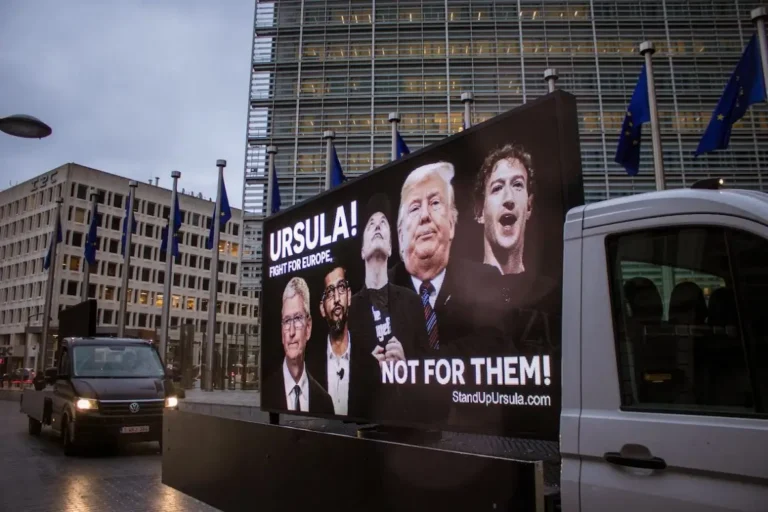
Access has a price. In June 2026 Corporate Europe Observatory and LobbyControl published their Corporate Lobby League for 2026. They count at least 381.7 million euros of declared annual lobbying spending by companies and trade associations, up 7.8 percent on 2025. A total of 173 companies and associations declare more than one million euros each.
Big Tech comes out on top of the sector ranking with 73 million euros. Finance follows with 66.7 million. The groups treat their total as a minimum, because the league counts the organisations that declare above the one million euro line and relies on figures that companies report themselves.
A second number circulates and it must not be mixed up with the first. In our report on the Digital Omnibus, a separate analysis put declared spending by the digital industry as a whole at 151 million euros, up from 113 million in 2023, an increase of 33.6 percent. That figure covers a broader group of digital firms and associations over a different period. The 73 million covers the Big Tech companies in the 2026 league.
Neither number tells you how much any of this changed a law. Money buys meetings and staff who can read a 300 page draft overnight. It does not buy votes in any direct sense, and nothing in these reports claims it does. What the figures show is how lopsided the ability to take part has become. A citizens’ group with two staff cannot match a company that employs a lobbying floor.
Industry and many lawmakers give a fair answer to this. Legislators are generalists, and technical laws about software, chemicals or finance are hard to write without expert input from the people who will have to follow them. The question is not whether lobbyists should be heard. It is whether everyone else can be heard on the same terms.
The Digital Omnibus test case
Read also: The Digital Omnibus Follows Big Tech’s Wish List Closely
The clearest recent test of that question is the Digital Omnibus, the Commission’s November 2025 package to change Europe’s data protection and AI rules. Corporate Europe Observatory and LobbyControl set eight of its proposed changes beside the position papers of Big Tech companies and their trade associations, and report close matches for most of them.
One example: the proposal that pseudonymised data would stop counting as personal data for a company that cannot identify the person is tied by the groups to papers from DigitalEurope and Microsoft Germany. Moving parts of the cookie consent rules into the GDPR is tied to Google and Microsoft. A delay to the AI Act’s high-risk rules is tied to CCIA, DigitalEurope and Meta.
The Commission strongly disputes the reading. It says the package came out of a transparent process that drew on civil society, small businesses and academia, and it frames the changes as simplification that makes Europe more competitive. A match between a lobbying paper and a legal text shows that the two say similar things. It does not show who wrote what, and the groups describe their own work as critical analysis.
The outcome so far is mixed, which is the honest summary. The EU’s data protection regulators opposed the new definition of personal data in a joint opinion in February 2026. The Council kept the core definition intact in October 2026. The AI half of the package passed with the delay that industry had asked for. The data half is unfinished, and the Parliament has still to set its position.
Our own piece on the AI Act delay follows the other half of that story. Read together, they show a pattern that repeats across this guide. The rule is proposed, the industry response is on the record, and the outcome lands somewhere in between. What is missing is a public record of the drafting itself.
Two scandals, no trial
In December 2022 Belgian police raided homes and offices in Brussels in what became known as Qatargate, an investigation into suspected corruption and influence buying involving people around the European Parliament. Investigators seized more than 1.5 million euros in cash. Nearly four years later, as far as I could find, no trial date has been set.
The case has moved in the courts and in the Parliament. In February 2026 the indictment chamber in Brussels ruled that the proceedings can continue, rejecting most of the objections raised. In December 2025 the Parliament had lifted the immunity of Alessandra Moretti and kept that of Elisabetta Gualmini. The Belgian side had asked Parliament to lift the immunity of both. Neither has been convicted of anything in this case.
The slow pace has a cost of its own. For years the public could not tell whether the Parliament’s reforms after Qatargate answered a real problem, because the problem itself had not been tried. That is a feature of how such cases work, and it makes the next scandal harder to judge while it unfolds.
The second scandal arrived in March 2025. Belgian police searched premises in Brussels on 13 March over suspected bribes paid to members of the Parliament to support Huawei’s interests, including on 5G. Huawei says it has zero tolerance for corruption and will cooperate with the authorities. The Parliament suspended the access of Huawei’s lobbyists the next day.
Huawei and the immunity votes
Members of the Parliament have immunity, and Belgian prosecutors need the Parliament’s consent to pursue some of them. In June 2026 the Parliament voted on four requests. In early June its Committee on Legal Affairs rejected three of the four, and the Green member Daniel Freund, who follows these files closely, commented on the result.
On 16 June the plenary decided each case. It lifted the immunity of Fulvio Martusciello by 344 votes to 234. It kept the immunity of Nikola Minchev, Daniel Attard and Antonio De Meo. Lifting immunity only allows the Belgian procedure to go further. Mr Martusciello is the subject of a Belgian request and has not been convicted of anything. Mr Attard asked for his own immunity to be lifted so that he could clear his name, and Parliament’s decision records that the allegations against him turned out to rest on mistaken identity, according to the Belgian prosecutor’s letter of 5 March 2026. None of the four has been convicted.
The decisions themselves matter more than the vote count. They are public, and they give the Parliament’s reasoning in its own words. Anyone can read the text of the Attard decision, adopted text P10_TA(2026)0192, and see where the Parliament says that it is not a court and that an immunity procedure is not a judgment on guilt.
Four requests, one lifted and three refused, is a result that readers will interpret according to what they already believe. A critic sees a Parliament that protects its own. A defender sees a Parliament that refuses to hand members over to prosecutors on thin papers. The next section takes the defender seriously.
The case for immunity
Parliamentary immunity exists for a reason that predates any of these cases. Members vote and speak on contested matters. A government that dislikes a vote could in principle ask a prosecutor to open a case against the member who cast it. Immunity protects the votes and opinions of members from that kind of pressure.
The Parliament’s legal affairs committee also looks at whether a request is backed by enough documentation. In its decisions on three of the four requests, the Parliament wrote of “a flagrant scarcity of concrete elements” in the request itself, not in the underlying allegations. That is an assessment of what Belgium sent, and the texts say the doubt may point to political motivation. Freund disagrees. If the assessment holds, refusing those requests was a defensible use of the procedure and not an act of self-protection.
The Parliament’s own text makes a further point that critics sometimes skip. It says that a decision on immunity does not decide guilt or innocence, and that the Parliament cannot act as a court. A refusal does not close a case. Prosecutors can keep investigating. What it blocks is the specific steps that need consent.
Critics answer that the same logic is cold comfort when the allegation is bribery. Voting is protected for good reason. Taking money to vote a certain way is not voting, and a procedure that cannot tell the two apart without the accused’s colleagues deciding has a conflict of interest built in. Transparency groups have argued for an outside body to take that judgment out of the Parliament’s hands.
Both positions are held in good faith. The practical point for a citizen is narrower. After four decisions on the same investigation, the Parliament’s reasons are public and the Belgian file is not. You can judge the first and not the second.
The referee that was blocked
Read also: Europe needs a revolving door rule for AI
Qatargate forced a promise. In early 2023 the Parliament demanded an independent ethics body with real powers, mandatory registration of lobbying events and cooling-off periods for former members. What arrived in May 2024 was smaller. Eight institutions signed an agreement creating an inter-institutional ethics body. Each institution sends a representative and five independent experts advise, and their opinions are not binding.
The body develops common minimum standards on interests, outside activities and gifts and publishes an annual report. It does not investigate individual cases or recommend sanctions. The European Council does not take part, and the ministers who sit in the Council are not covered by the standards.
Even that modest version met resistance. On 14 May 2025 the Parliament’s Committee on Constitutional Affairs voted 17 to 13 against carrying out Parliament’s part of the agreement, with the centre-right European People’s Party joined by members from the far right, according to reporting by the Brussels Times, Euronews and the eucrim legal news service.
Where does it stand now? In the sources I could open, I found no later vote that settles the matter. One policy brief calls the body newly established, while other accounts describe the Parliament’s participation as delayed or blocked. A reader should check the Parliament’s own pages before relying on either description.
The argument against the body is not frivolous. Members elected by voters, the argument goes, should answer to voters and to courts, not to a panel that nobody elected. The argument for it is that clear shared standards protect honest members too. So far the first position has prevailed, and the body’s modest design is the reason the second is hard to test.
Revolving doors in practice
The people who write rules and the people who are regulated by them also swap jobs. The European Ombudsman has been looking at this for two years. In May 2024 the office opened a strategic initiative on officials from the Commission’s competition department who move to law firms that represent companies before it. According to Euronews, the Commission pointed to its twelve month ban on lobbying former colleagues.
In April 2026 the Ombudsman, Teresa Anjinho, closed a separate inquiry, OI/5/2025/KR, into revolving door practices at 15 EU agencies. The decision is public on the Ombudsman’s website and is worth reading by anyone who wants to see how a cooling-off rule works in practice and where it stops. A twelve month wait is short next to a ten year career.
The cases that reach the public are the ones that break the rules. According to DutchNews, citing the Uber Files documents, the former Commissioner Neelie Kroes breached ethics rules by lobbying for Uber after leaving office. Kroes denies any formal or informal role before May 2016. Most moves do not break any rule, and that is the point of a rule written too loosely.
Our opinion piece on a revolving door rule for AI argues that artificial intelligence makes the problem more urgent. The same companies now build the tools that governments use to analyse threats and handle data about their citizens, and an official who has run a procurement office knows exactly what a bid has to say. A rule written now would cost very little.
Rules written after the lobbying
It helps to see what this looks like in a policy area where the stakes are not abstract. When the AI Act’s high-risk rules were delayed, the case for delay came from industry groups and, to a degree, from member states and the Commission itself, which said that technical standards were not ready. The delay became law in July 2026, and the high-risk obligations for stand-alone systems now apply from 2 December 2027, and those for AI built into regulated products from 2 August 2028.
You can think that delay is sensible and still ask how the decision was made. Our reporting on Europe’s AI rules for systems it rents asks a related question about who benefits when the rules take effect, because Europe writes obligations for systems that mostly run on American infrastructure.
The Union’s enforcement record shows the other side. Brussels fined Big Tech 2.46 billion euros and then faced US tariff threats. A fine is the end of a long procedure. The case in our report on Meta’s fines in Brazil and the DSA shows how another country tests the same ideas. In each case a rule that took years to write is judged by whether anybody can enforce it.
The pattern is easy to state. Those who can follow a process closely, afford the staff and show up early shape the text. Those who cannot, mostly citizens, small firms and local groups, meet the law only after it is passed. That is not a conspiracy. It is how a system behaves when attention costs money and the record of who spoke to whom is partial.
Some of the bigger gaps are structural. The Council, where governments negotiate, has no equivalent of the Commission’s meeting diary. Implementing and delegated acts, which fill in technical rules after a law passes, get far less attention than the law itself. A citizen who follows only the headline vote sees the shortest part of the process.
What a citizen can check today
You do not need to wait for a prosecutor to learn how a law was made. Several tools are open to anyone. Each has limits, and it is worth knowing what they are before you rely on them.
The Transparency Register lists organisations that lobby the EU institutions, with their declared spending bands, staff numbers and interests. It relies on self-declaration. The Commission’s published meeting diaries show who met a Commissioner or a senior official and about what. Transparency International EU’s Integrity Watch tool lets you search those meetings by organisation and by topic.
For spending, the LobbyFacts database compiles register data over time, so you can see how a company’s declared budget moved. Treat the numbers as a floor, as the Lobby League itself does. A company that declares nothing is not necessarily spending nothing.
For immunity decisions, the Parliament publishes adopted texts and the reports behind them. For documents that are not public, the EU has a right of access to documents that any resident can use. Our guide to requesting public documents in Europe walks through it, and how to follow EU money shows where the funds go once a law is passed.
Three habits help when you read about any new EU law. Look for the list of who the Commission met. Compare the proposal with the position papers of the sectors it affects. Then ask who is missing from the room. The answer is usually the group that has the least money to send someone.
The Qatargate files may reach a courtroom, and the Huawei investigation may too. Until then, the public record has one stable fact: the law and the lobbying around it are visible long before the verdict, if someone reads them.
BASIS OF ANALYSIS
Basis of analysis: public reports by Transparency International EU, Corporate Europe Observatory and LobbyControl, adopted texts of the European Parliament, press reporting on the Qatargate and Huawei investigations, and decisions of the European Ombudsman, read in November 2026. People named have not been convicted of anything.
Sources
- Transparency International EU: Who really has the EU’s ear (29 May 2026)
- Transparency International EU: EU political integrity
- Corporate Europe Observatory and LobbyControl: The EU’s 2026 Corporate Lobby League (June 2026)
- Corporate Europe Observatory and LobbyControl: How Big Tech shaped the EU’s roll-back of digital rights
- European Parliament: adopted text P10_TA(2026)0192 on a request to waive immunity (June 2026)
- eucrim: New ethics body set up to develop a common ethics culture in EU institutions
- eucrim: EP pushes for increased transparency and integrity after Qatargate
- DutchNews: Former commissioner Neelie Kroes breached ethics rules by lobbying for Uber (July 2022)
- Euronews, Brussels Times, Eunews and TNW reporting on the Huawei investigation, the immunity votes of June 2026 and the ethics body vote of 14 May 2025
- European Ombudsman: decision in inquiry OI/5/2025/KR (20 April 2026)