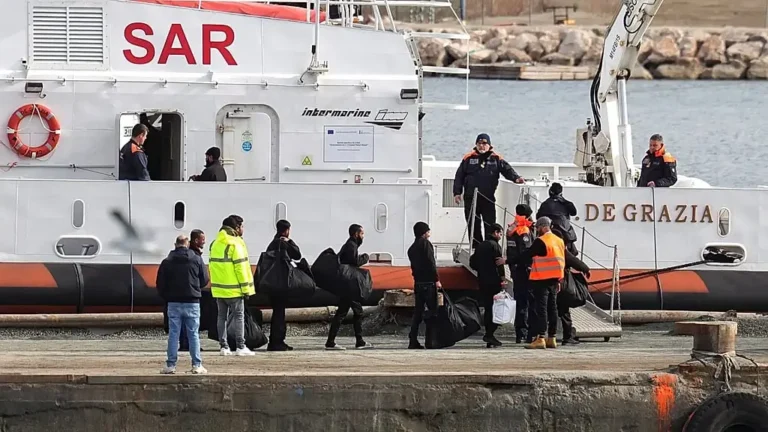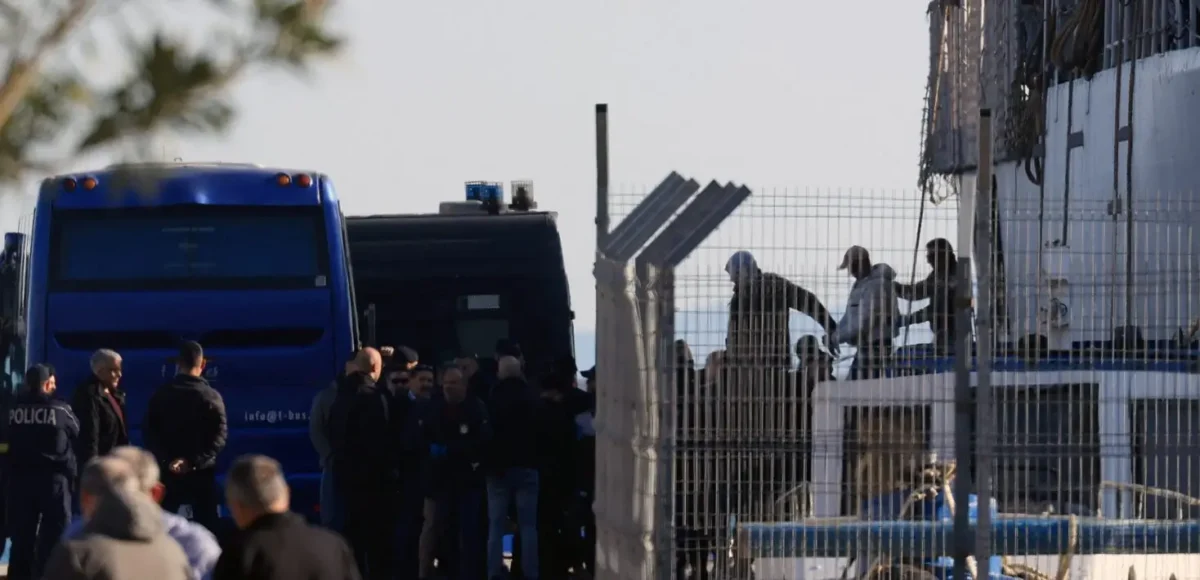
Rejected asylum seekers from Germany, Austria, Greece, Denmark and the Netherlands could be sent to Rwanda from 2027. The five governments are due to present the deal in Vienna on Monday 16 November at 4pm, and what is known comes from diplomats and people briefed on the talks, not from a published text. It would be the first return hub outside the bloc.
Table of contents
Diplomatic sources describe a pilot for about 100 people, with each country possibly sending around 20. Another account speaks of a few hundred people from spring or summer 2027. The gap suggests how little is fixed, and the precedent matters more than the headcount.
What a return hub in Rwanda would be
The hub is for people who have already lost. It would take rejected asylum seekers who have exhausted every legal route to stay in the EU, which sets it apart from the British scheme, where claims were to be processed in Rwanda. The UK Supreme Court ruled that scheme unlawful in 2023, and it was scrapped in 2024.
Diplomatic sources say the site would not be a detention facility. Rwanda would prefer to call it a welcome centre, and some people might stay and work in the country. People briefed on the talks add that residents would get residence permits and freedom of movement, with no time limit on their stay.
A stay without an end date can turn a transfer centre into a destination. Critics call such hubs “legal black holes” with little oversight, and the Danish Refugee Council’s EU director, Celine Mias, asks who is legally responsible for a person once the transfer has happened.
Read also: Estonia Shuts the Russian Border, but the Suspects Lived in Latvia
The law came first, and the host second
The legal frame was built before the host was named. The Return Regulation was politically agreed on 1 June 2026, and the European Parliament approved it on 17 June by 418 votes to 218, with 30 abstentions. It formalises the possibility of return hubs: people who cannot be returned to their country of origin may be transferred to a third country with which an agreement or arrangement exists.
The most consequential change is a deletion. Until now most migrants could only be sent to their country of origin or to a country with which they had a proven connection. The new law drops that requirement. Only unaccompanied minors are exempt, and families with children can be transferred, which the Commission’s 2025 proposal had excluded.
The refugee organisation ECRE noted in early July that the regulation still awaited final approval by the Council. Once it is published in the Official Journal, the provisions on return hubs apply immediately, while the rest follows after 12 months. Rwanda said in August that it had begun preliminary discussions with several European states.
Who pays, and who watches
The five countries would reportedly bear all costs, and no total estimate exists. For scale, Italy’s Albania scheme is put at a reported 670 million euros over five years, and a 2025 US agreement with Rwanda at about 7.5 million dollars. Rwanda reportedly sought a 50 million pound payment after the British scheme was scrapped, and two members of the European Parliament were shown facilities in Kigali in September, including a hotel earmarked for that scheme.
The governments say the project will follow EU law and run with the UN refugee agency UNHCR and the International Organization for Migration (IOM). An IOM spokesperson says its support would need a formal request from the receiving government and assurances on safeguards. The agency says it could play an ancillary role.
Read also: Brussels drafts ban on ten online manipulation tricks
The oversight question is open. Human Rights Watch says paying Kigali would give political leverage to a government responsible for serious abuses. Freedom House rates Rwanda “not free”, and the Italian legal association Asgi warns of risks of torture or inhuman treatment.
The pressure behind the pilot
The pilot sits inside a wider push. In a joint letter, 19 EU member states urged the bloc to pursue third-country measures, including return hubs, and asked the Commission for financial backing. Spain and France have criticised the scheme.
Fewer than 30 percent of people ordered to leave the EU are returned to their country of origin, diplomatic sources say, and elections are approaching in several member states. The United States has begun transfers to Rwanda under an agreement covering up to 250 people.
Four demands that are all documents
On 8 July the Council of Europe’s Commissioner for Human Rights, Michael O’Flaherty, wrote to the ministers of the five countries about their hub plans. His letter names the risks as refoulement (return to persecution), ill-treatment, collective expulsion and arbitrary detention.
He asked for four things: a human rights risk assessment and mitigation plan before anything starts, independent and continuous monitoring with the power to suspend cooperation, legally binding agreements with enforceable rights clauses, and public access to the assessments, monitoring results and agreements. Informal arrangements, he wrote, can raise the risks.
Each demand is a document: an assessment, a monitoring mechanism, a treaty text, a public file. Monday’s presentation will show whether any of them exists.
BASIS OF ANALYSIS
Basis of analysis. The analysis rests on nine sources, of which only the Council of Europe letter is a primary document. The rest are news agencies, outlets and an NGO digest of the regulation. The agreement text, its costs, Rwanda’s own position and the Council’s final approval of the regulation could not be confirmed, and neither could the presentation in Vienna itself.
Sources
Council of Europe: Letter from Commissioner Michael O’Flaherty to the Danish minister (8 July 2026) – the four guardrails and the risks named.
ECRE: European Parliament approval of the Return Regulation (2 July 2026) – vote, return hub provisions, entry into application.
Euronews: EU greenlights controversial return hubs in strictest-ever new migration law (1 June 2026) – removal of the connection requirement.
Euronews: Five EU countries to announce first-ever return hub for migrants in Rwanda (16 November 2026) – pilot design, costs, UN roles, member state split.
BBC via Yahoo: Five EU countries expected to announce migrant deportation centre in Rwanda (16 November 2026) – countries, pilot size, rights criticism.
The National: Five EU countries to announce Rwanda deportation hub scheme (16 November 2026) – Rwanda’s payment request, facilities, critics.
RTÉ (AFP): EU nations to unveil Rwanda deal for migrant return hub (16 November 2026) – schedule, hub design, return rates.
Reuters via Internazionale: Council of Europe warns five EU states of rights risks in return hub plans (16 July 2026) – the 19-state joint letter.
ANSA: Atteso oggi a Vienna l’accordo di 5 Paesi Ue sull’hub di rimpatrio in Ruanda (16 November 2026) – Vienna conference and Rwanda’s interior minister on the programme.