


In 2025 the EU sold China goods worth €199.6 billion and bought €559.4 billion from it, leaving a deficit of €359.8 billion, according to Eurostat. In June 2026 China’s monthly surplus with the EU reached $32.9 billion, according to Chinese customs data, a record at the time that our own reporting says was later exceeded.
Table of contents
- The trade gap keeps growing
- Rare earths: a pause with a date on it
- Chips, cars and the Nexperia lesson
- Networks, inverters and the switch in the grid
- Medicines and the things nobody notices
- Why Europe cannot simply buy elsewhere
- What Brussels is building, and where it is thin
- Who inside Europe disagrees, and who is on the other side
- What is still open
A deficit is a bill, and Europe can pay a bill. The harder problem sits inside the products: the magnets in a car motor, the chip in an engine controller, the inverter that feeds a solar farm into the grid, the ingredient in a pharmacy’s antibiotics. For each of these Europe relies on Chinese suppliers it cannot replace within a year, and Beijing has already shown that it can slow or condition supply when it wants leverage.
This guide follows that dependence across six areas: trade, rare earths, chips and cars, networks and the power grid, medicines, and the policy tools Brussels is building. It links to our reporting on each and flags where the numbers rest on a single source. Most of the EU’s new instruments are still proposals, so the picture changes month by month.
The trade gap keeps growing
The Eurostat figures for 2025 show EU exports to China down 6.5% and imports up 6.4% on 2024. Since 2015 exports have grown 37.1% and imports 89%, so the gap has widened for a decade. Electrical machinery and parts is the largest import category at €164.9 billion, or 29.5% of everything Europe buys from China, according to Eurostat figures reported by the Brussels Times.
2026 is running worse. A market report on Eurostat’s August data puts the bilateral deficit at €38.4 billion, up from €30.1 billion a year earlier, with imports from China up 19.7% and exports up 3.2%. The Commission puts the daily deficit at about €1 billion, a figure we also cite in our report on the new trade tools.
China’s own customs data point the same way. Our report on China’s trade surplus passing $1 trillion shows exports to Europe up 24.4% in October while imports from Europe fell 4.2%. Chips and computing hardware carry much of the export growth, though the figures we found do not break this down for exports to Europe.
A trade gap becomes a security question when what Europe buys cannot be bought elsewhere at short notice. That is our reading of the numbers, and it is why the rest of this guide looks at specific chokepoints rather than the headline deficit.
Small parcels are the visible edge of the same flow. About 6 billion low-value items entered the EU in 2025, roughly 90% of them from China. The €3 duty and €2 handling fee that now apply cut parcel counts sharply in some countries, but the figures come from different yardsticks and say little about where shoppers went instead.
Rare earths: a pause with a date on it
Read also: Europe’s Rare Earth Deal With China Is a Favour Beijing Can Withdraw
If your company builds cars, wind turbines, factory motors or defence electronics in Europe, the magnets inside them most likely come from China. Europe depends on China for 98% of its rare earth magnet demand, according to a January analysis by Investment Monitor citing CSIS, and Germany took nearly 90% of its permanent magnet imports directly from China in 2024, KfW Research found. China also controls roughly 91% of global refining capacity, which the Atlantic Council calls its real source of leverage.
Beijing introduced its first licensing regime in April 2025, covering seven medium and heavy rare earths: samarium, gadolinium, terbium, dysprosium, lutetium, scandium and yttrium. In October 2025 it announced a second, wider package that would also reach foreign-made products containing Chinese rare earths and the technology to process them. China suspended that second package on 7 November 2025 for one year, until 10 November 2026.
That date has now passed. On 9 November 2026, a day before the expiry, China’s Commerce Ministry extended the suspension to 10 January 2027, S&P Global and Benchmark Minerals report. The extension covers five further rare earths and processing technology and equipment, and according to the South China Morning Post also lithium batteries and synthetic graphite anode material. The April 2025 licences for the seven heavy rare earths stay in force.
What a squeeze looks like is on record. When the licence system started to bite in 2025, Chinese magnet shipments fell about 75% year on year within weeks, and only about a quarter of European licence requests were approved, the Atlantic Council analyst Theodor Westerlund Moberg writes. The EU’s October deal promises a fast-track green channel for licences, but the Commerce Ministry holds the pen.
Trade Commissioner Maroš Šefčovič called the October result a first step. The economist Alicia García-Herrero measured the package at a few billion euros against a trade deficit of about €360 billion. The next checkpoints are a ministerial video conference in January 2027, close to the new expiry date, and a third round of consultations in March 2027. Our full account is in Europe’s Rare Earth Deal With China Is a Favour Beijing Can Withdraw.
Europe’s own backup is mostly on paper. The RESourceEU plan of December 2025 promised a Critical Raw Materials Centre, stockpiling and joint purchasing, with €3 billion of EU money. In October 2026 the Centre was still a legislative proposal. ODI Global found that 40% of the EU’s strategic raw material projects have no funding, and La Rochelle, one of the few non-Chinese plants that can separate all seventeen rare earths, produces about 1.5% of China’s output.
The Critical Raw Materials Act caps imports from any one country at 65% of annual needs by 2030. The KfW authors judge it difficult for the EU to get below 65% reliance on China even with diversification. If they are right, the goal itself is out of reach by the date the law sets.
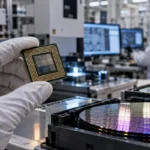
Chips, cars and the Nexperia lesson
The Dutch government intervened at the chipmaker Nexperia on 30 September 2025, over concerns that its Chinese owner Wingtech was moving equipment and intellectual property out of Europe. Court orders removed the founder as chief executive and put Wingtech’s shares under trustees.
Beijing then halted exports of Nexperia’s finished products from China on 4 October 2025, and automotive chip supply was disrupted until a partial relaxation in November, according to market reports. Bosch cut production at three plants, MERICS notes in the assessment we cite in our commentary on Xi’s purges.
The Dutch suspended their administrative order in November 2025, but the ownership fight is unresolved a year later. On 2 November 2026 the Hague court granted Nexperia an injunction, and Nexperia has sued Wingtech and its founder for about $2 billion in damages, which Wingtech denies. On 11 November the Amsterdam Enterprise Chamber issued new orders barring Wingtech from interfering in daily operations, and Wingtech said on 15 November that it will contest them.
A restructuring plan from the court-appointed administrators would split the company into a Chinese and a non-Chinese business. Nexperia’s interim chief executive said Wingtech should be compensated if the split becomes permanent. The company makes cheap, common chips rather than leading-edge ones, and our assessment is that Nexperia showed how a low-cost component can stop a factory line as effectively as a rare one.
On advanced AI chips Europe is mostly a bystander. Washington decides who may buy them, and our reporting on who really guards the AI chip supply and the Nvidia board inquiry in A Board Investigating Its Own Chief Proves Nothing shows how thin that oversight is. Allegations in that case remain unproven, and no one has been charged.
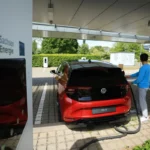
Cars are the most visible front. The EU put duties of up to 45% on Chinese battery-electric cars in October 2024, on top of the standard 10%, while hybrids stayed at 10%. Monthly hybrid imports from China then rose from about 3,800 in October 2024 to about 50,000 in July 2026, according to Brussels Signal, which does not name its source for the figures.
On 9 October 2026 Commissioner Šefčovič announced an understanding with Beijing that he said would cut Chinese hybrid exports to the EU by several million cars over four years, which the Commission estimates is more than half of projected volumes. He added that the European Council would take the final decision. The joint statement gave no details. Media reports cited by the Polish think tank OSW describe an import quota of 350,000 hybrids in the first year, rising 6% annually, with a safeguard that Just Auto says could start on 1 December. The EU imported about 300,000 hybrids from China in 2025, and OSW expects about 800,000 in 2026.
Chinese brands also reach European buyers through national subsidies. In Germany’s EV subsidy Chinese brands account for 9 to 17% of funded vehicles, depending on how joint ventures are counted, and the scheme has no European-content requirement.
Networks, inverters and the switch in the grid
On 20 January 2026 the Commission proposed a revision of the Cybersecurity Act that creates, for the first time, a mechanism to designate high-risk suppliers and force their removal. Mobile operators would have to phase such components out of key 5G assets within 36 months of the Commission publishing its high-risk supplier list, according to a briefing from the British think tank BISI. The text names no country or company, and AP notes that the term high-risk has long been used for China and for Huawei.
Huawei answered that a rule based on country of origin violates the EU’s principles of fairness and proportionality. China’s foreign ministry called it an attempt to de-risk mobile networks by force. The proposal is needed because the earlier 5G toolbox was voluntary and, SecurityWeek notes, some countries bought Chinese gear while others shunned it.
Solar inverters are the newer worry. They convert the power from panels and must stay online, and the Commission has warned that a remote shutdown could cause countrywide blackouts. The European Solar Manufacturing Council reported that about 70% of inverters installed in 2023 came from Chinese vendors, and that Huawei and Sungrow alone control remote access to 168 GW of European capacity. Those are industry figures, not official ones.
In April 2026 the Commission restricted EU funding, including through the European Investment Bank, for solar, wind and storage projects that use inverters from high-risk countries. It is a funding freeze, not an import ban, and it concerns projects seeking EU money. China’s Commerce Ministry criticised the step on 7 May. Lithuania banned remote access by Chinese suppliers to larger installations in November 2024, and Czechia’s cybersecurity agency warned about small plants in 2025.
The Commission puts inverters at roughly 5% of the cost of a large solar installation, and the IEA estimates that utility-scale projects would pay just under 2% more with suppliers outside high-risk countries. For rooftop systems the IEA estimates are higher. If that estimate holds, price is not the main obstacle. Our reading is that the installed base and member state politics are, since a funding rule does not reach inverters already connected.
Medicines and the things nobody notices
Medicines show a dependence that rarely makes headlines. A stress test of 56 essential active pharmaceutical ingredients found only 26 low-risk, while a disruption of 20 would have serious consequences, notably for antibiotics, Il Foglio reports. An ISS commentary on the same work says dependence on China is even higher one step earlier, at the precursor chemicals.
Eleven health ministers wrote an open letter on the issue, Il Foglio reports. The same article says China has not so far used this leverage as a weapon. The point of a dependence assessment is the capacity, not the behaviour to date, and the stress test is a measure of capacity.
The Critical Medicines Act is the EU’s answer. Parliament and Council reached agreement in May 2026, with final adoption expected after legal checks, according to trade reports. It lets public buyers favour medicines with at least 50% of value created in the EU, while information-sharing on contingency stocks stays voluntary. Critics warn that the criteria may raise prices for health systems under pressure.
The pattern repeats in cheaper goods. Europe relies on China for batteries, machinery and pharmaceutical ingredients that a cut-off tool would also hit, as our report on the new trade tools notes. Any measure that shuts out Chinese firms also shuts out European consumers from products they use.
Why Europe cannot simply buy elsewhere
Europe’s research service EPRS puts China’s share of global rare earth production at about 60% and of refining at about 90%, and says that position is unlikely to change soon. Mines are the smaller problem. The Atlantic Council argues the EU cannot mine its way out of dependence, because the processing and magnet-making steps sit in China, and those take years to build.
Money is the second obstacle. European industry told the South China Morning Post that unreliable pricing, wary investors and differing national rules hold back the EU’s supply push. Our rare earth report adds that Northvolt’s collapse shows how hard it is to compete with Chinese costs, and that investors struggle to price the risk of governments restricting exports for strategic reasons.
It helps to separate three kinds of dependence, which is our own framework and not an official one. In the first, alternatives exist but cost more, as with solar inverters, where the IEA puts the extra cost for large projects below 2%. In the second, alternatives exist but need years, as with rare earth processing and pharmaceutical ingredients. In the third, a single owner or plant is the only source, as the Nexperia case showed.
Each kind needs a different tool. A price gap can be closed by procurement rules or price floors, which is what the Atlantic Council recommends. A time gap needs stockpiles and funded projects, and the EU’s record on both is thin so far. A single point of failure needs a second source, which is slow and costly. A cut-off tool or a tariff does little for any of the three, because it penalises the buyer before it builds a supplier.
What Brussels is building, and where it is thin
The loudest proposal is the so-called kill switch. A Franco-German letter asks for powers up to an immediate cut-off from the internal market, to be activated by a reversed qualified majority, meaning measures go ahead unless enough member states block them. The Anti-Coercion Instrument, the closest tool today, has never been used.
Trade Commissioner Šefčovič told MEPs on 4 November that a new instrument should be presented by the end of the year. We follow the politics in EU Leaders Want New Trade Tools Against China.
China’s ambassador to the EU, Cai Run, answered on 5 November that China would have to take countermeasures if the EU adopts restrictive and discriminatory measures. A cut-off would also hit European firms, because the EU relies on China for pharmaceutical ingredients, batteries and machinery, and officials say the tool would not be ready before next year at the earliest.
The Industrial Accelerator Act, proposed on 4 March 2026, works on the other side of the border. Under the draft, acquisitions and new plants in strategic sectors would need approval above €100 million when the investor comes from a country with more than 40% of global capacity in that sector. Approval would depend on meeting at least four of six conditions, among them a limit of 49% of control rights for a foreign investor in a joint venture, Squire Patton Boggs explains.
The act also gives public procurement and support a preference for EU-made products. The thresholds are country-neutral on paper, but the European Business Magazine says in its analysis that in practice they bite mainly on Chinese investors in batteries, electric vehicles, solar and critical raw materials. China’s Commerce Ministry warned of countermeasures in April.
The Russia war is a second front in the same dispute. The EU’s 20th sanctions package in April 2026 listed 27 mainland Chinese and Hong Kong entities for supplying dual-use goods to Russia’s military industry, according to the South China Morning Post. China demanded their removal and separately added seven European defence-related firms to its export-control list, which CGTN links to arms sales to Taiwan.
Our assessment is that each EU tool now draws a counter-tool in a field where Beijing holds more cards. For the Russian side see our guide to Russia’s shadow war and Sanctions deserve less credit than we claim.
Who inside Europe disagrees, and who is on the other side
Read also: Xi’s purges expose Europe’s bet on Beijing
European capitals do not agree on how hard to push. Germany’s stance toward trade with China has shifted sharply in recent months, and France and Germany now argue for the same tool. Spain and Hungary are pushing for closer ties with Beijing, EU Insider reports. The Chinese carmaker BYD is expanding its Hungarian base, which already underpins its passenger car plans, Automotive World notes.
The counterpart matters as much as the quarrel. Our opinion piece Xi’s purges expose Europe’s bet on Beijing draws on analysis showing that 42 of 44 military-affiliated full Central Committee members elected in 2022 have been purged or have disappeared. MERICS expects Beijing to become less willing to compromise, and the piece argues that deals with such a leadership last only as long as the next loyalty campaign.
That is an argument, not a measured fact, and the opposite case is easy to state: a leader as secure as Xi can sign deals and keep them. The evidence from this autumn supports both readings. China extended the rare earth pause at the last minute, yet it also kept the April licences and the wider legal machinery in place.
Pressure on speech belongs in the same picture. In November a Hong Kong judge added ten years to Joshua Wong’s sentence for asking foreign governments for sanctions, which we discuss in Joshua Wong’s crime was asking for sanctions. Whether economic dependence makes European governments quieter on such cases is an open question, and the record we reviewed does not answer it.
Influence also reaches Brussels directly. Belgian police searched premises in March 2025 over suspected bribes paid to members of the Parliament to support Huawei’s interests, and Huawei says it has zero tolerance for corruption. The case and the wider lobbying picture are in Who Writes Europe’s Laws and Who Watches Them. Europe’s other large dependence, on American cloud and data systems, is in Europe Runs on Computers It Does Not Own.
What is still open
Several decisions fall within the next few months. China’s extended rare earth pause ends on 10 January 2027, with a ministerial video conference planned the same month and a third round of trade consultations in March 2027. The Commission is due to present its new trade defence package by the end of 2026, and a hybrid car safeguard could start as early as 1 December.
The Cybersecurity Act revision is in the legislative process, and the Critical Medicines Act awaits final adoption. The Nexperia fight moves through Dutch courts, with Wingtech contesting the latest orders. The Industrial Accelerator Act is still moving through Parliament and Council, and China has already threatened countermeasures.
Three gaps will remain whatever happens. The hybrid car quota rests on media reports of documents, and neither side has published the terms. Several dependence figures, such as the inverter shares, come from industry bodies rather than public statistics. And no single number captures how much of Europe’s output would stop if one Chinese supplier were cut off.
The record so far shows a Europe that has named its dependencies and begun writing rules for them, while the rules arrive after the leverage. It does not yet show whether Brussels can build alternatives or agree on a response before the next licence deadline decides the question for it.
BASIS OF ANALYSIS
Basis of analysis: 43 sources, read in November 2026, among them Eurostat figures through press releases, a European Parliament research paper, trade and regional outlets, think tanks, law firm briefings and four of our own earlier reports. Atlantic Council, KfW, ODI, MERICS and EU Insider figures were read through those earlier reports. The hybrid car quota rests on media reports, the inverter shares come from an industry body, and the August 2026 trade figures come from a market report on Eurostat data. Wingtech’s position is taken from Chinese outlets. Commission and Council texts, court rulings and the Chinese customs releases were not opened.
Sources
- Eurostat via Public Technologies: Trade in goods with China in 2025 (10 April 2026)
- Euronews: Is the European Union reliant on trade with China? (15 April 2026)
- Brussels Times: EU trade deficit with China tops €359 billion
- GIS Report: The EU’s shaky start to balancing trade with China
- Action Forex: EU and eurozone trade balance, August 2026
- Investment Monitor: EU leaders scrutinise China trade gap
- S&P Global: China extends rare earth export suspension to January 2027 (9 November 2026)
- Benchmark Minerals: China extends pause on rare earth and battery export controls until 2027
- South China Morning Post: As China extends pause on rare earth controls, pricing and financing hold back EU supply push
- European Parliament Research Service: China’s rare-earth export restrictions
- Mining Technology: China rare earth export pause nears expiry
- OSW: European Commission and China agree to curb hybrid car imports (14 October 2026)
- Automotive World: EU and China tentatively agree to restrain hybrid exports
- CnEVPost: China and EU make progress on hybrid trade (9 October 2026)
- Just Auto: EU and China agree to moderate Chinese hybrid vehicle exports
- Evertiq: Nexperia sues Wingtech for $2 billion in damages (5 November 2026)
- China Daily HK: Dispute between Wingtech and Nexperia widens (10 November 2026)
- Dr. Web: Nexperia and Wingtech, the Amsterdam ruling of 11 November (in German)
- The Edge Malaysia: Nexperia interim chief on a split of the business (11 November 2026)
- Global Times: Wingtech rejects allegations in Nexperia’s $2 billion lawsuit (4 November 2026)
- AP via WTOP: EU plans phase out of high-risk telecom suppliers (20 January 2026)
- SecurityWeek: EU plans phase out of high-risk telecom suppliers
- BISI: CSA2 and high-risk supplier rules (21 September 2026)
- Yicai Global: China, Huawei criticise EU draft Cybersecurity Act expansion
- Euronews: EU moves to ban high-risk inverters from China (4 May 2026)
- pv magazine: EU moves to restrict funding for projects using inverters from high-risk suppliers (23 April 2026)
- pv magazine: EU expert group urges curbs on high-risk solar suppliers (8 October 2026)
- pv magazine: Restrict remote access of PV inverters from high-risk vendors (ESMC)
- IEU Monitoring: IEA says Europe can curb high-risk inverter dependence at limited cost (29 July 2026)
- Il Foglio: Why Europe’s vulnerability to China also extends to medicines (27 October 2026)
- ISS: The weak point, why pharmaceutical security belongs at the heart of European defence
- Council of the EU: Critical medicines act
- Pulse: EU approves Critical Medicines Act to favour local drug production (13 May 2026)
- Squire Patton Boggs: Industrial Accelerator Act, a general overview (March 2026)
- Investment Monitor: The EU is catching up to the rest of the world with the IAA (23 March 2026)
- European Business Magazine: China warns EU over Industrial Accelerator Act (27 April 2026)
- FTI Consulting: What does Europe’s manufacturing push mean for Chinese companies?
- South China Morning Post: China warns EU to remove firms and citizens from Russia sanctions list
- RFE/RL: Beijing targets 7 European firms as EU Russia sanctions hit Chinese companies (24 April 2026)
- ExtraFokus: Europe’s Rare Earth Deal With China Is a Favour Beijing Can Withdraw
- ExtraFokus: EU Leaders Want New Trade Tools Against China
- ExtraFokus: China’s trade surplus passes $1 trillion again
- ExtraFokus: Xi’s purges expose Europe’s bet on Beijing
- electrive: China agrees to limit hybrid exports to the EU (11 October 2026) – Šefčovič on several million cars over four years.
- Automotive World: EU caps Chinese hybrids at 350,000 but spares local plants – quota, 1 December start, exemptions.
- Just Auto: EU and China agree to moderate hybrid exports – the European Council decides.
- Caixin: China hits Nexperia with export curbs after Netherlands freezes assets (15 October 2025) – 4 October export control notice.